Film Noir and Neo-Noir Style Guide
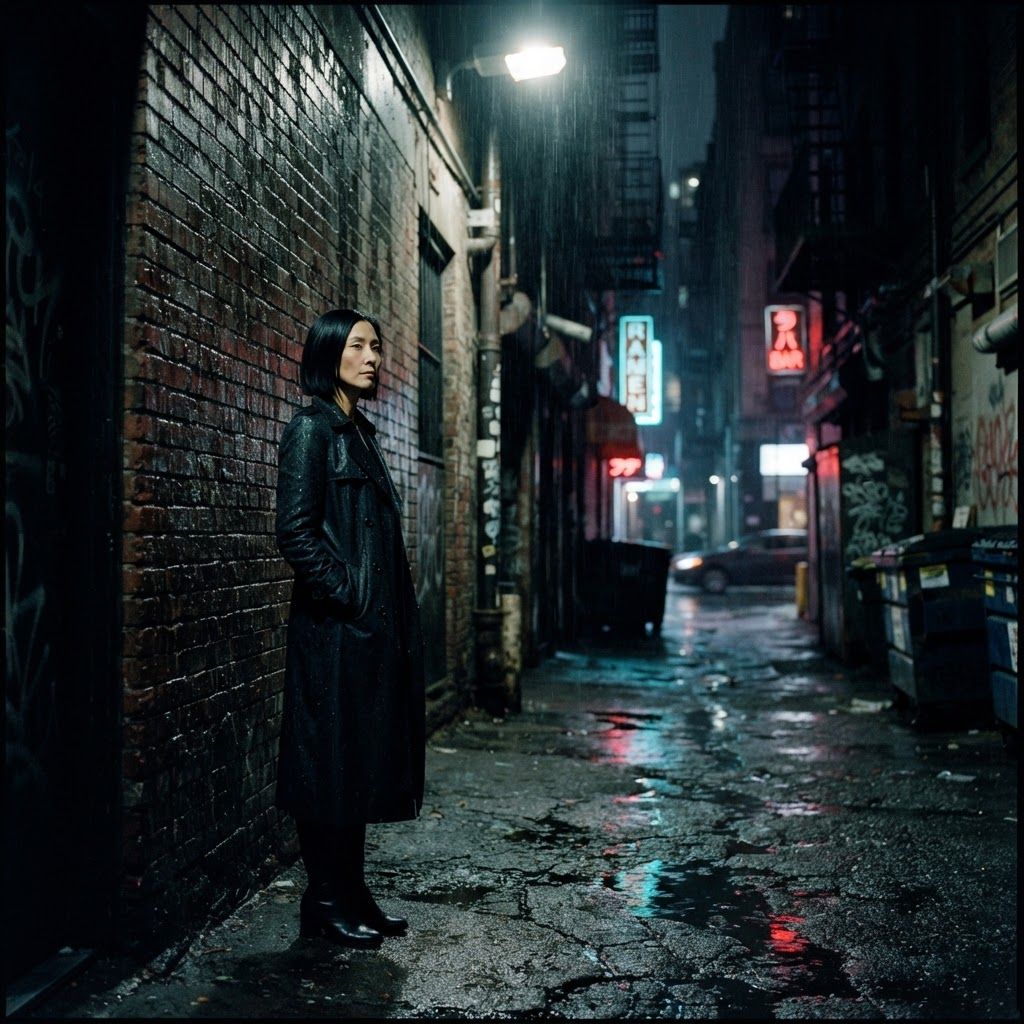
If you want a film noir or neo-noir look, start with mood before props. The style works when you look caught between a secret and a bad decision. Strong light, deep shadow, simple wardrobe, and a tense pose matter more than a perfect set.
Classic film noir usually feels older, sharper, and more graphic. Think black coats, fedora brims, cigarette-smoke haze, venetian blind shadows, and hard black-and-white contrast. Neo-noir keeps the same suspicion and moral trouble, but it can use color, neon, rain, glass, cars, hotels, and modern city light.
Choose the setup by the feeling you want. A close-up is best for identity. A rainy alley gives scale. A lamp or corridor builds pressure. Reflections and dawn add a softer, more modern finish. Keep your face readable, your pose controlled, and your background uncluttered.
Private Eye Close-Up
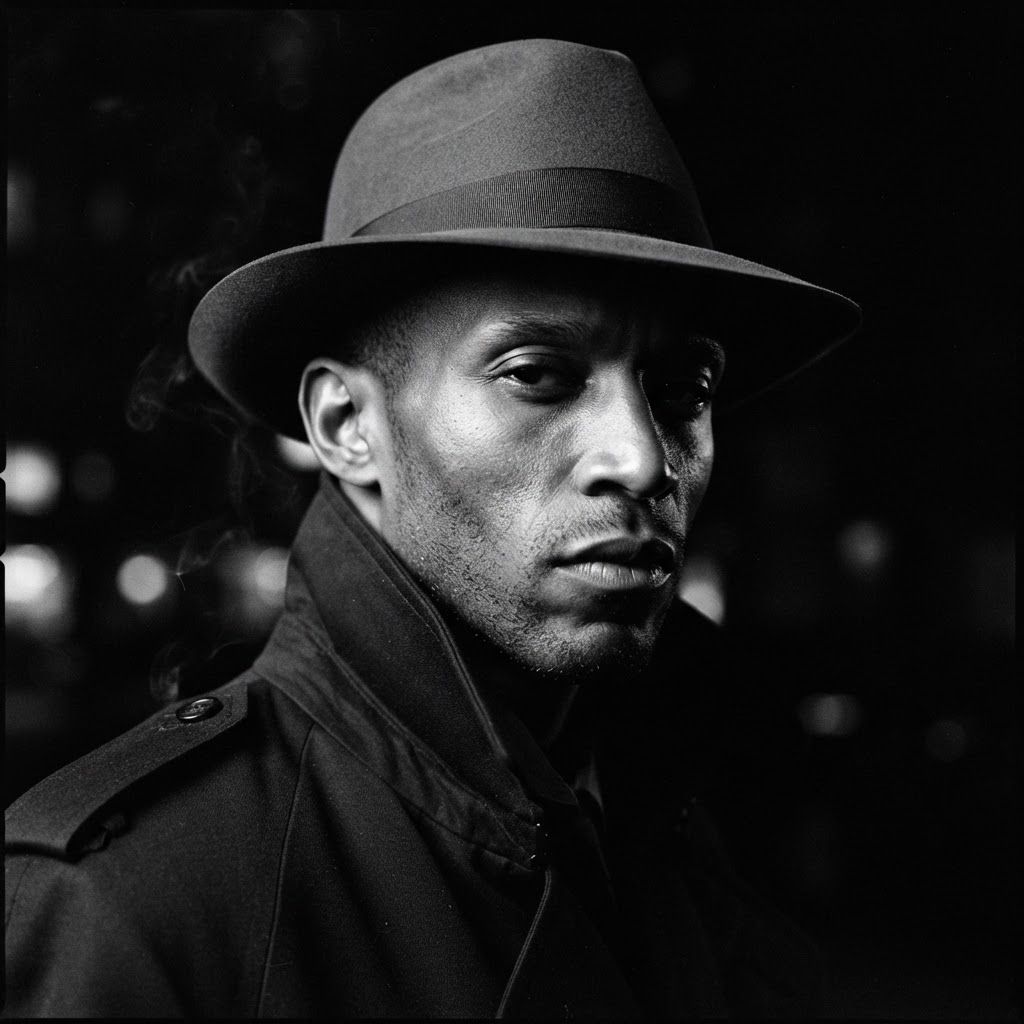
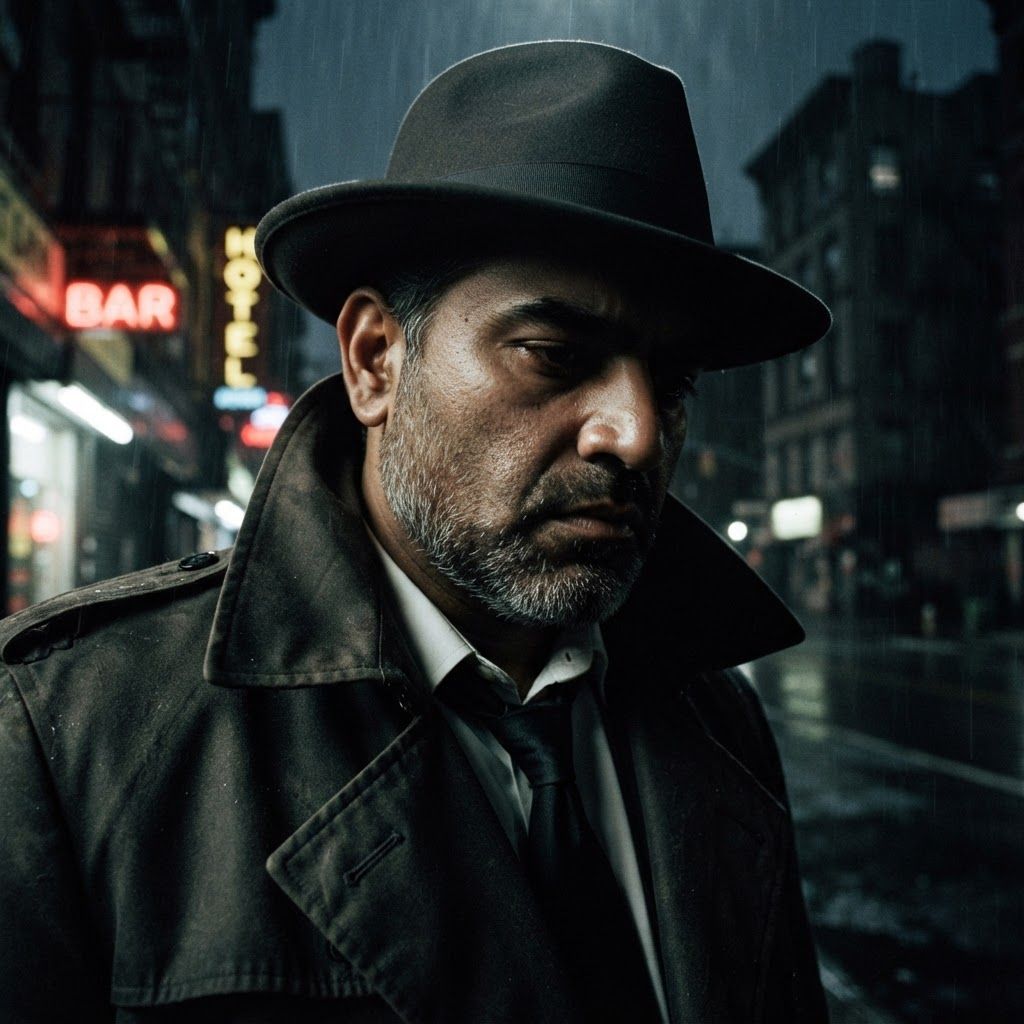
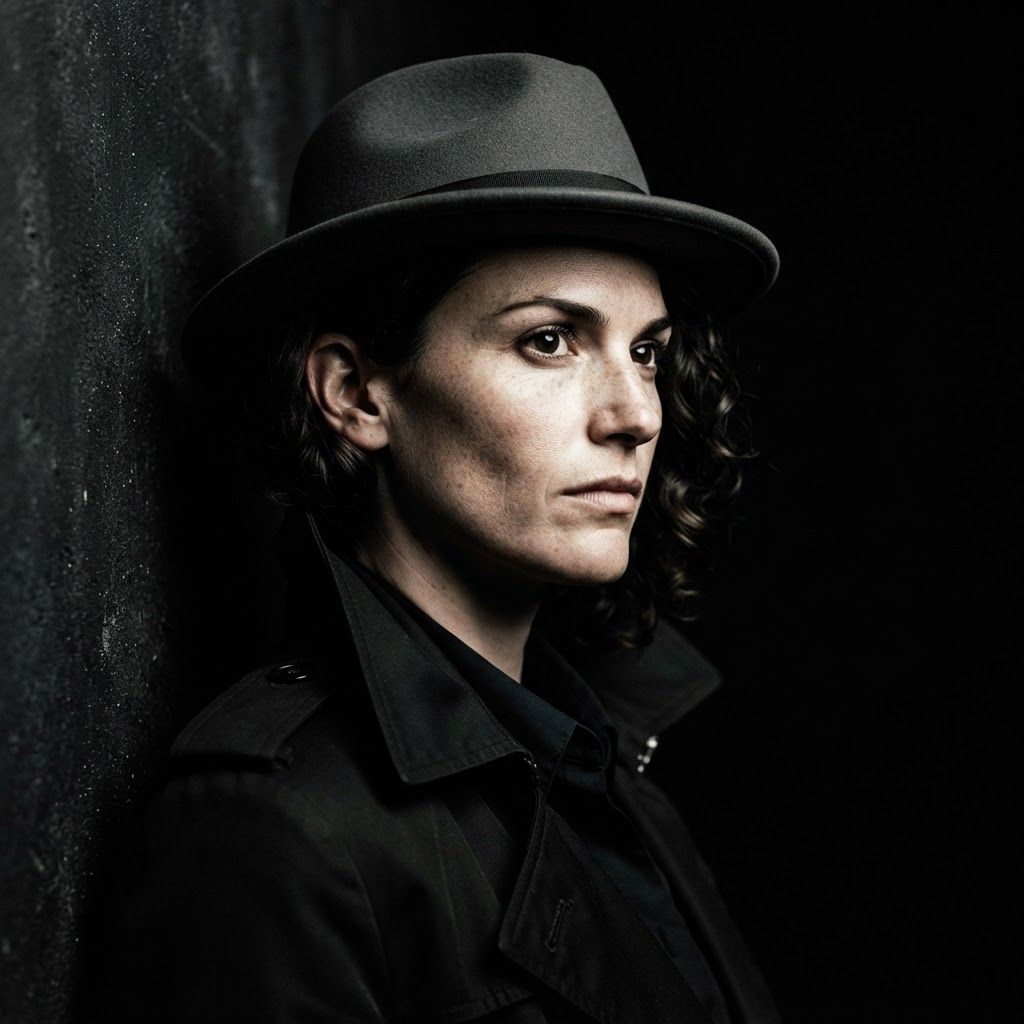
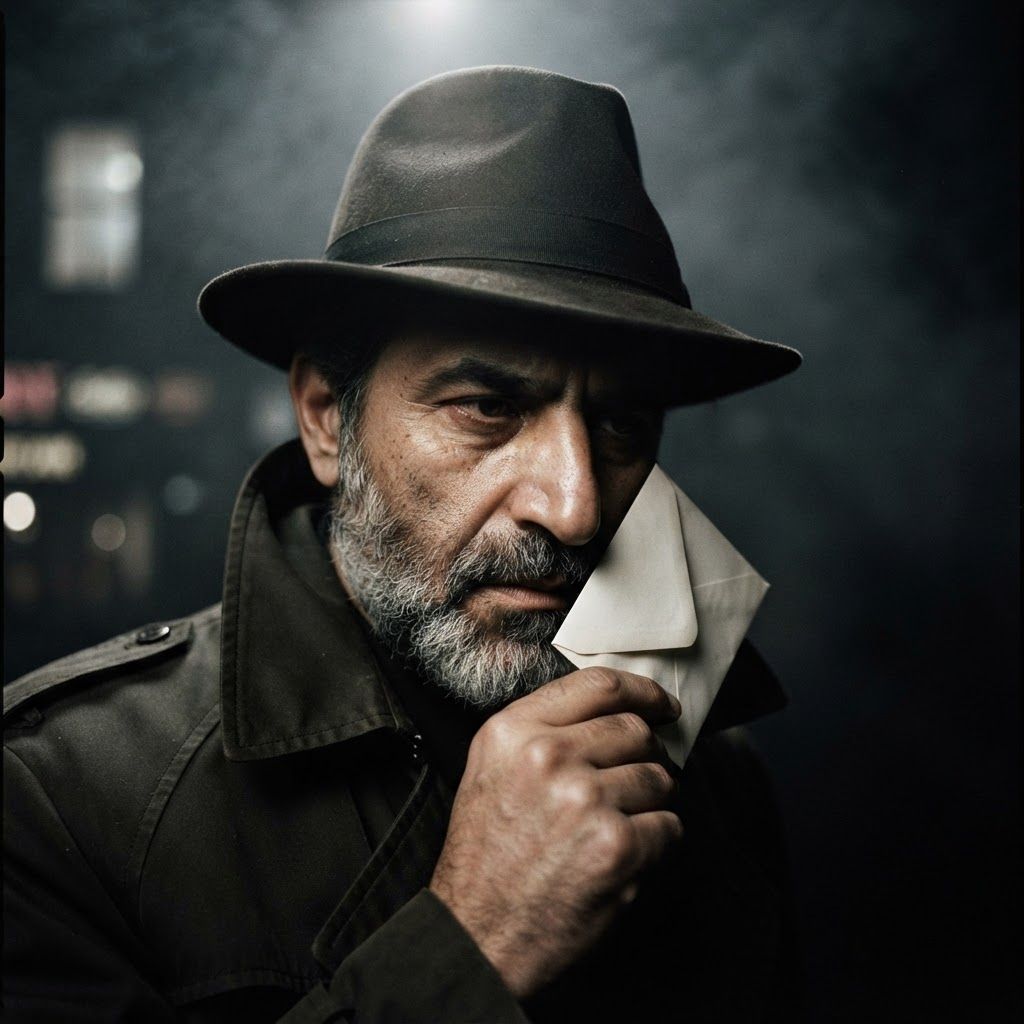
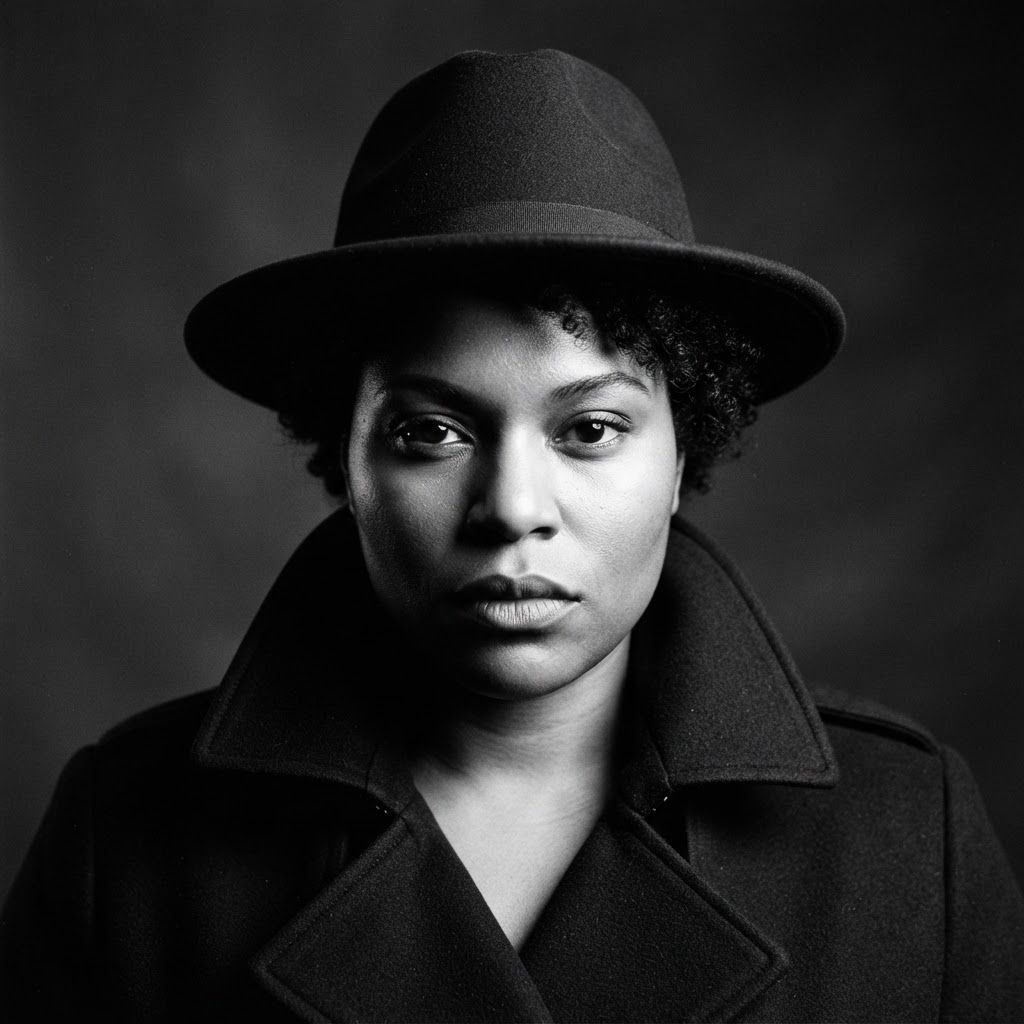
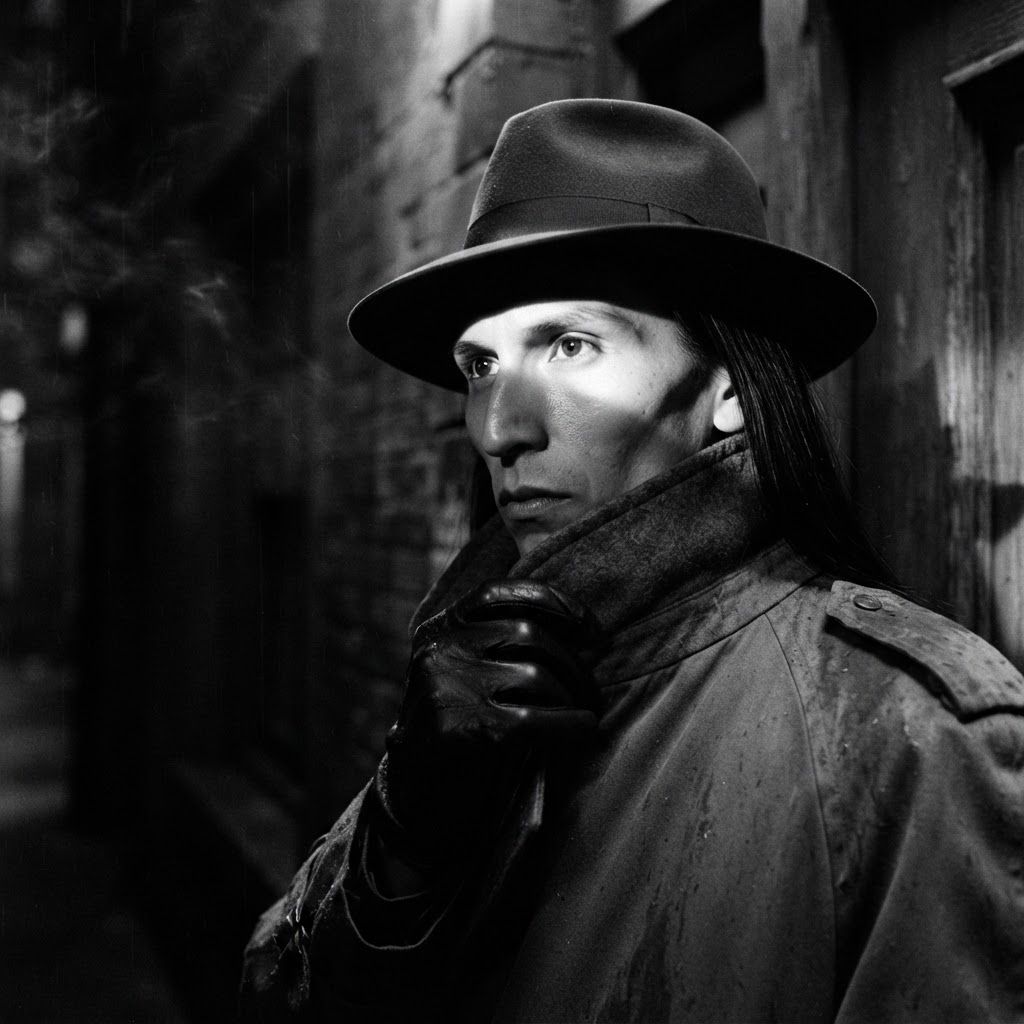
A tight private eye portrait gives you the fastest noir signal. The face fills the frame, the collar comes up, and the hat brim cuts the eyes with shadow. It feels guarded, tired, and alert at the same time.
This works best when you want a simple portrait with strong character. Keep the expression small. A half-squint, closed mouth, and slight turn away from the camera feel more believable than a big scowl. Let one cheekbone catch light so the face does not disappear.
Pose with your chin slightly down and your body angled. Use a low hat brim or raised collar. Place one hard light high and to the side. Wear a trench, dark coat, or plain suit jacket against a dark wall. Avoid bright smiles, busy patterns, and flat front light.
Choose a photo to create your version
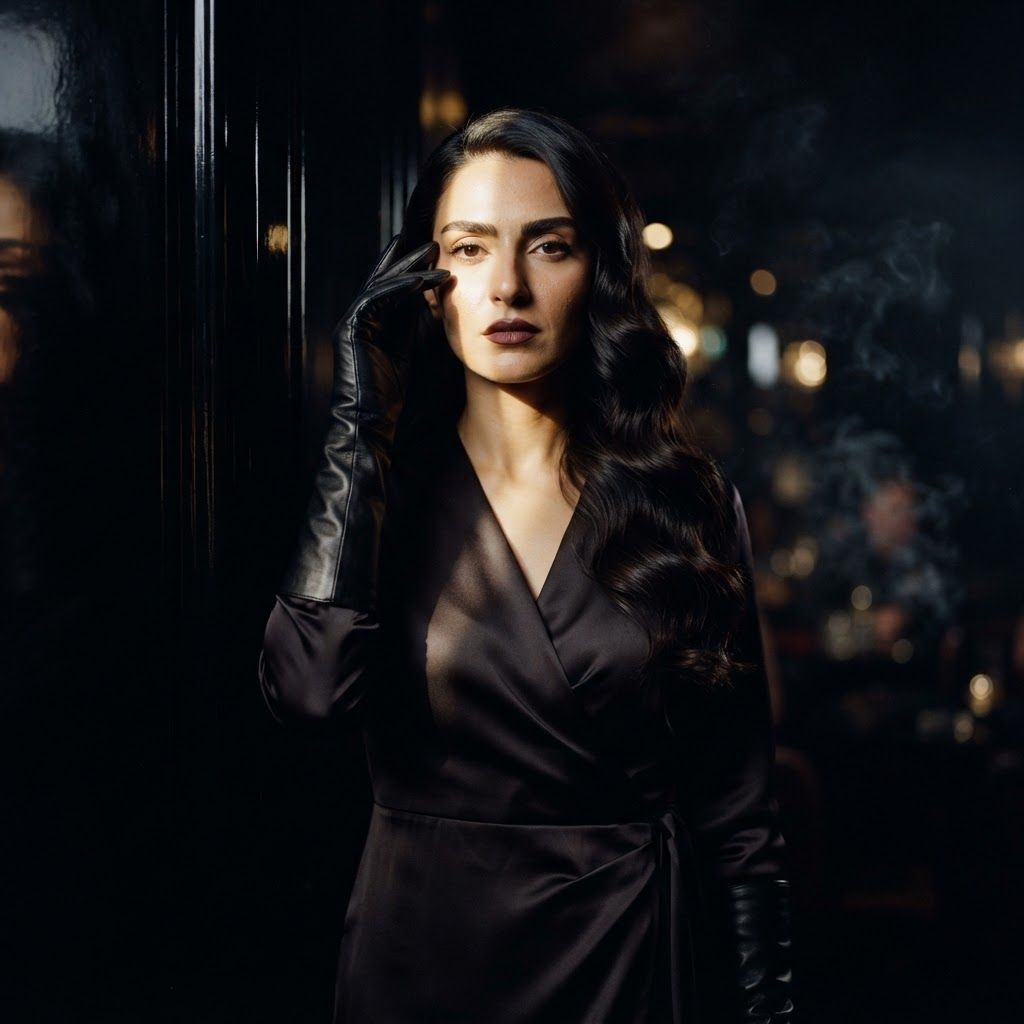
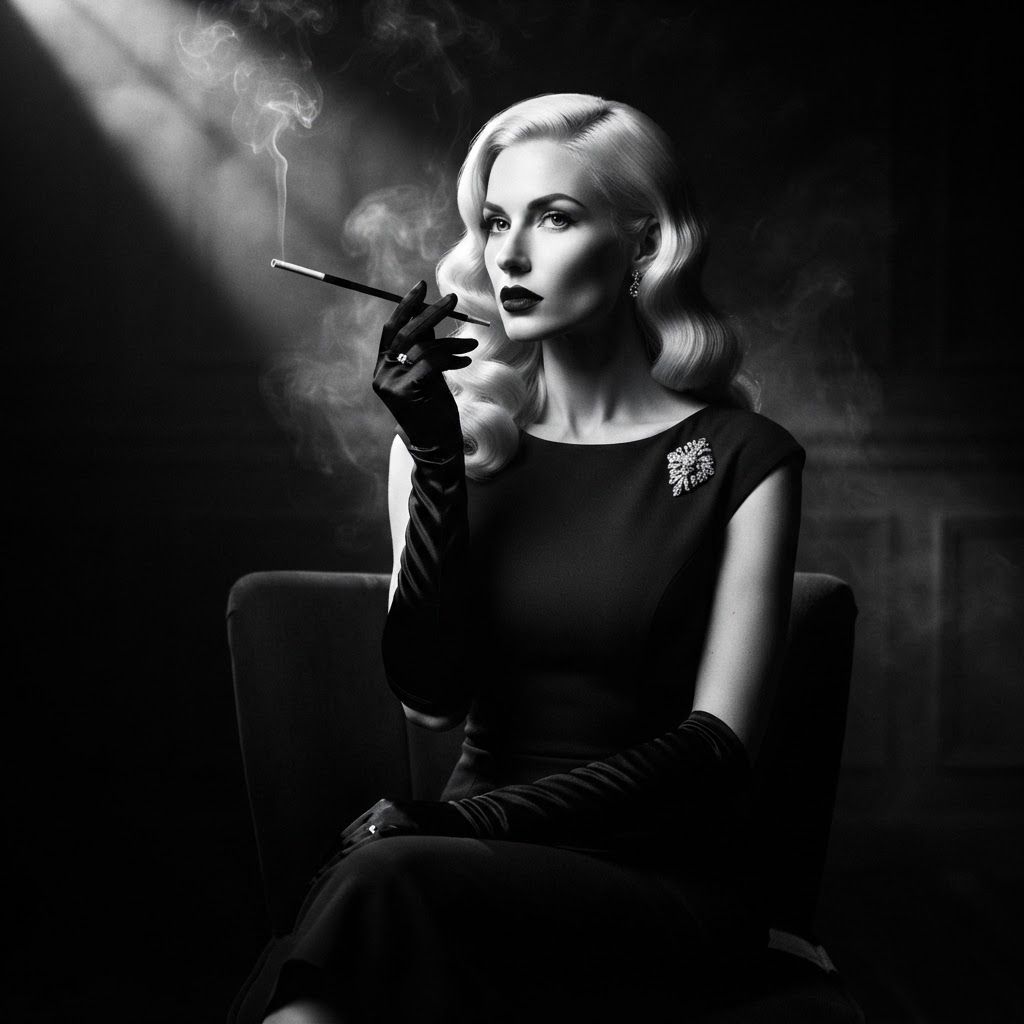
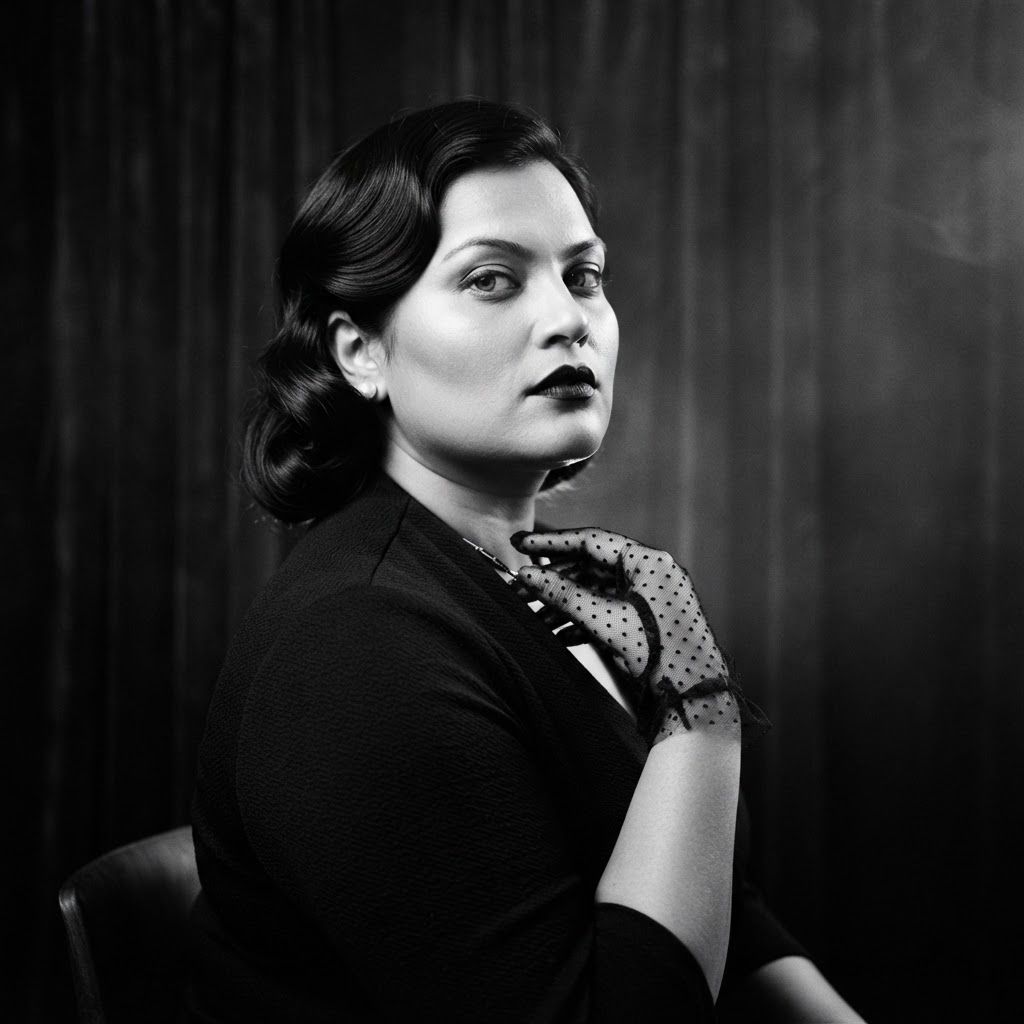
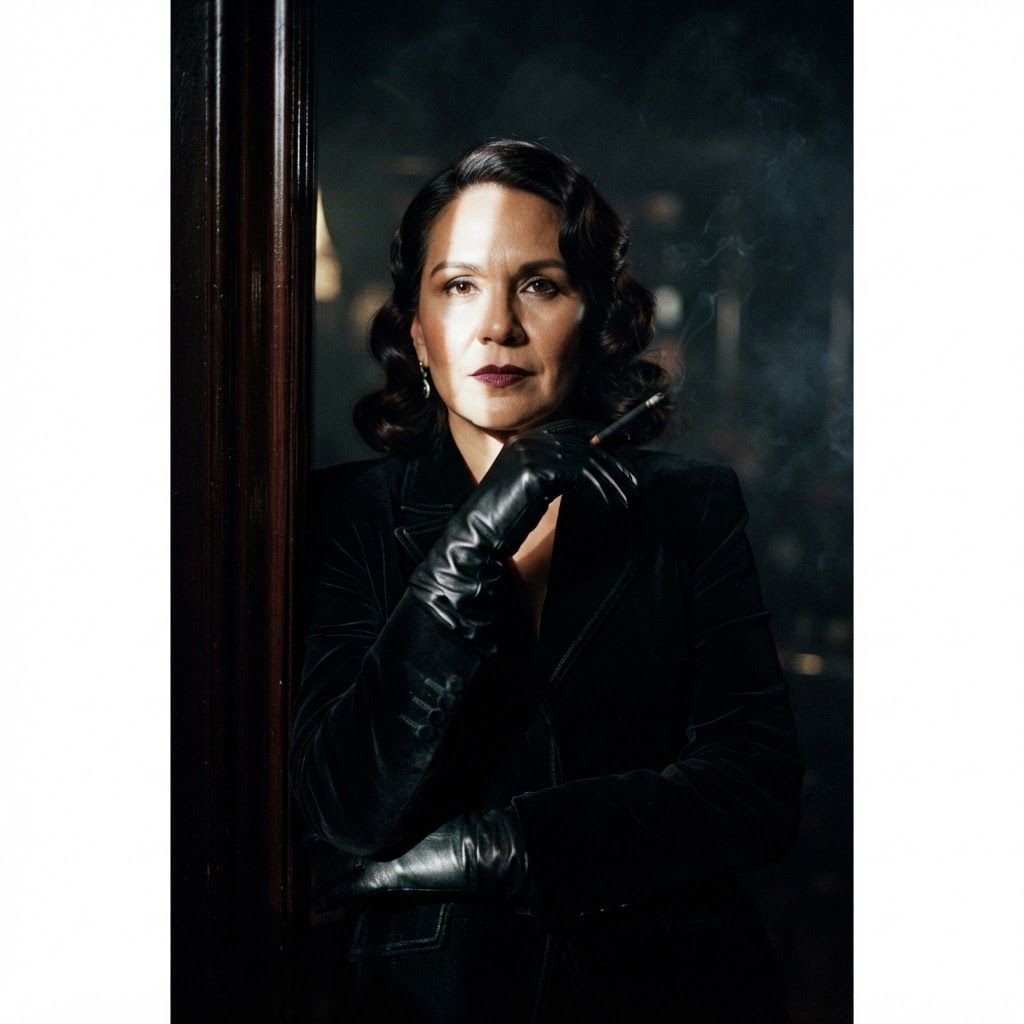
Femme Fatale Gaze
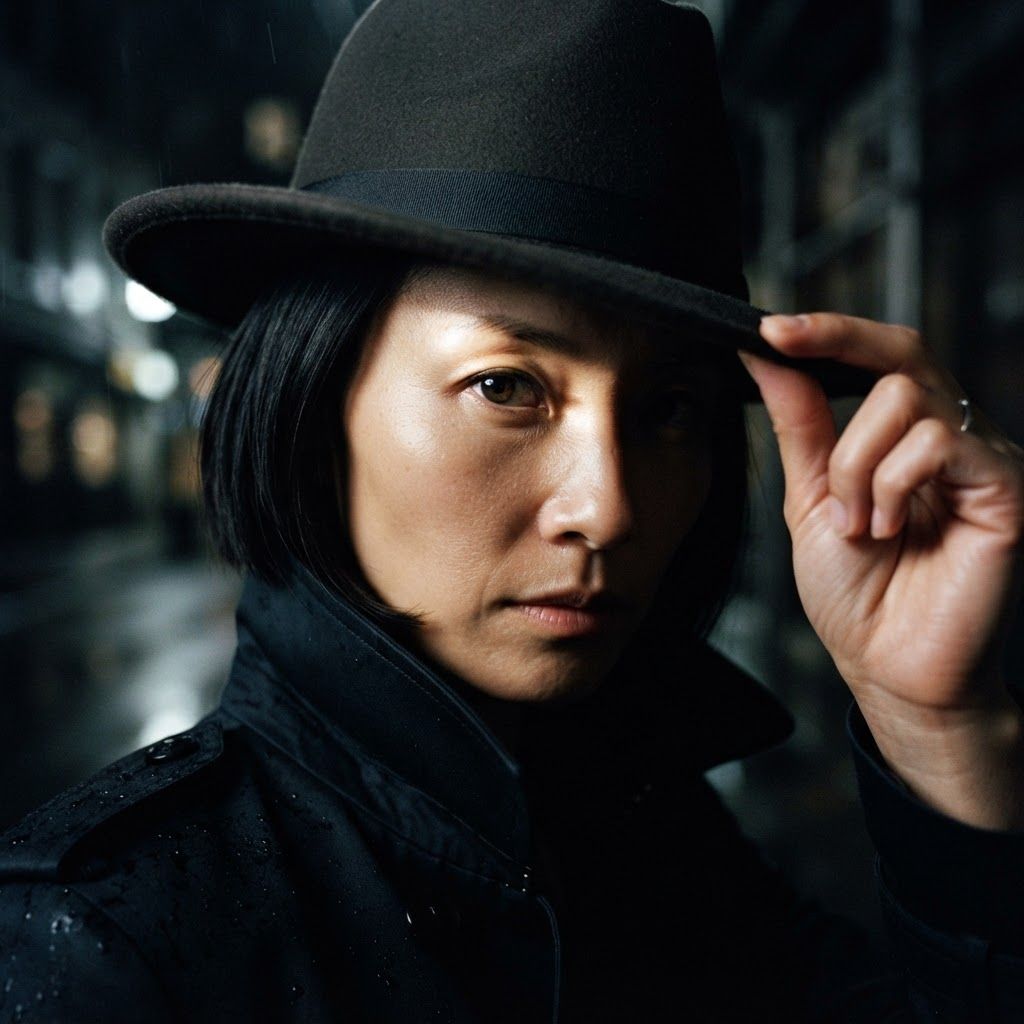
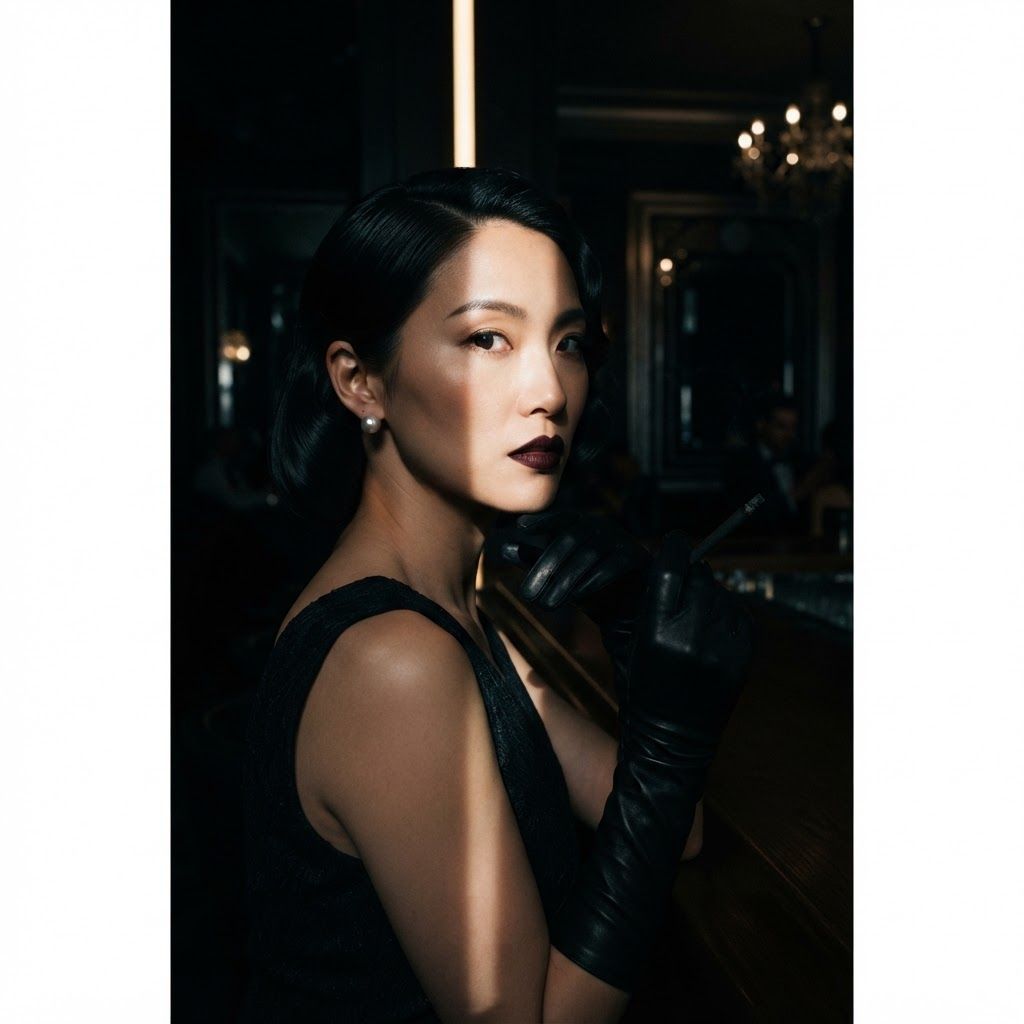
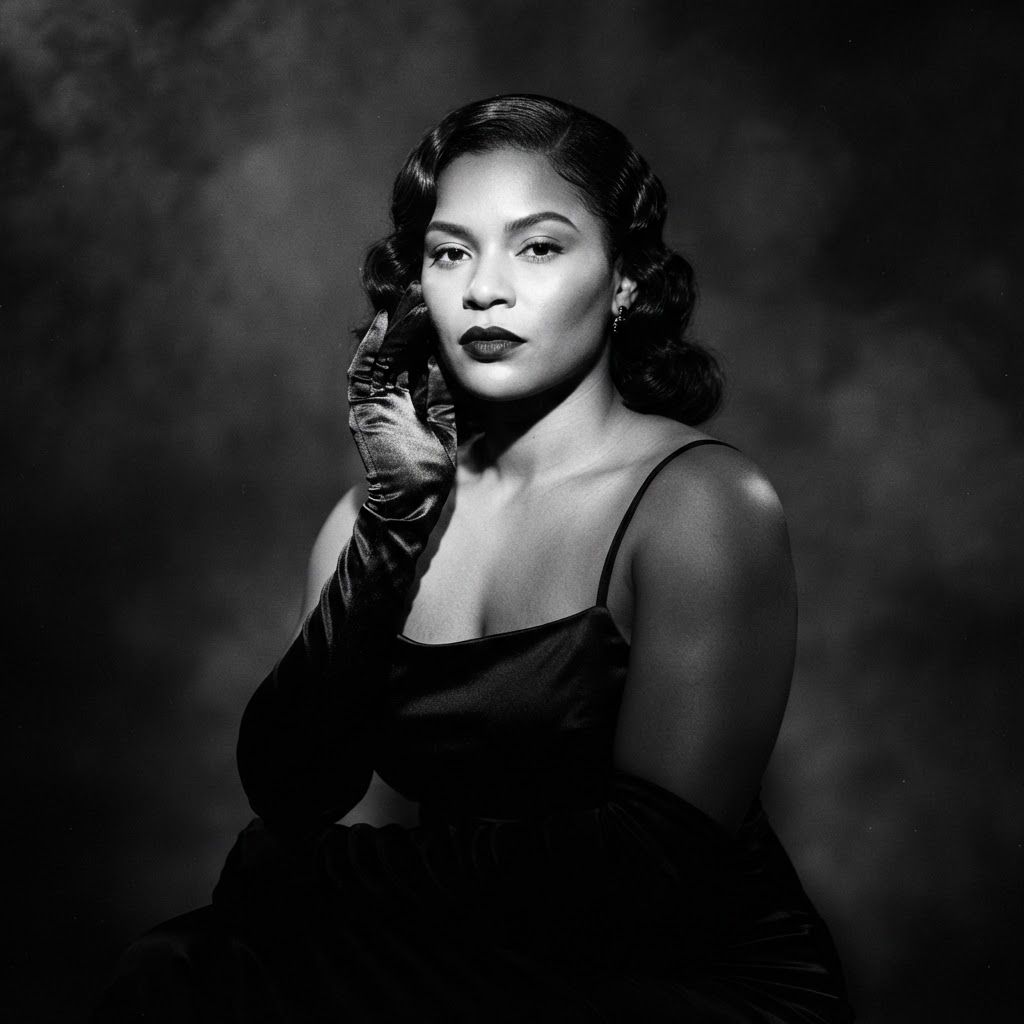
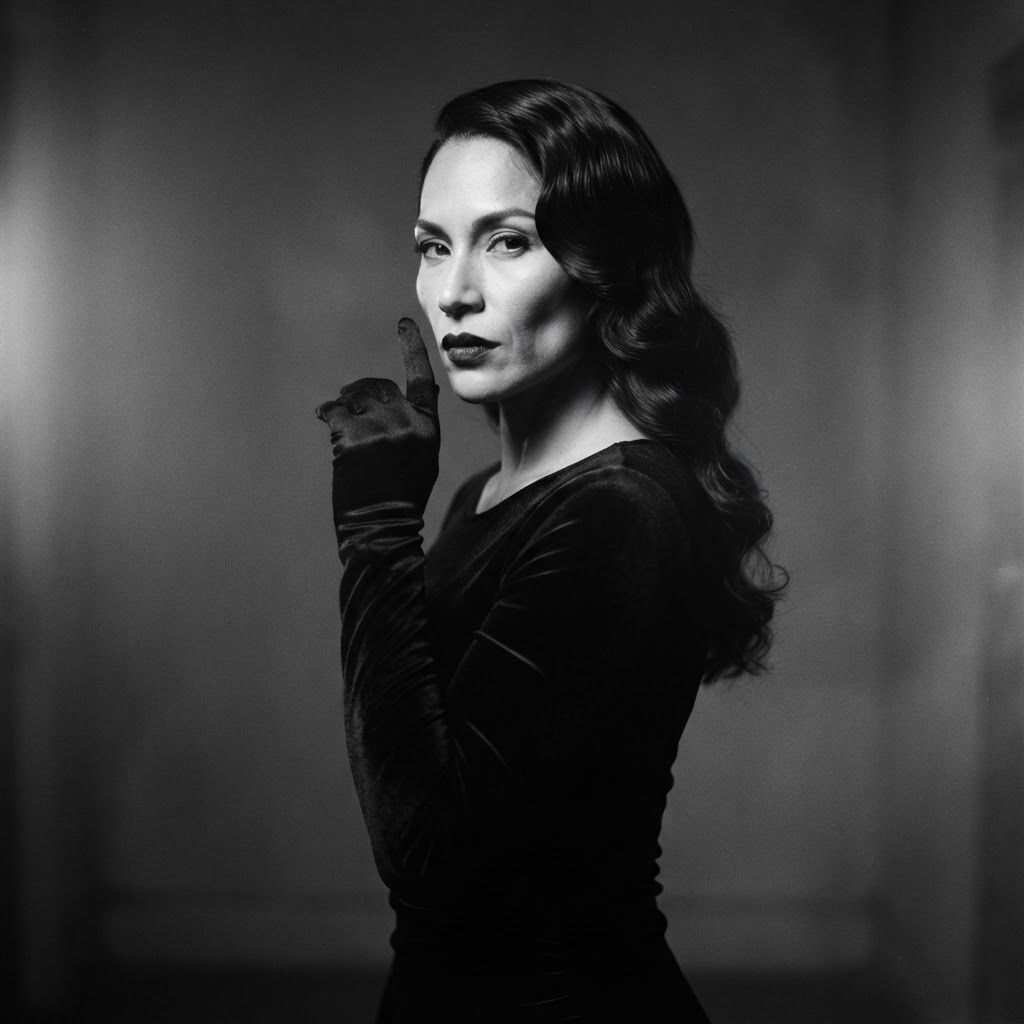
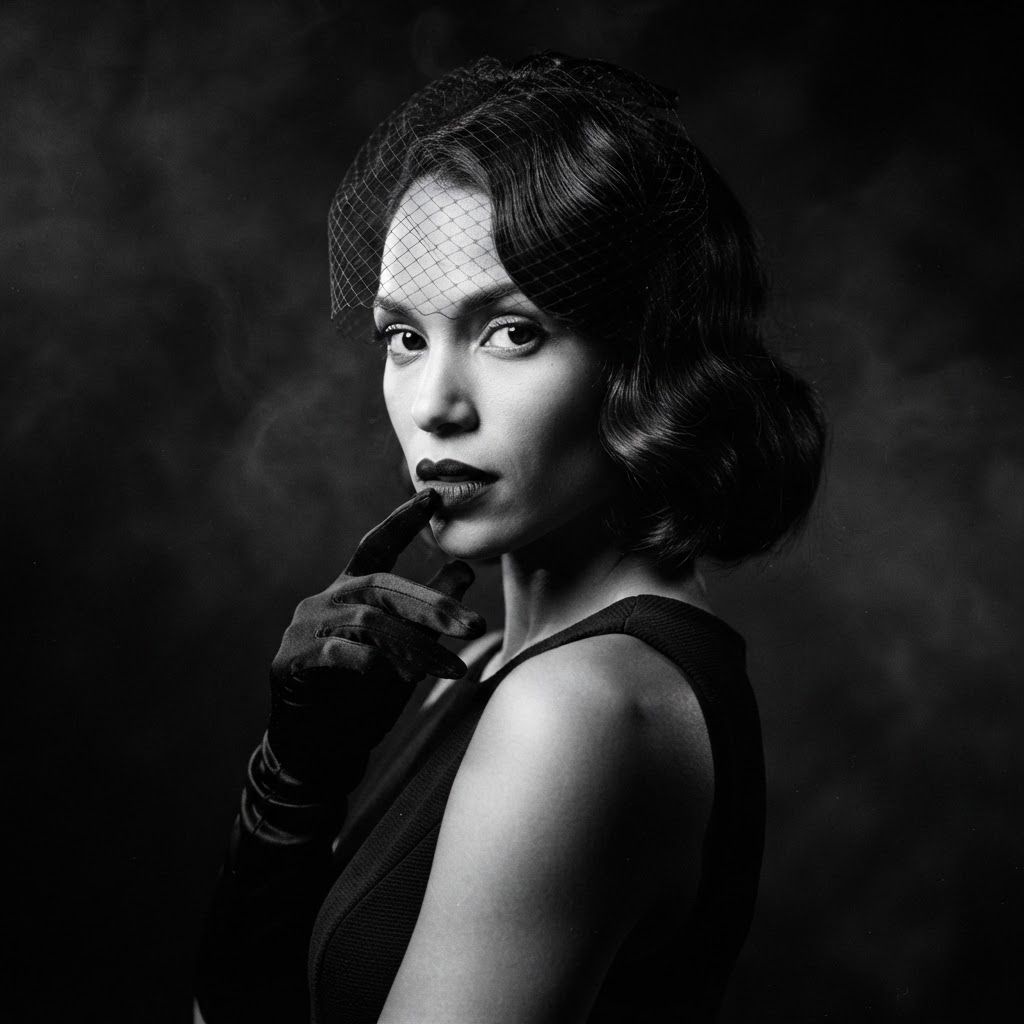
The femme fatale look is not only about glamour. It is about control. A three-quarter pose, glossy hair, dark lip, and steady eyes create danger without needing action. The best version feels calm, not loud.
Use this idea when you want elegance with tension. The hand near the face adds shape and gives the light something to catch. Gloves, a satin collar, pearl detail, or a dark dress can help, but keep the styling clean. Too many accessories can turn the mood into costume.
Turn one shoulder toward the camera and look past the lens or straight through it. Add a narrow strip of light across the eyes, lips, or gloved hand. Use smooth hair, dark lipstick, and a simple dark background. Avoid over-posing the hand or making the expression too sweet.
Choose a photo to create your version
Venetian Blind Shadows
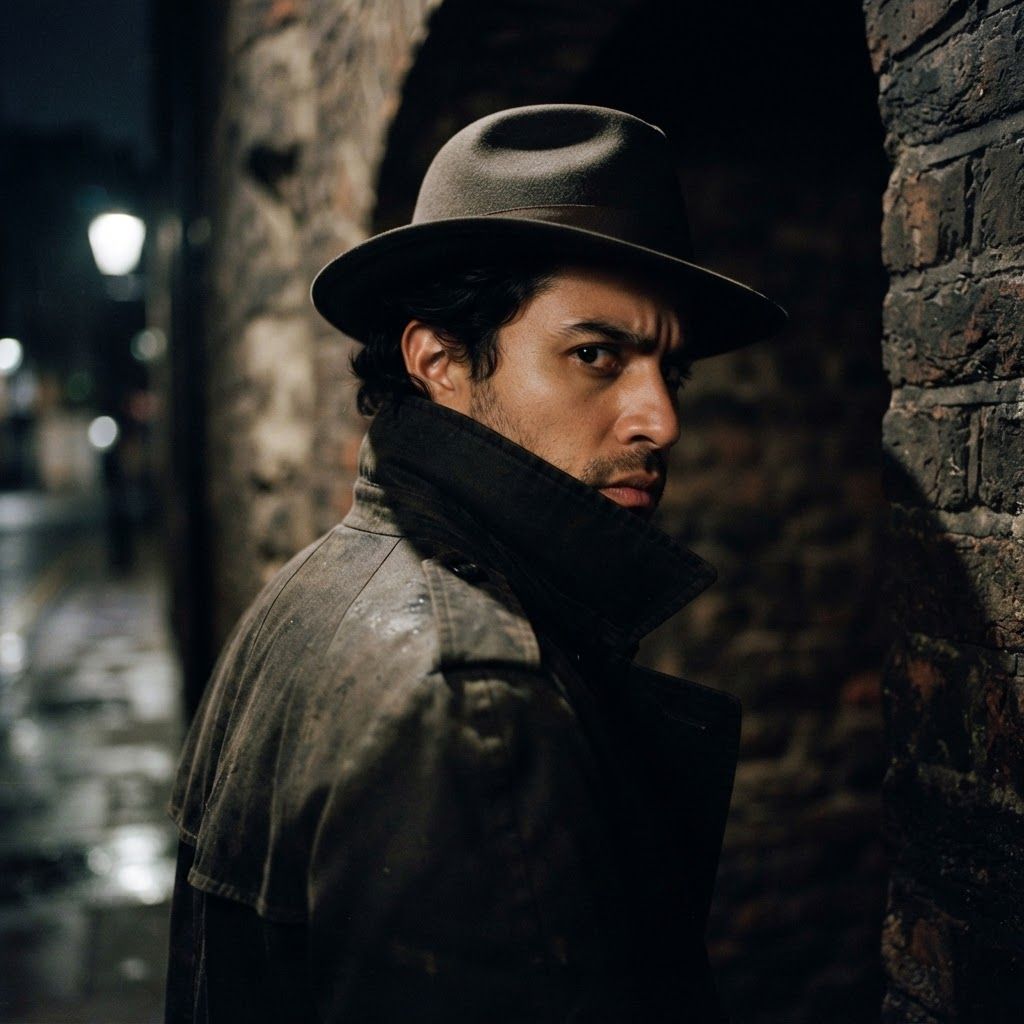
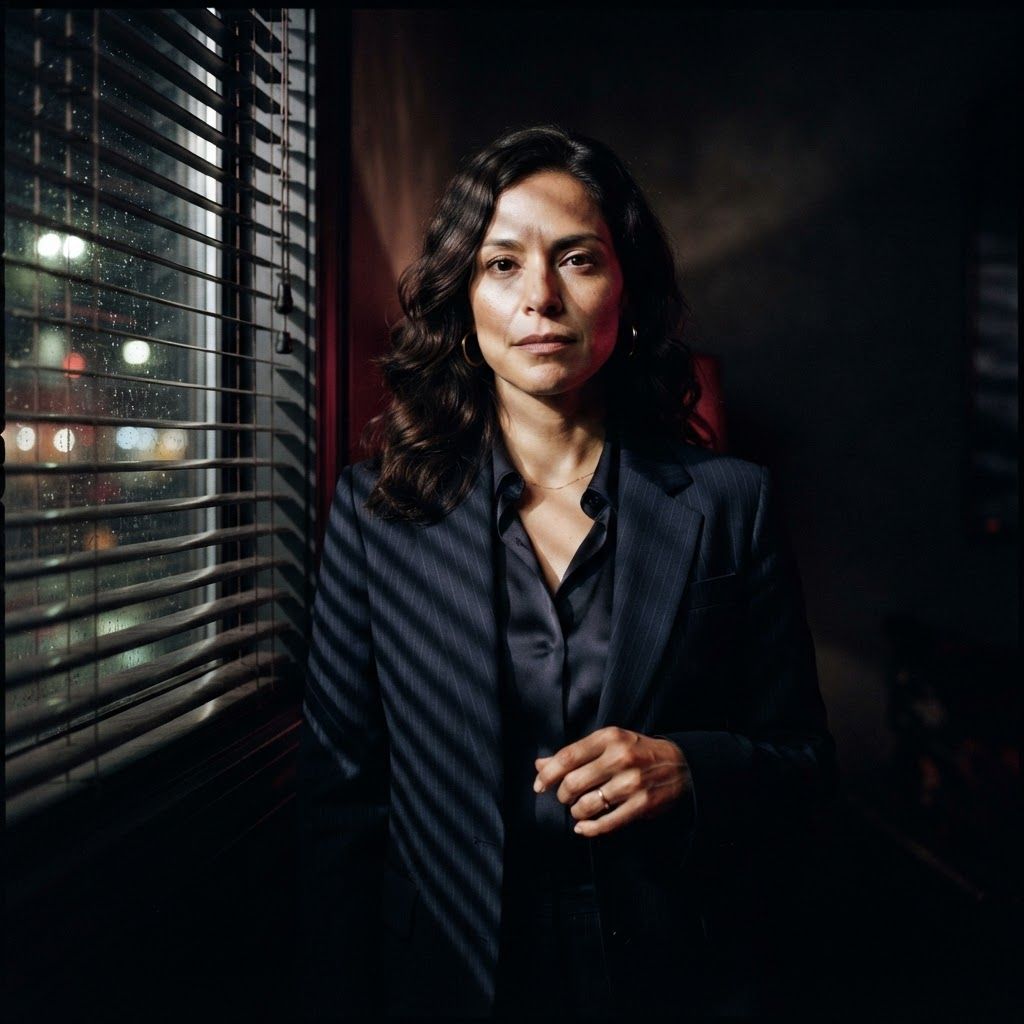
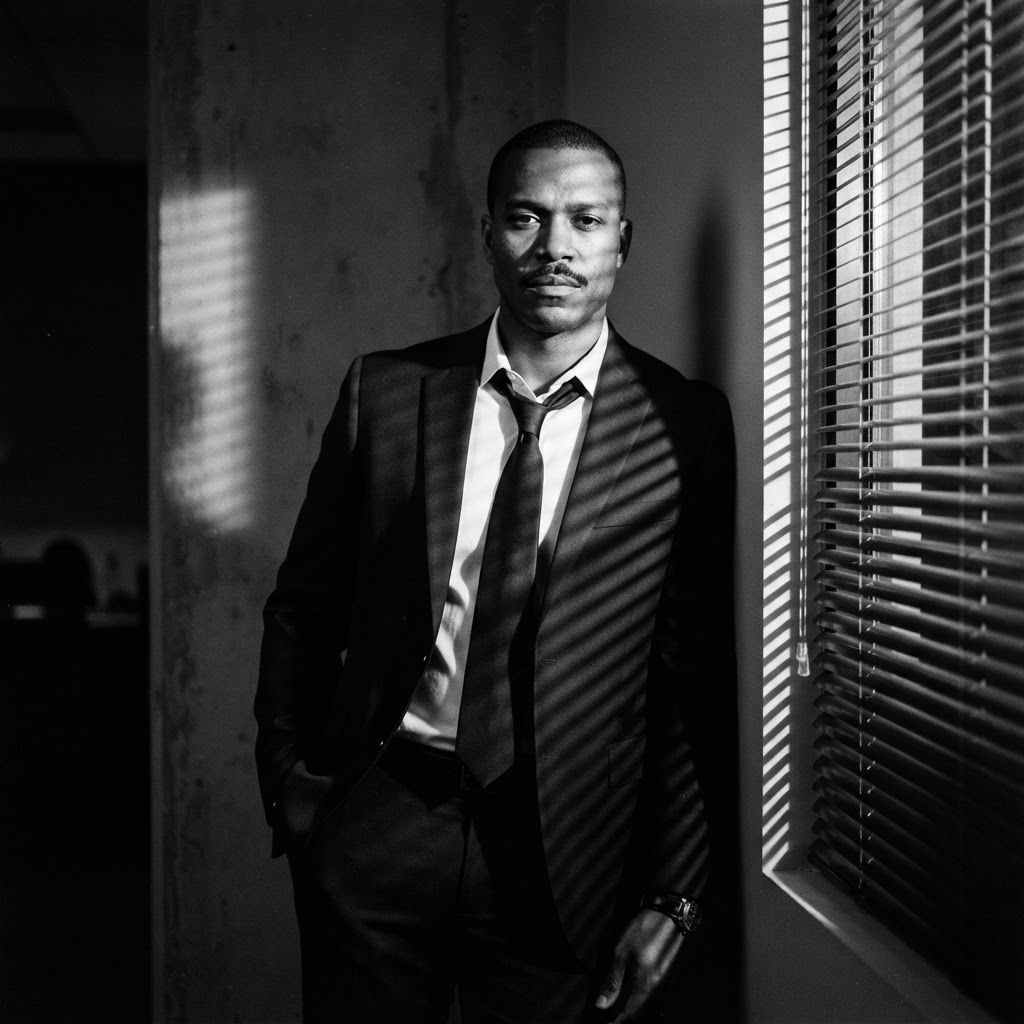
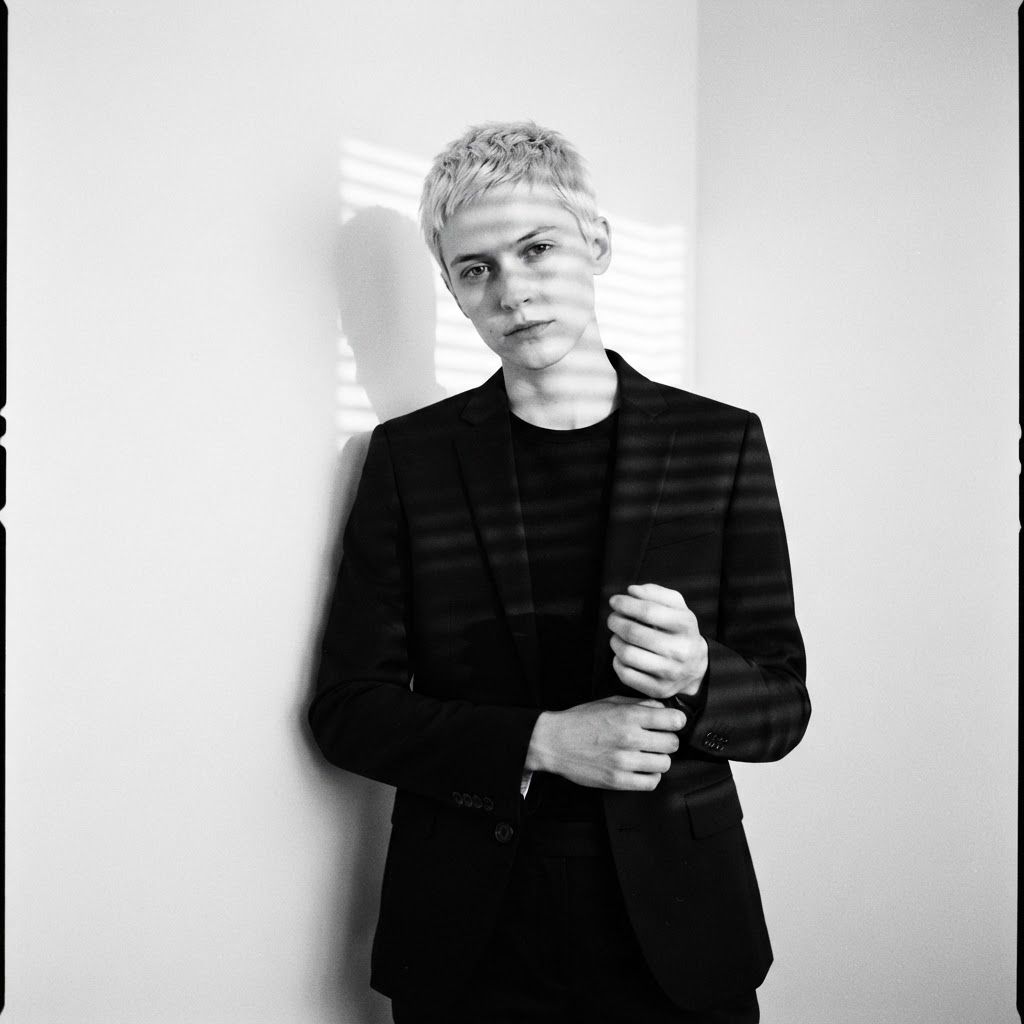
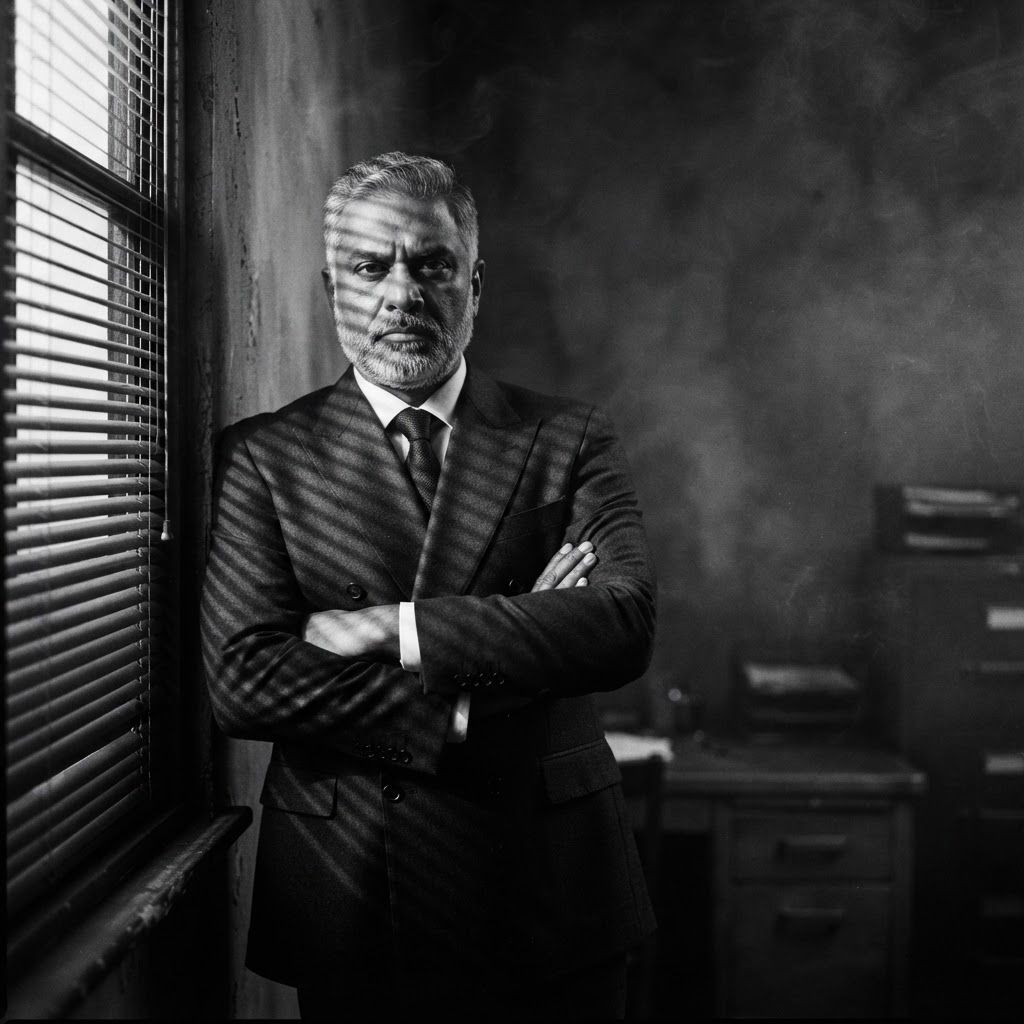
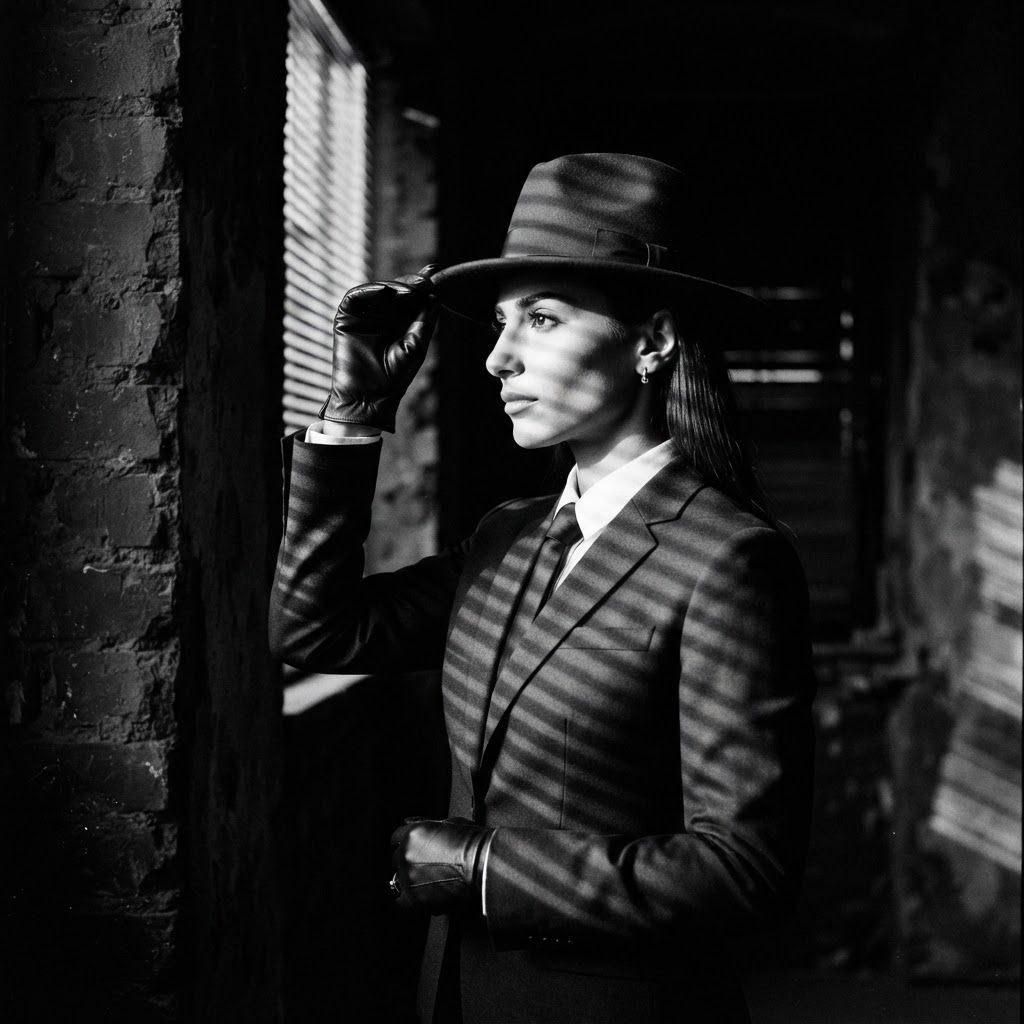
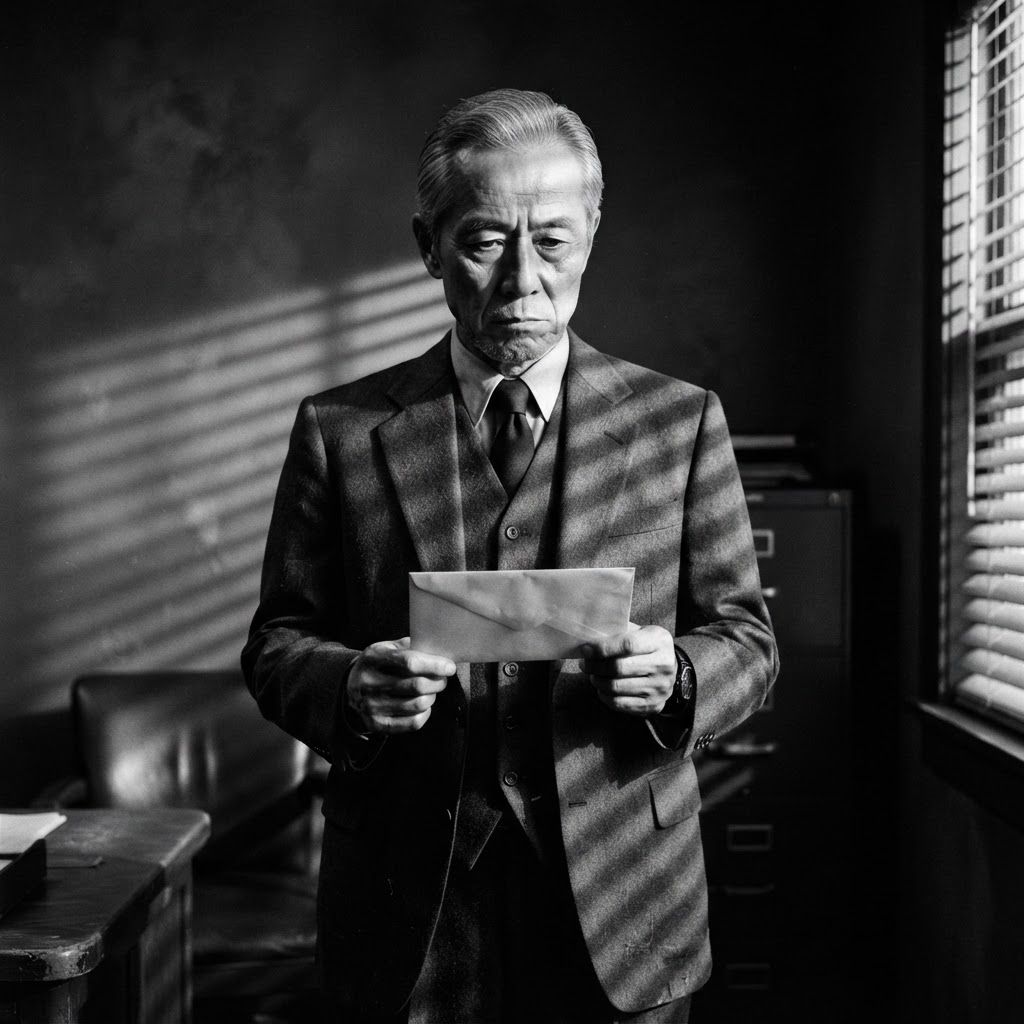
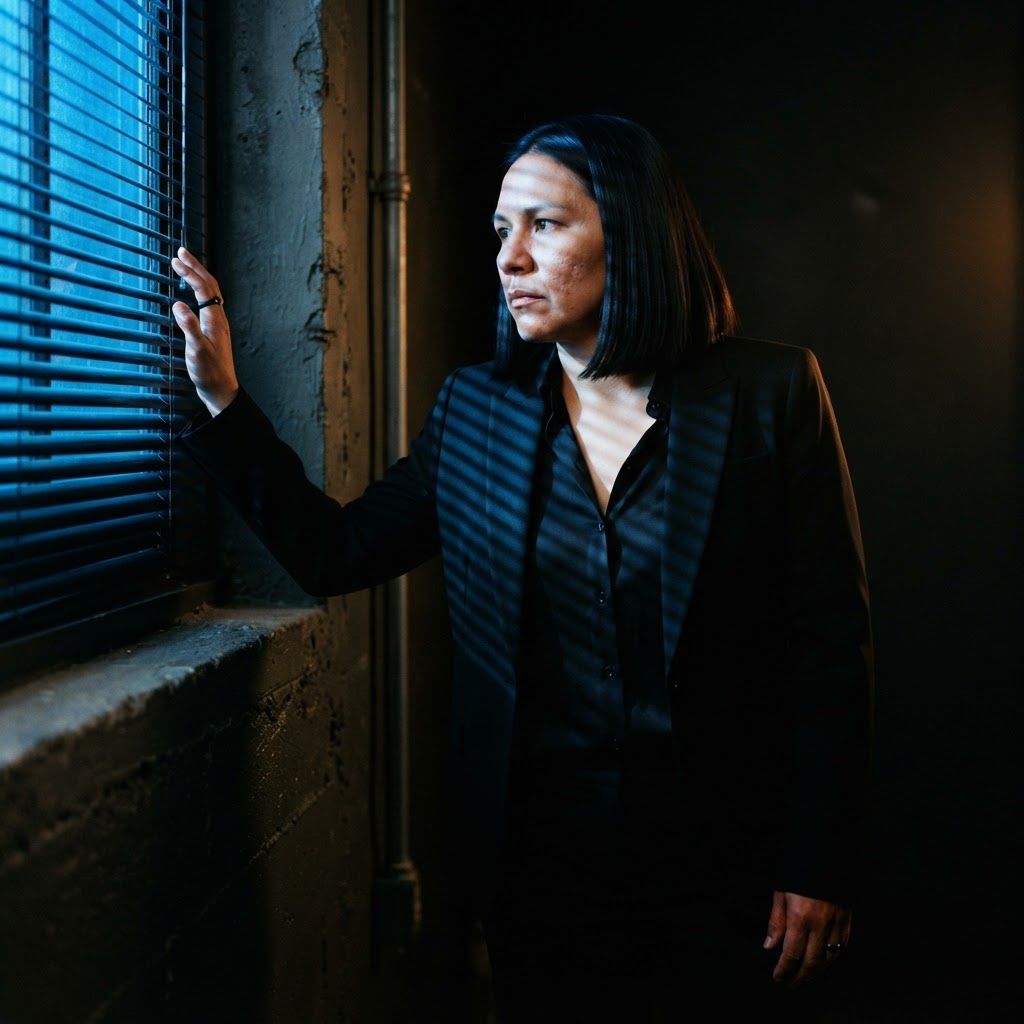
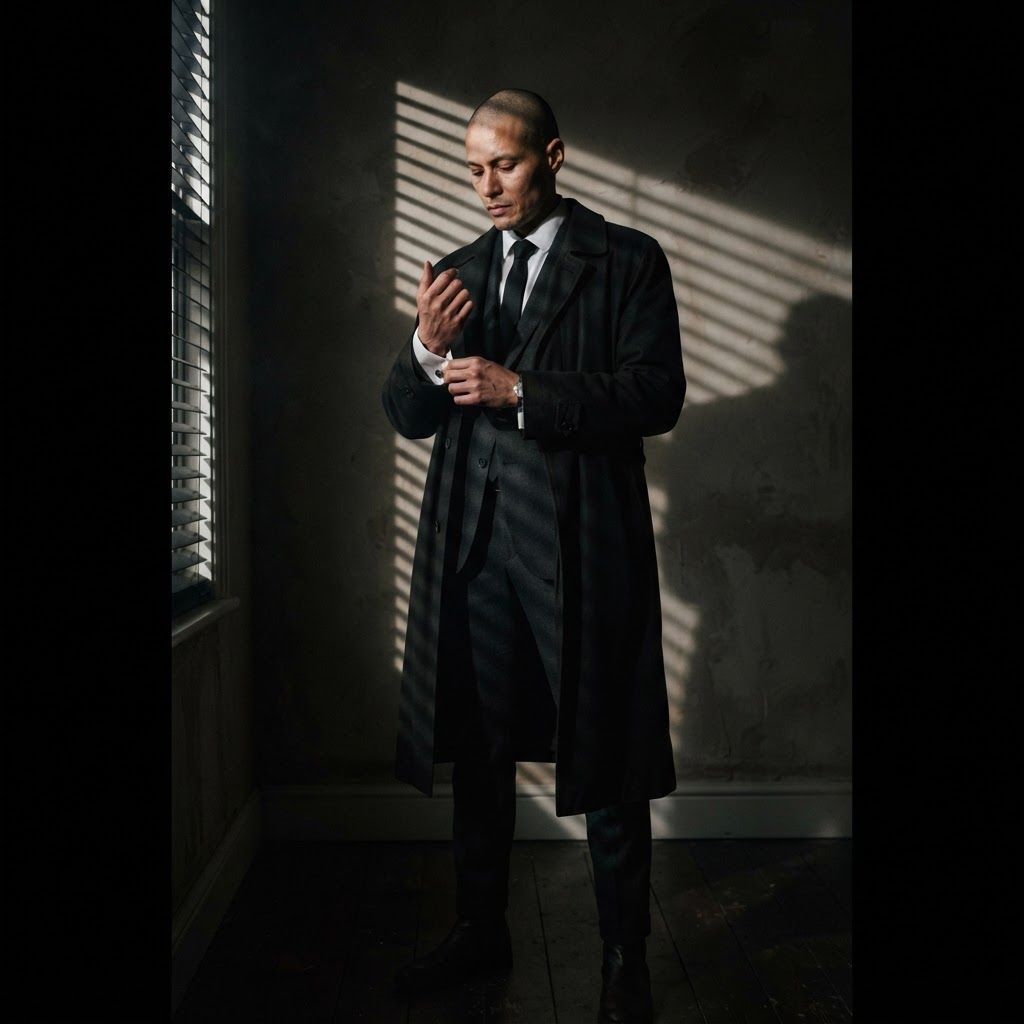
Striped blind shadows are one of the clearest film noir style markers. They cut the face and body into light and dark, which makes even a plain wall feel tense. The pattern suggests watching, hiding, and being trapped.
This setup is strong for a half-body portrait because you can show the face, jacket, and shadow pattern together. Make sure the stripes cross key features without hiding both eyes. If the lines are too thick or too soft, the effect loses its sharp crime-drama edge.
Stand close to a wall with your body turned slightly sideways. Aim a hard light through blinds, a slatted shade, or a striped cutout. Wear a suit, blouse, dark coat, or fitted jacket. Keep the background simple. Avoid soft room light that washes out the stripes.
Choose a photo to create your version
Rainy Alley Stakeout
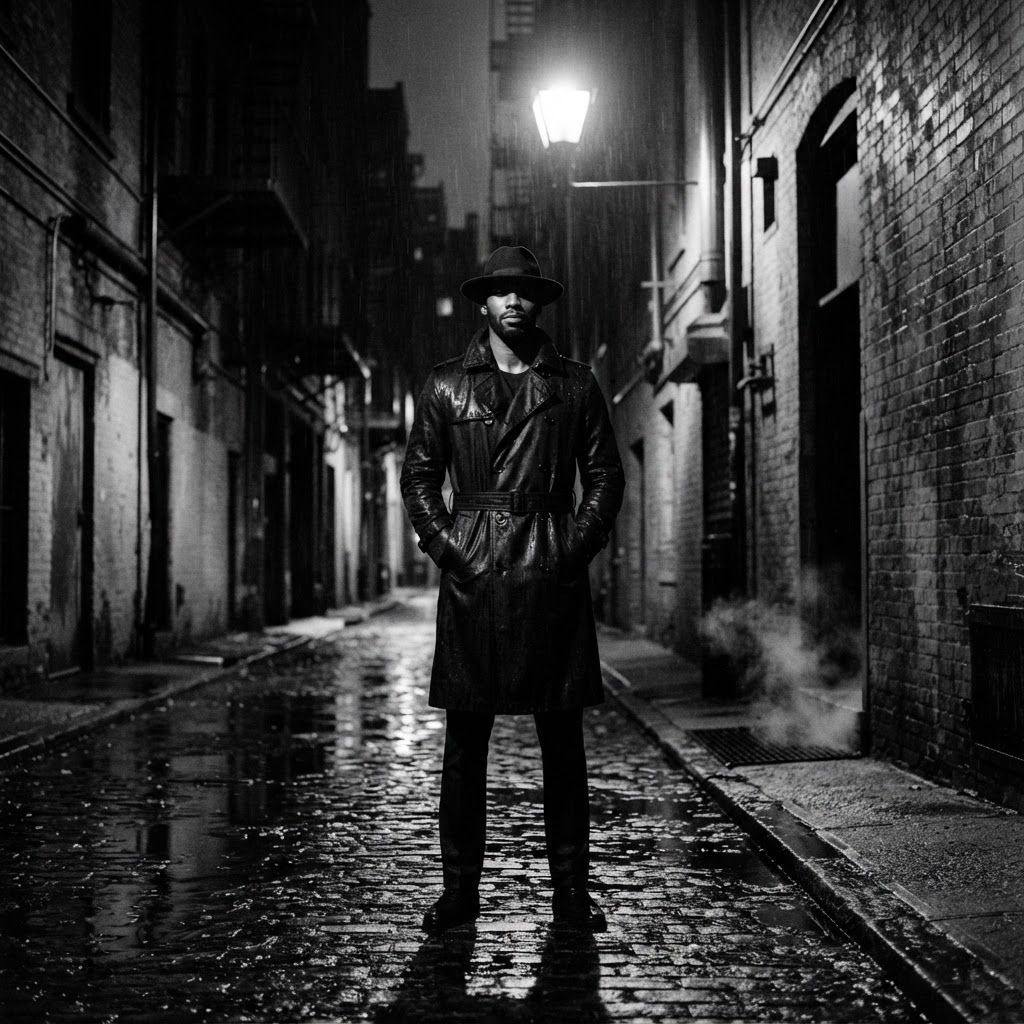
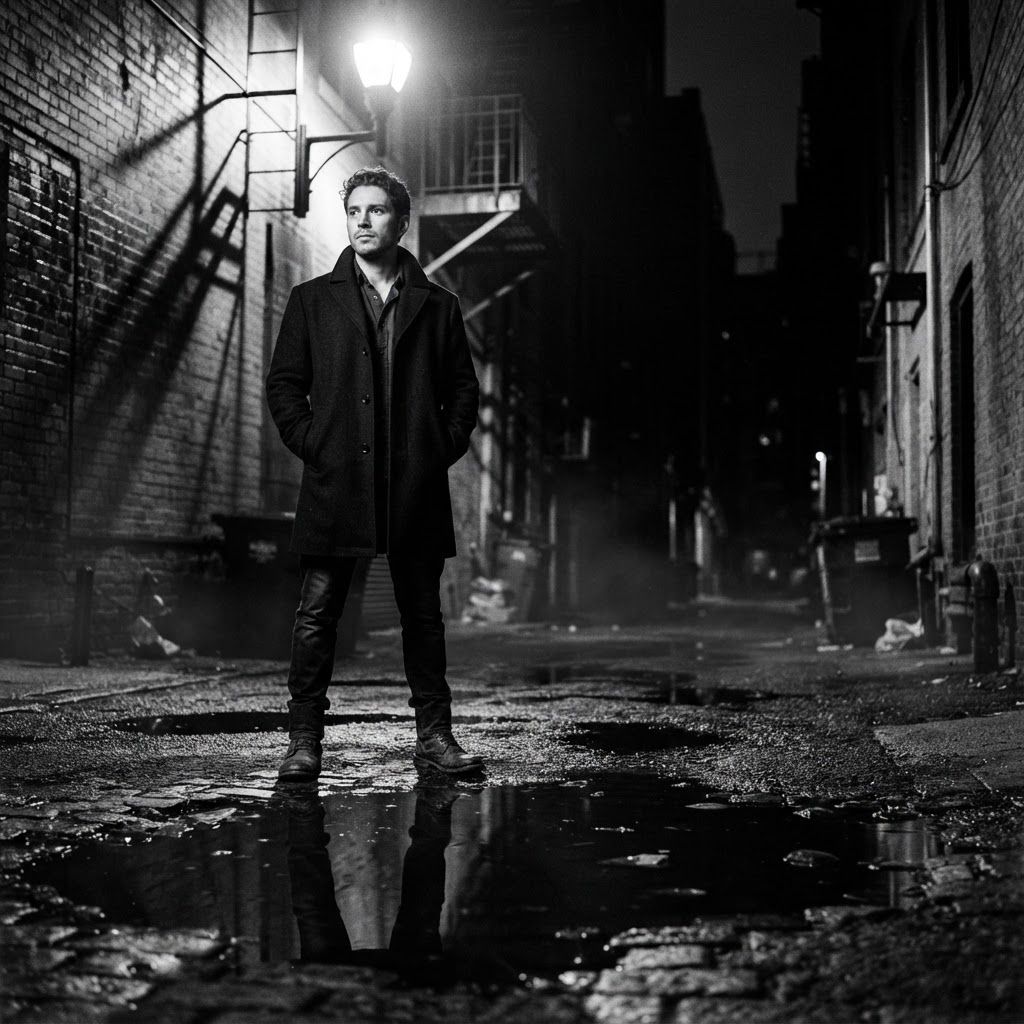
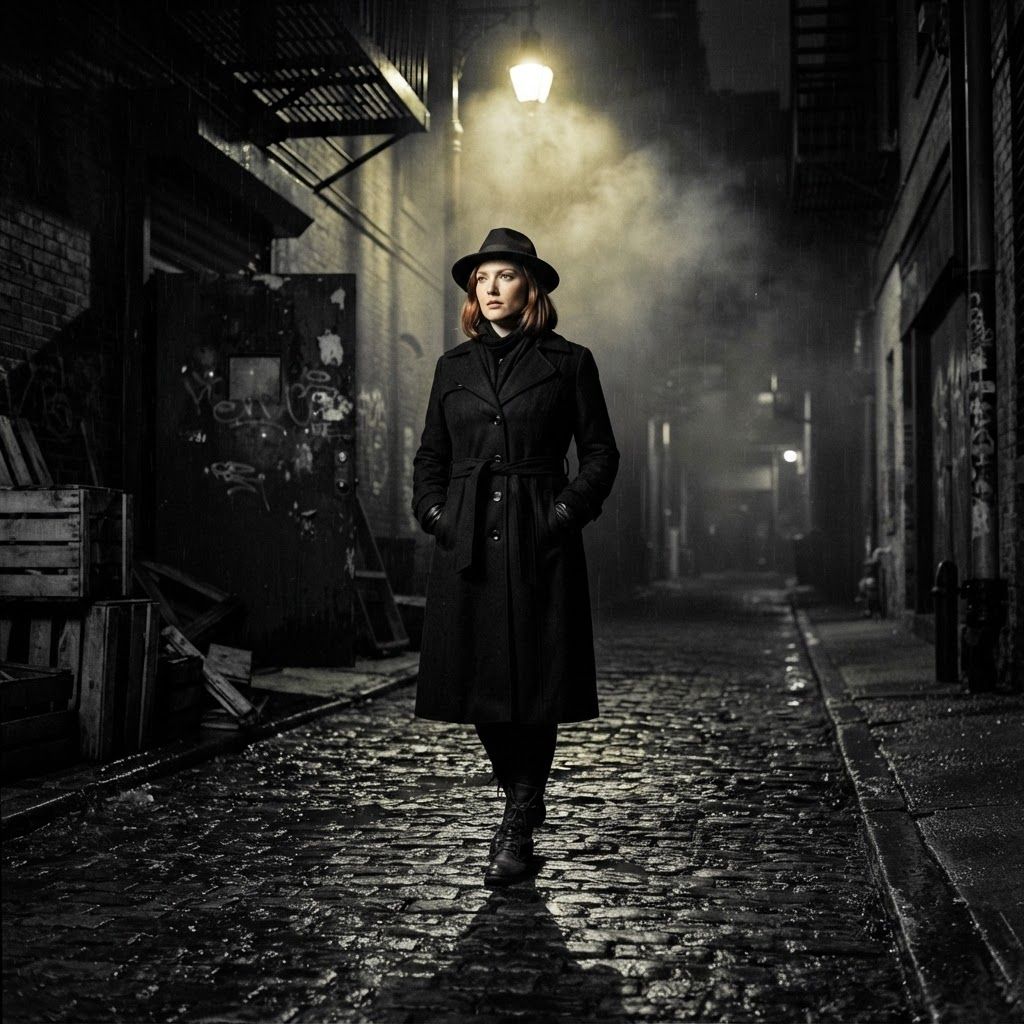
A rainy alley gives noir and neo-noir a full scene. Wet pavement reflects streetlight, and the lone body shape becomes the center of the frame. It feels like you are waiting for the next clue, not posing for a clean portrait.
This idea works when you want scale, atmosphere, and movement around you. Keep your stance still and grounded so the rain, shadows, and reflections can do the drama. Hands in coat pockets often look better than loose arms because they create a guarded silhouette.
Stand under or near one streetlamp with your feet apart and shoulders relaxed. Wear a long coat, dark boots, and simple layers. Let wet ground, brick walls, or trash cans add texture. Avoid bright umbrellas, crowded backgrounds, and daylight that kills the midnight mood.
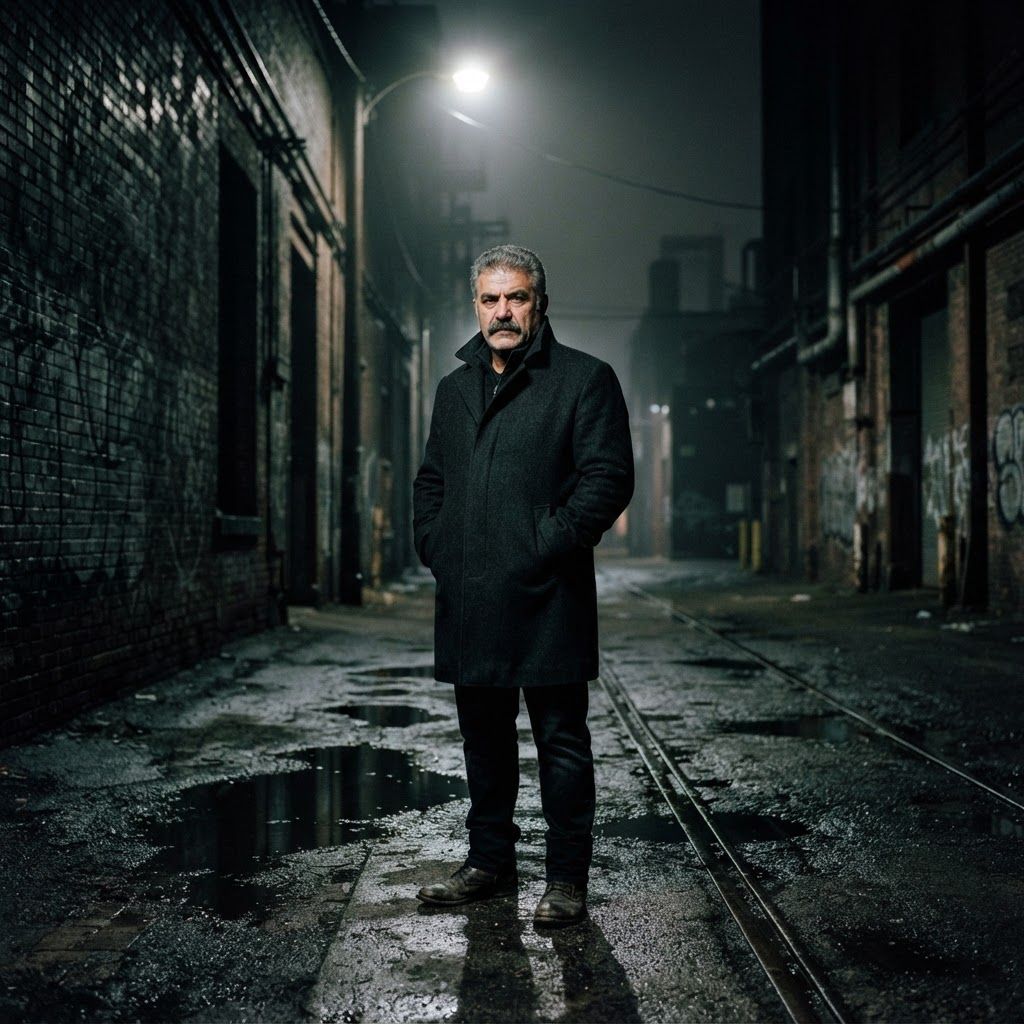
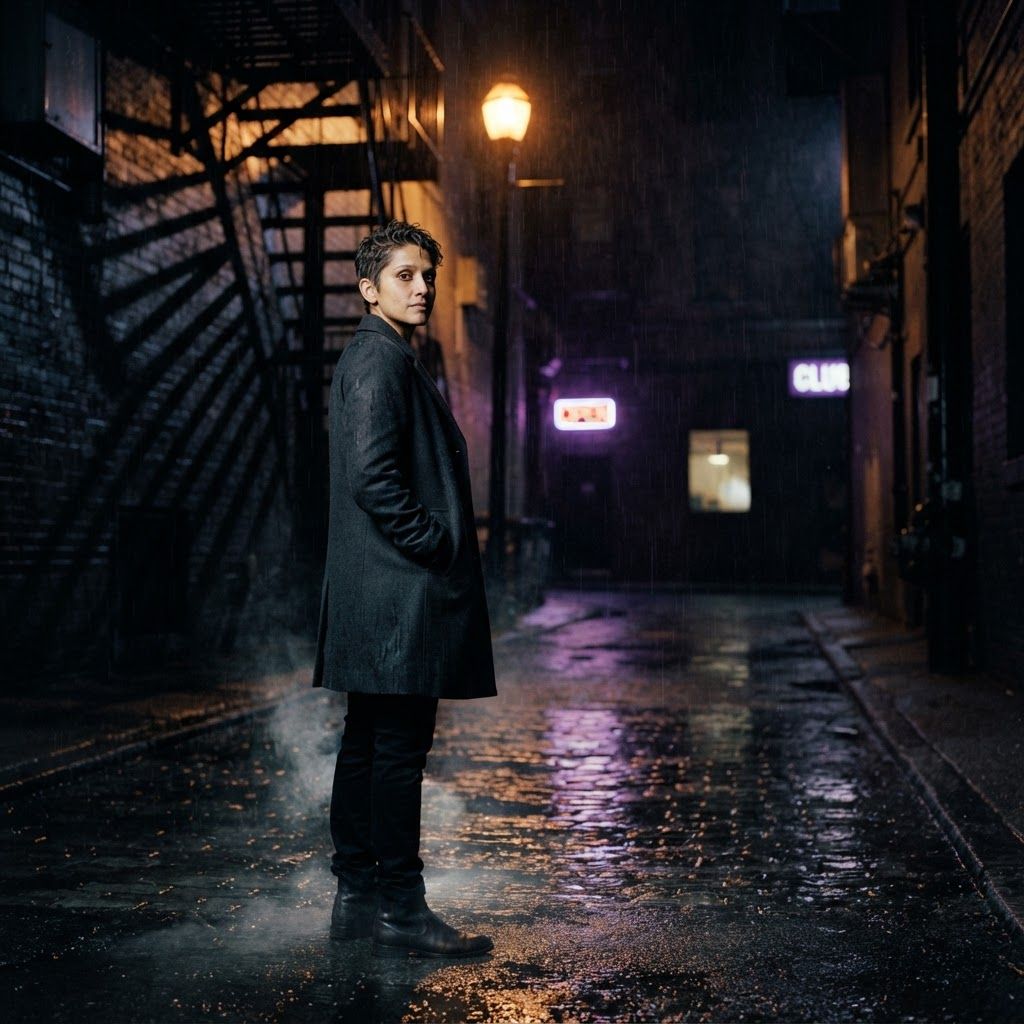
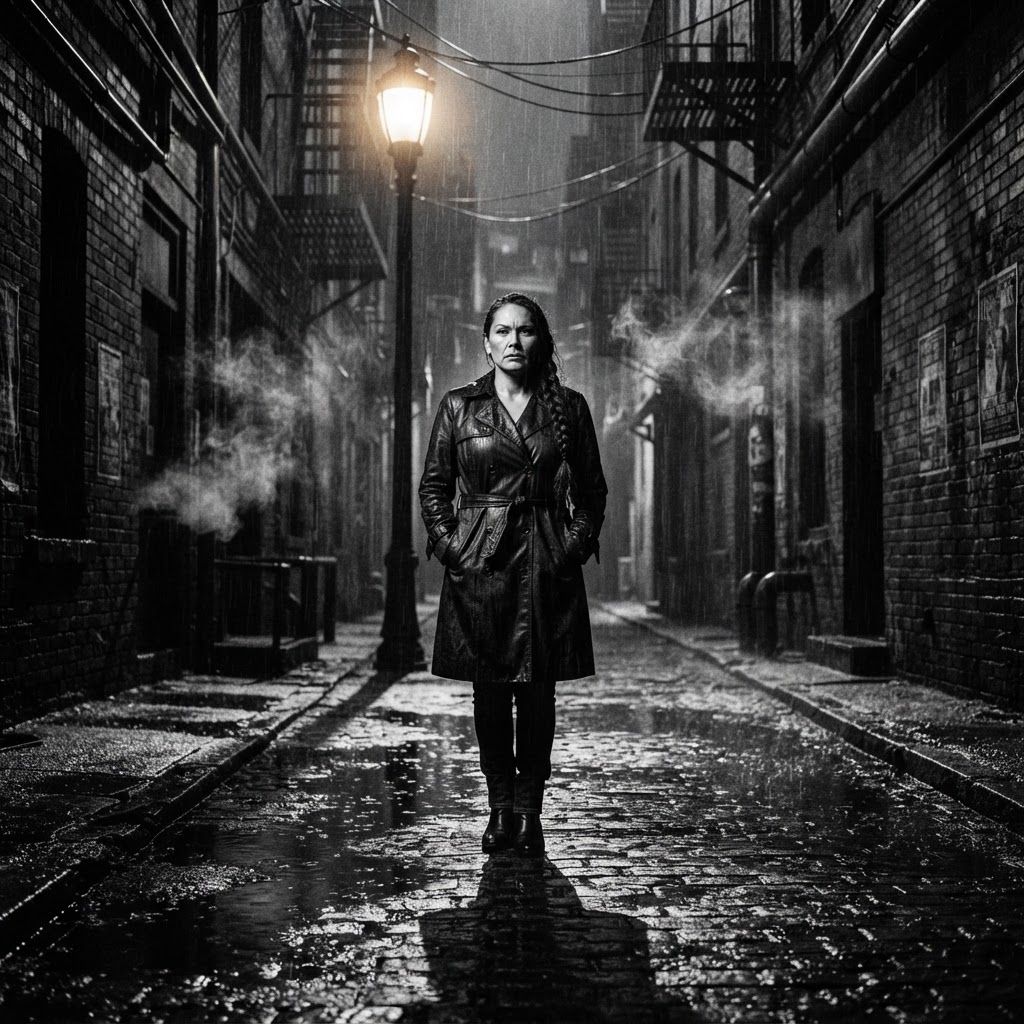
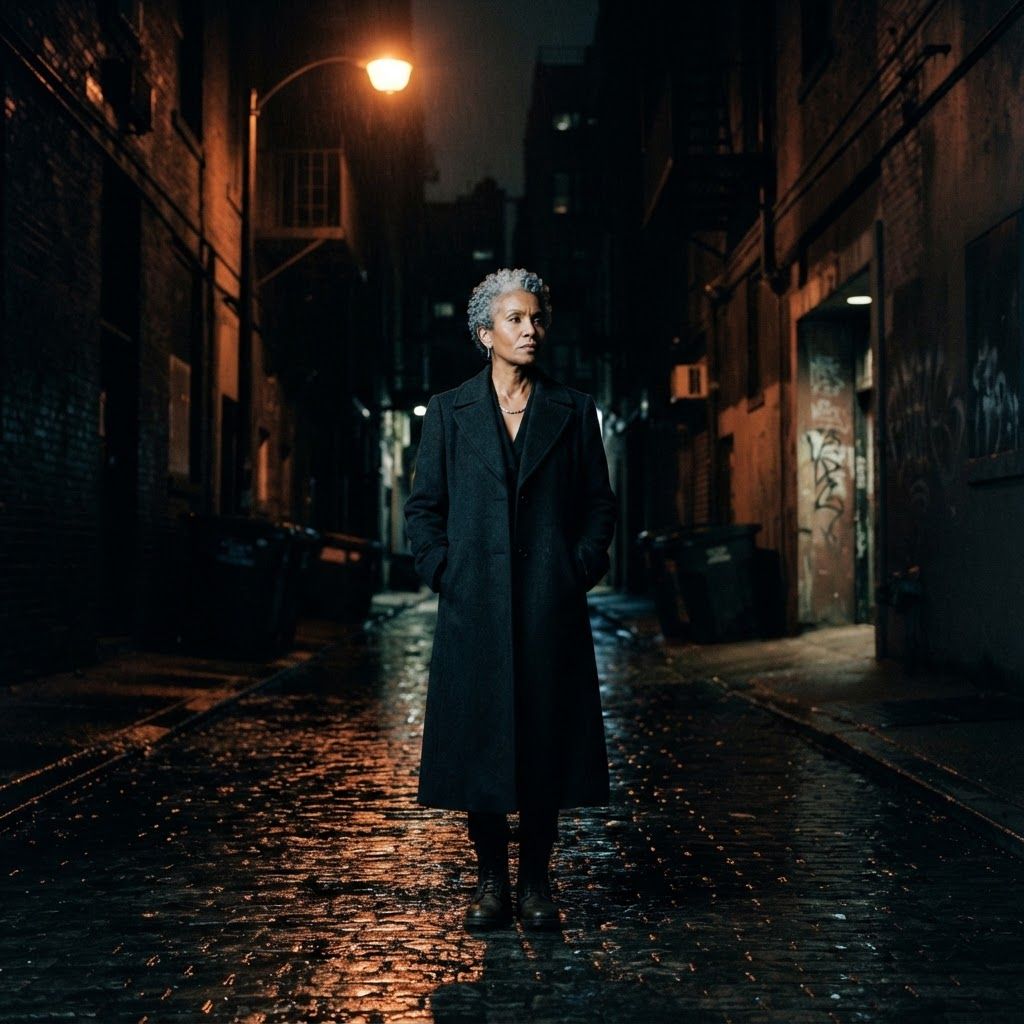
Choose a photo to create your version
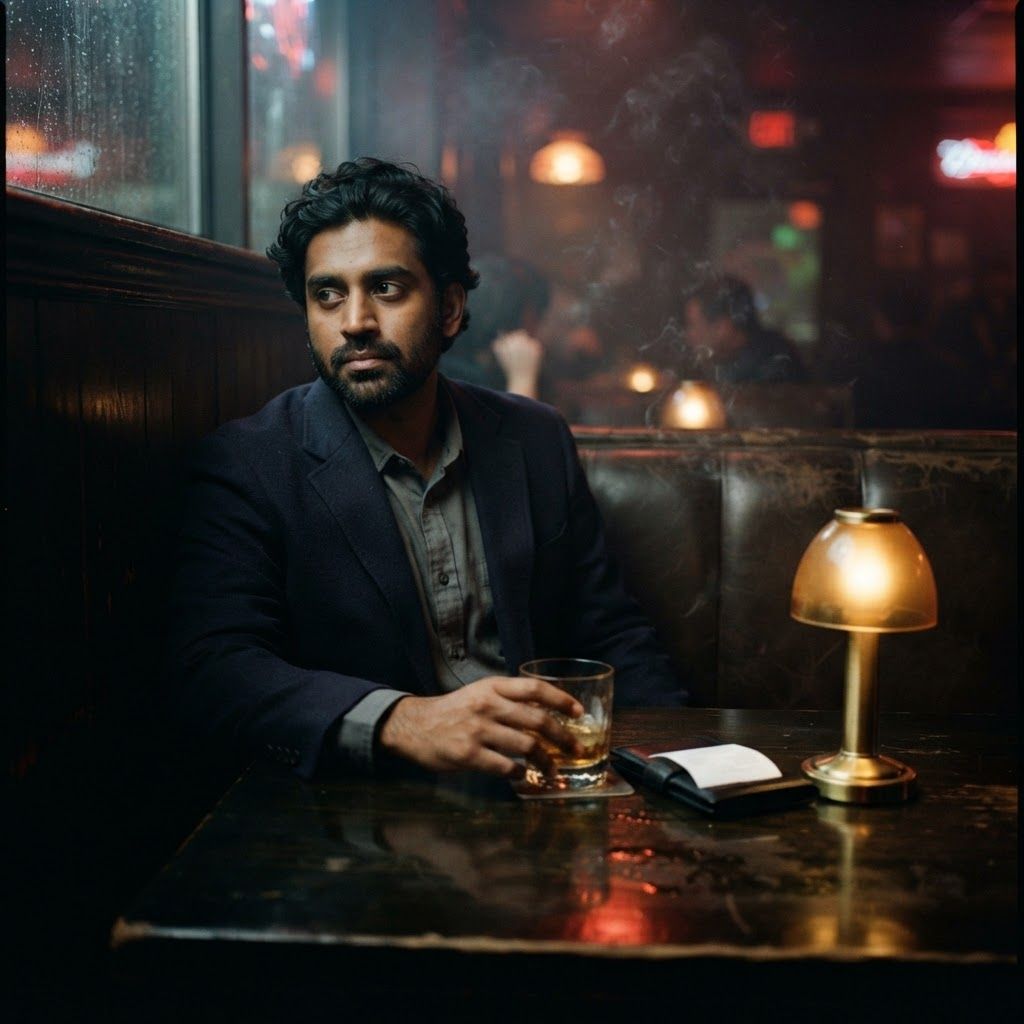
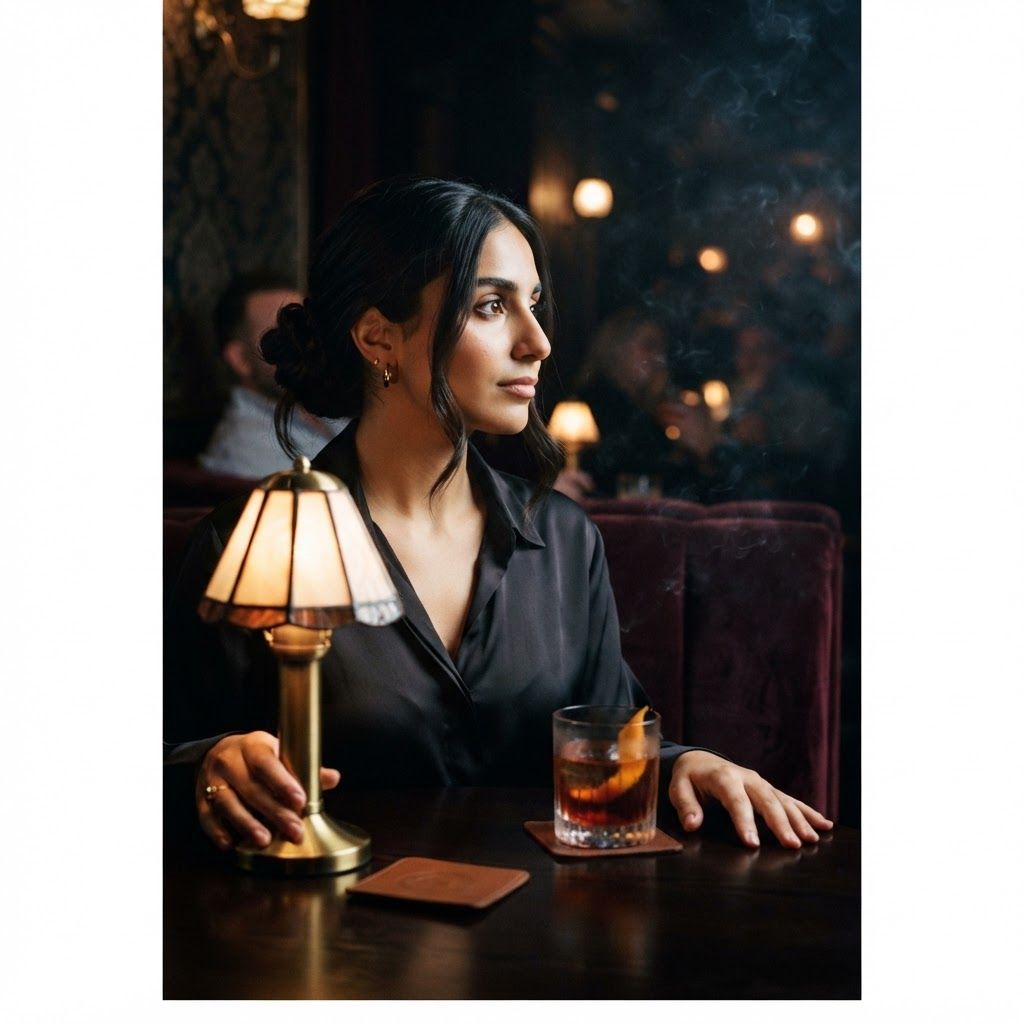
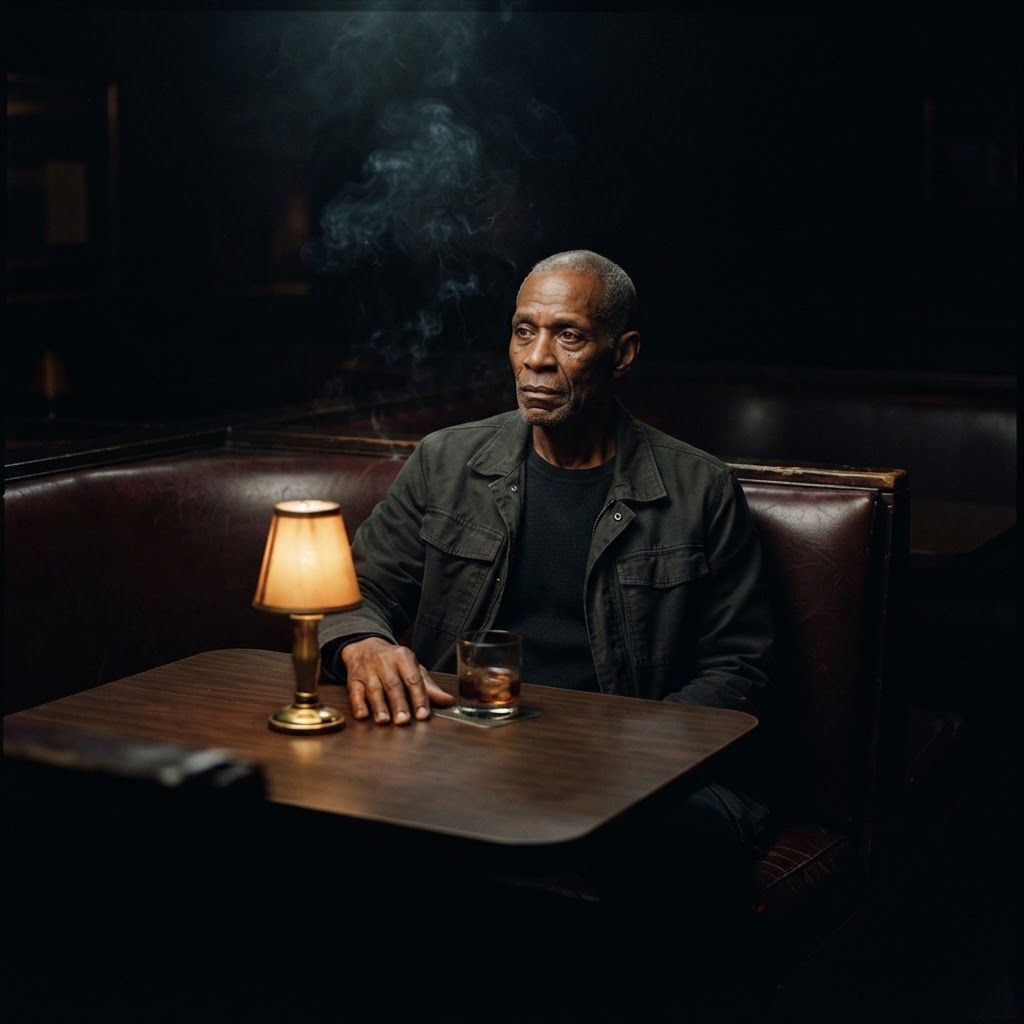
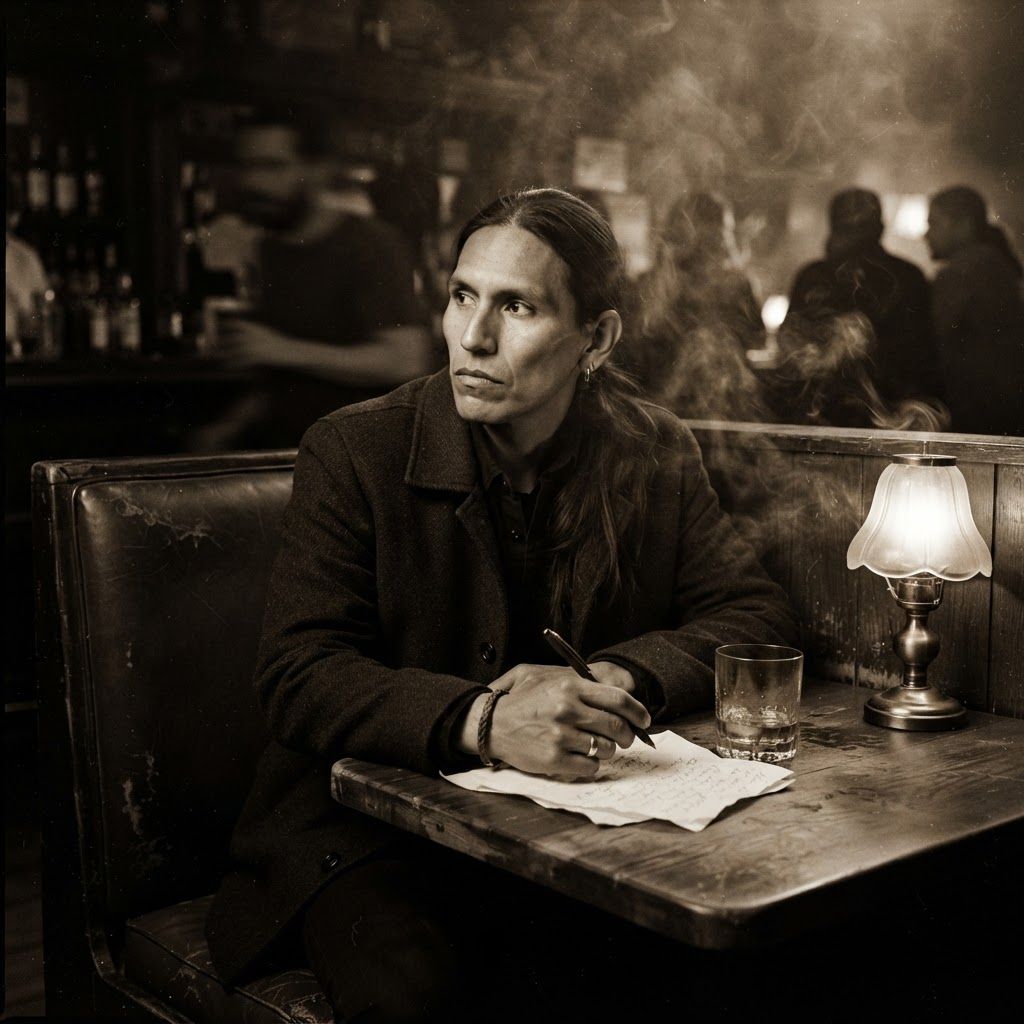
Smoky Bar Booth
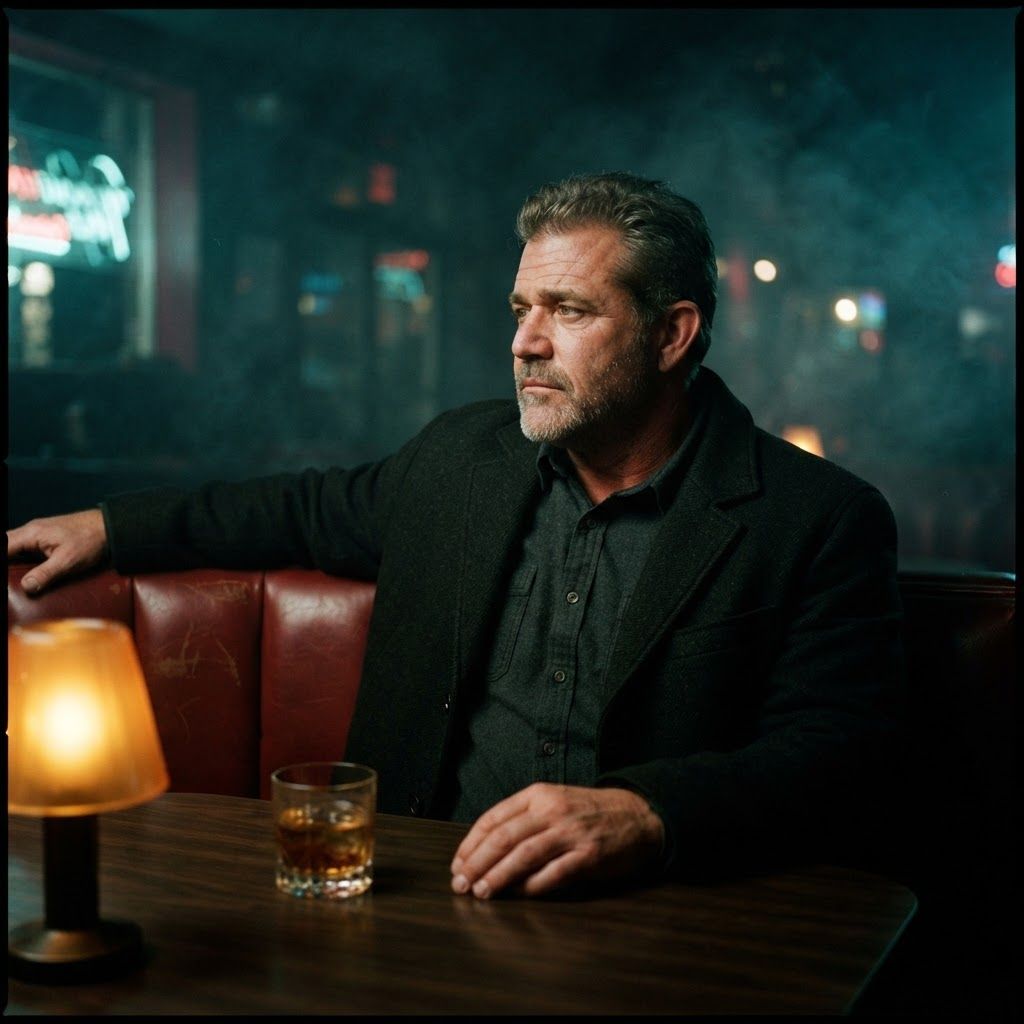
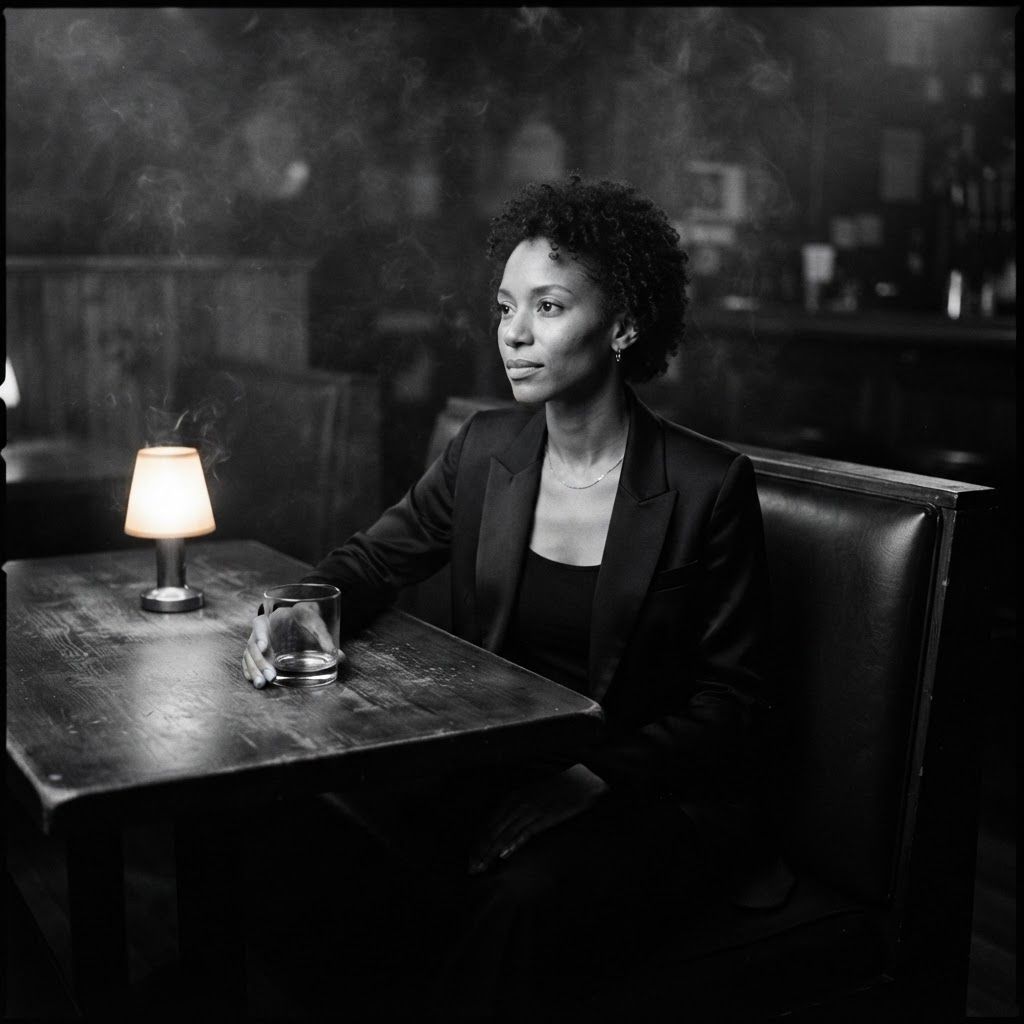
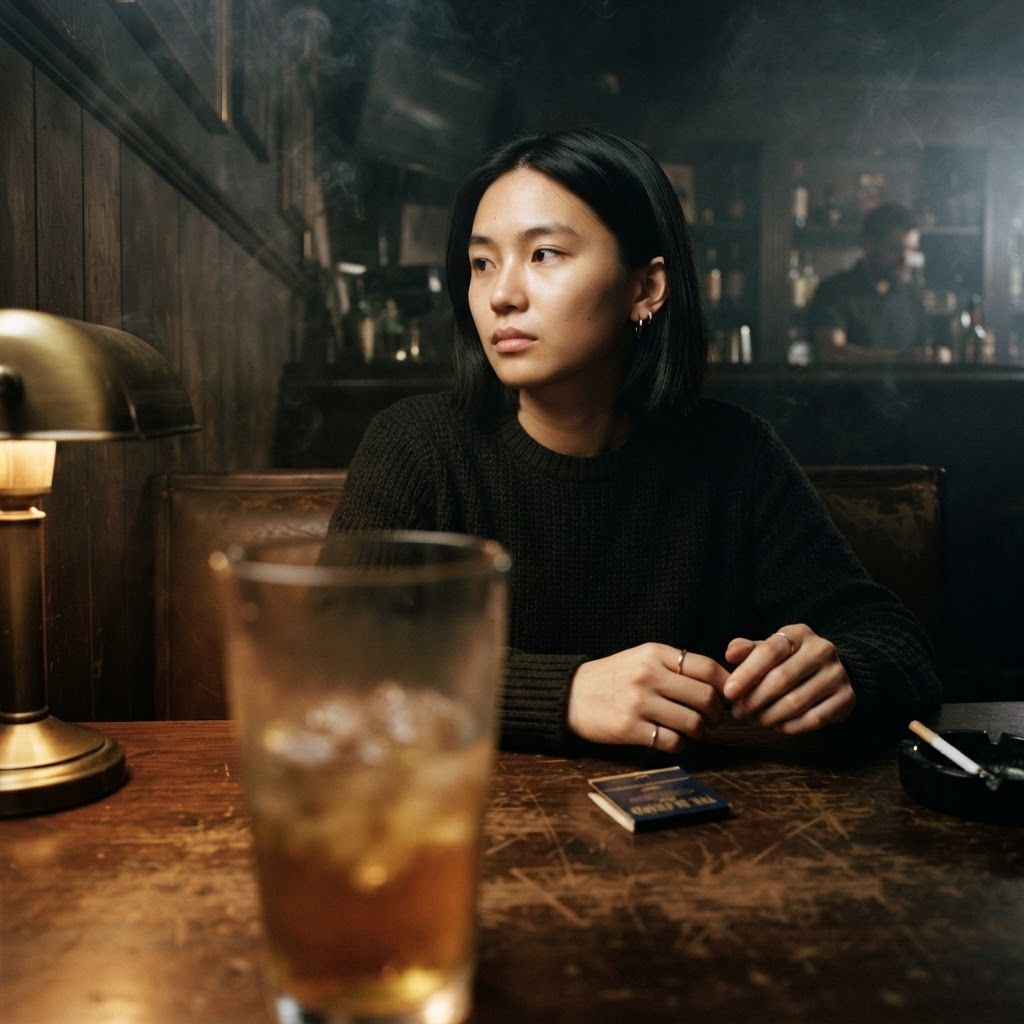
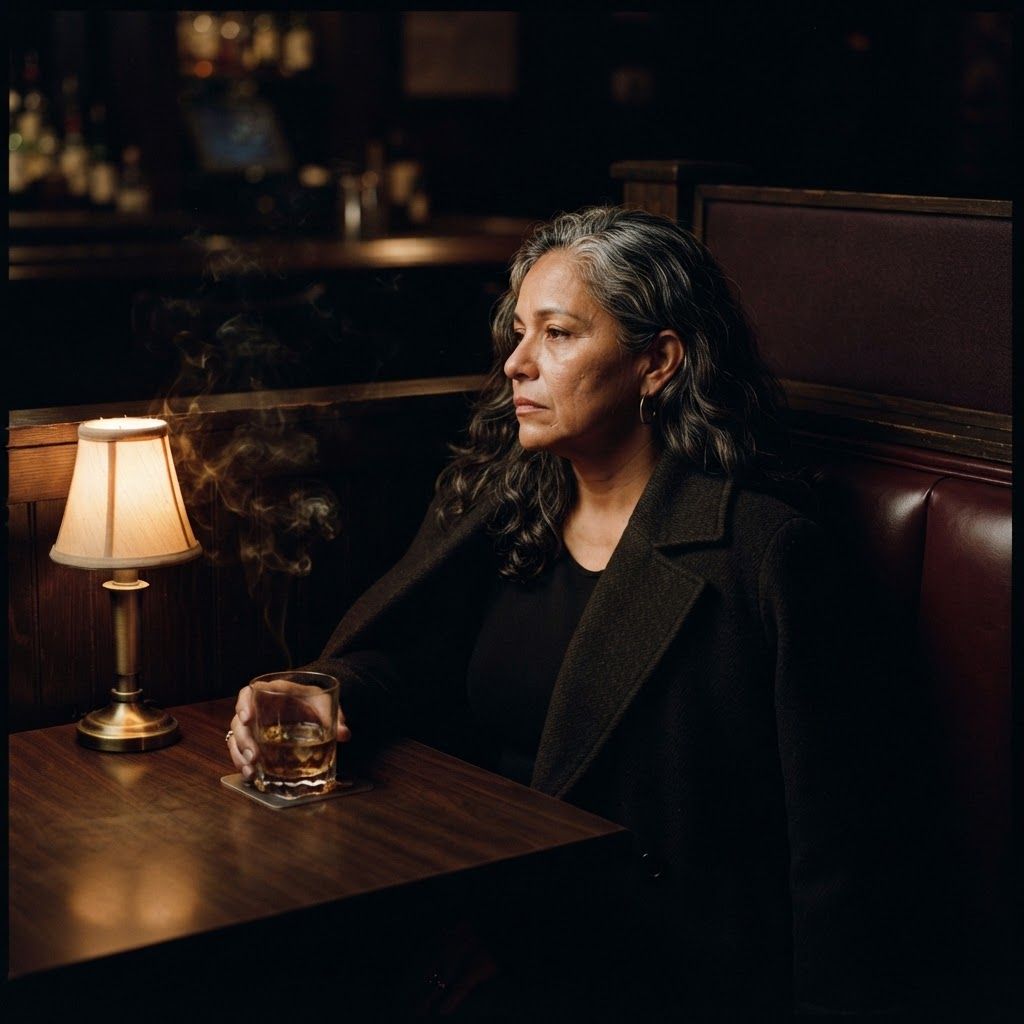
A smoky bar booth brings in the weary side of noir. You are not running or accusing anyone. You are thinking. Low light, a small table lamp, and a glass nearby can make the moment feel private and heavy.
This setup needs restraint. The face should still be the main point, not the drink or smoke. Angle your gaze away from the glass, as if you are listening to bad news. Keep the smoke soft and thin so it adds haze without covering your features.
Sit deep in a booth with one elbow near the table and your face turned away from the brightest light. Use a small warm lamp below eye level. Wear a dark jacket, open collar, or simple dress shirt. Avoid heavy smoke, cluttered tables, and a party expression.
Choose a photo to create your version
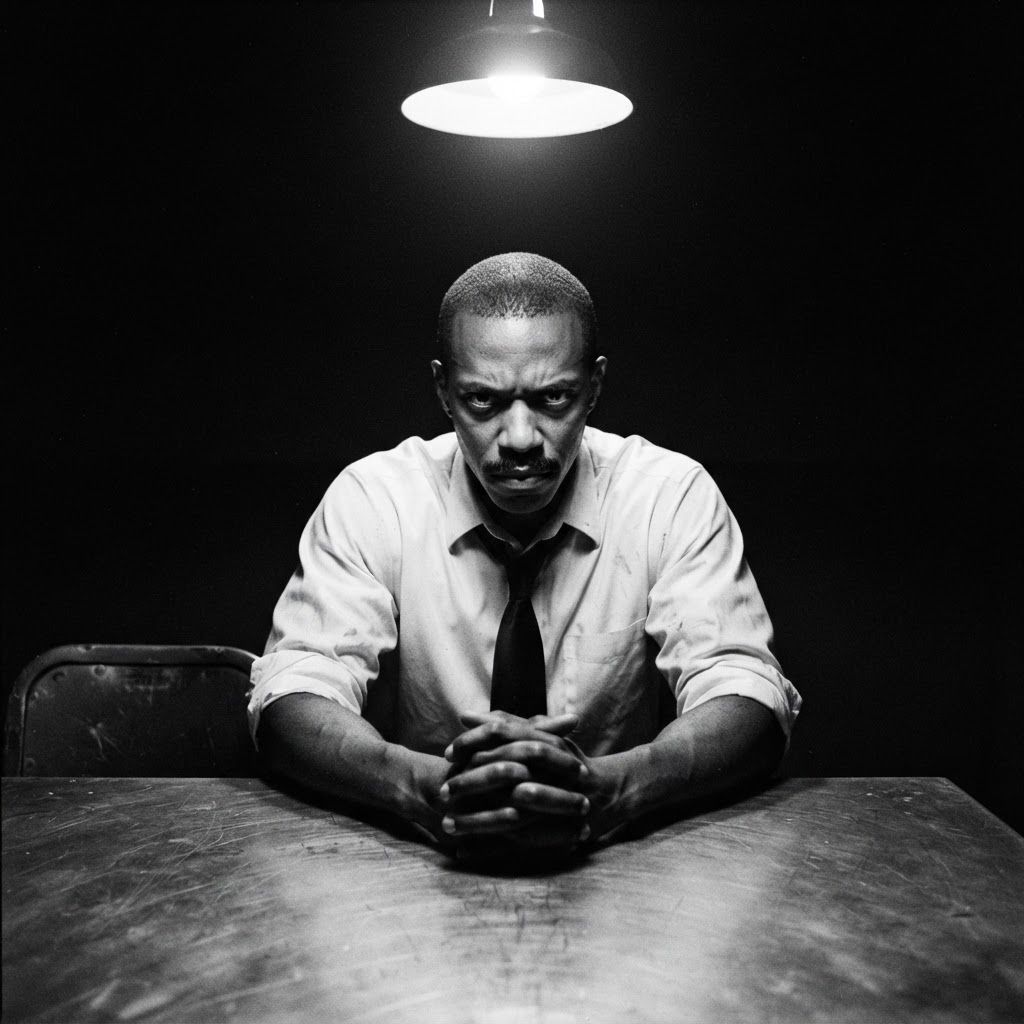
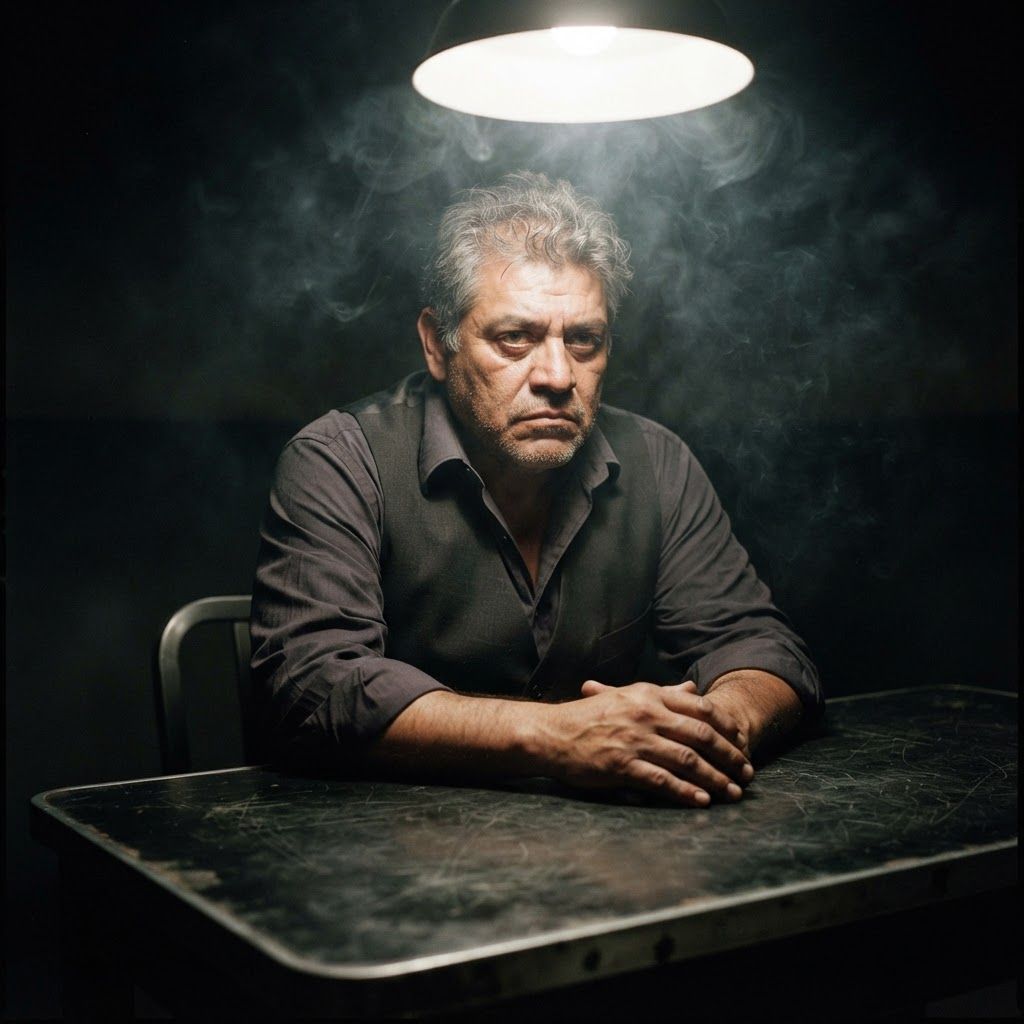
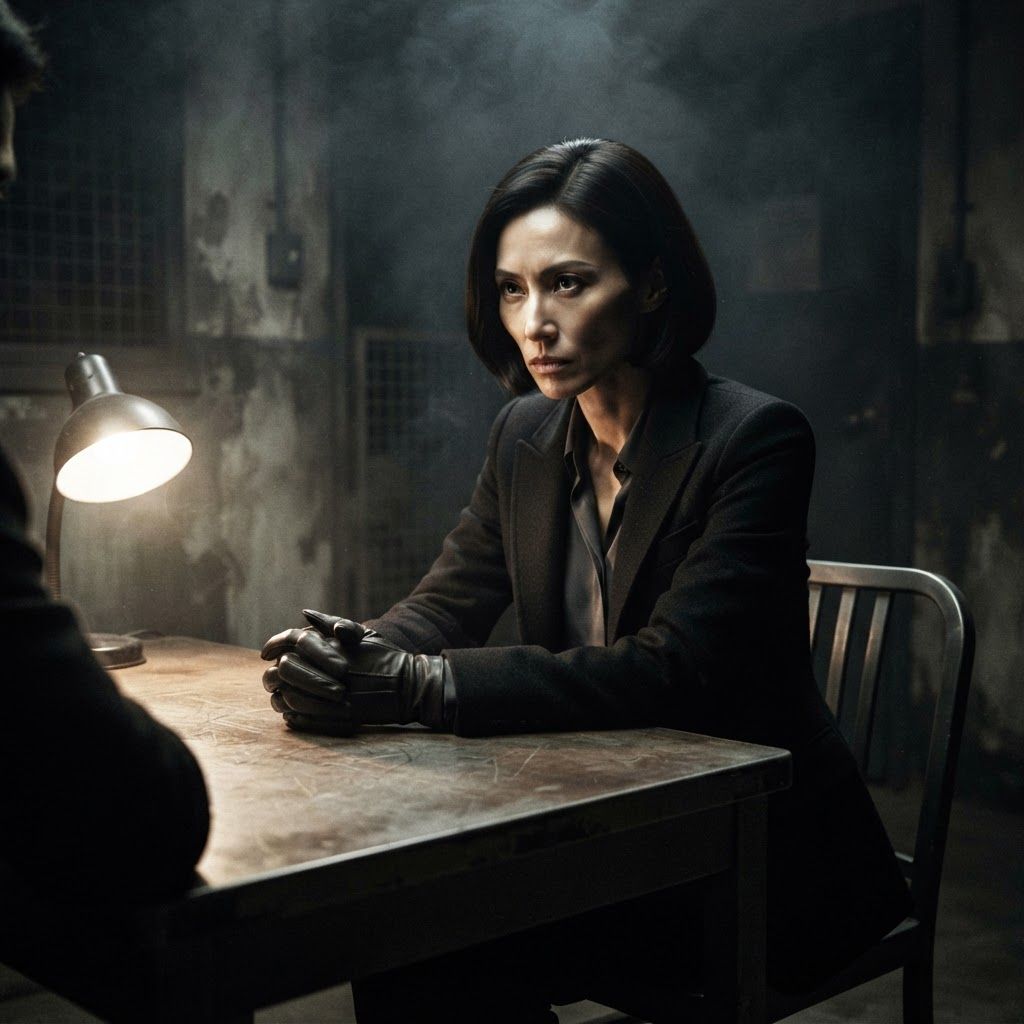
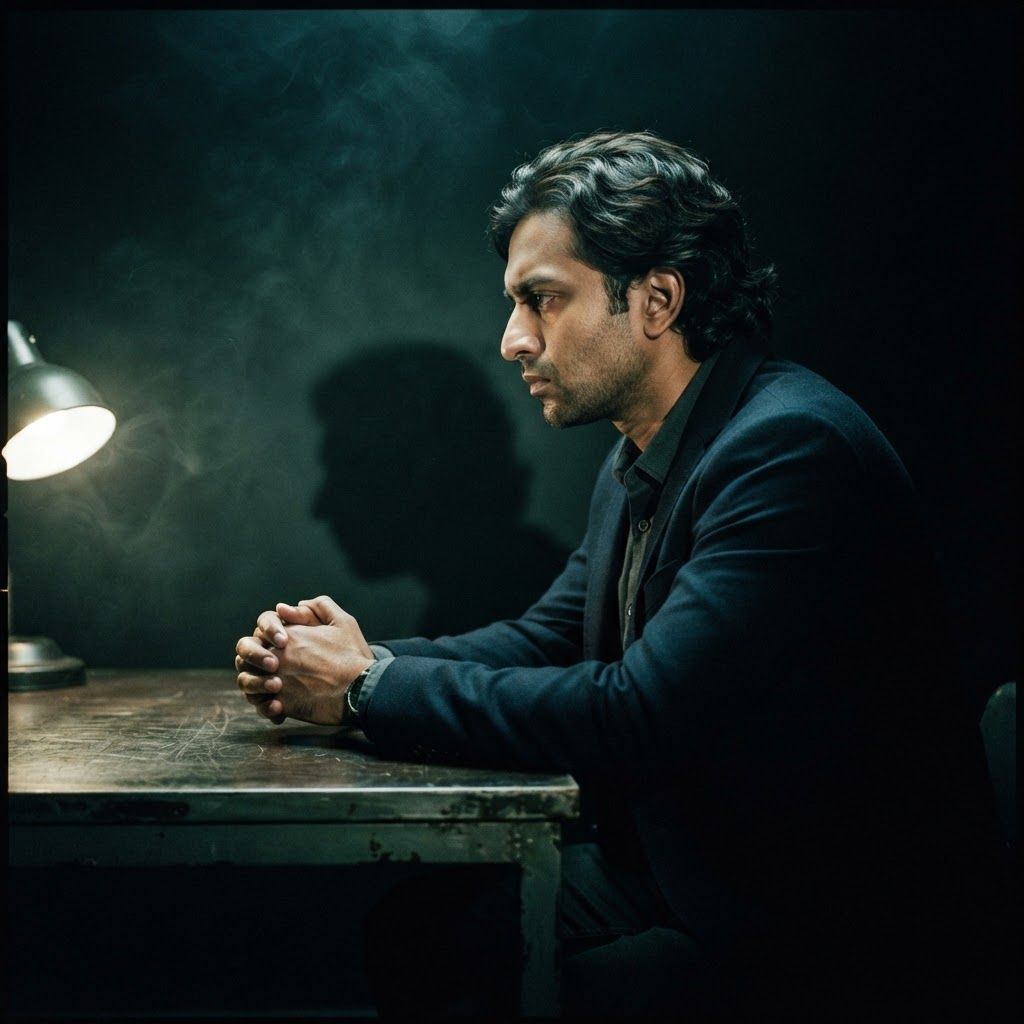
Interrogation Lamp
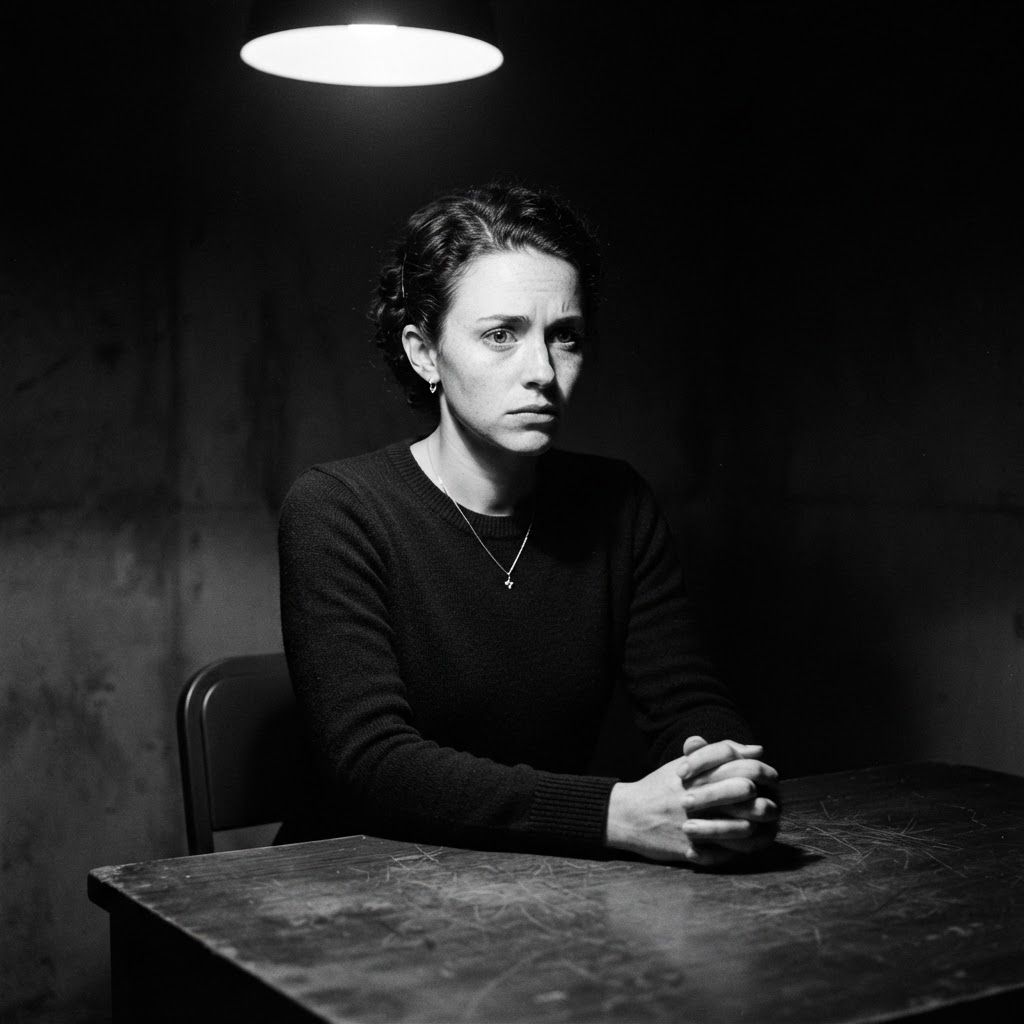
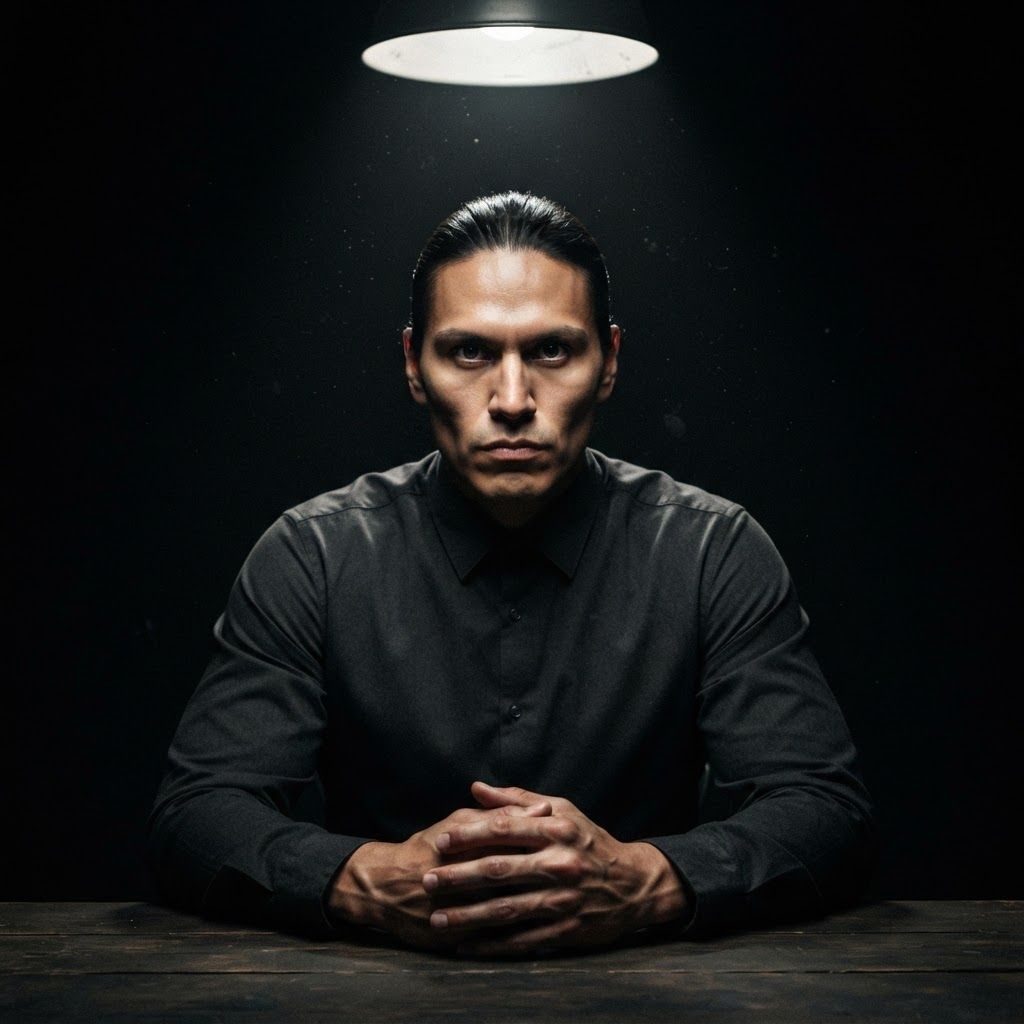
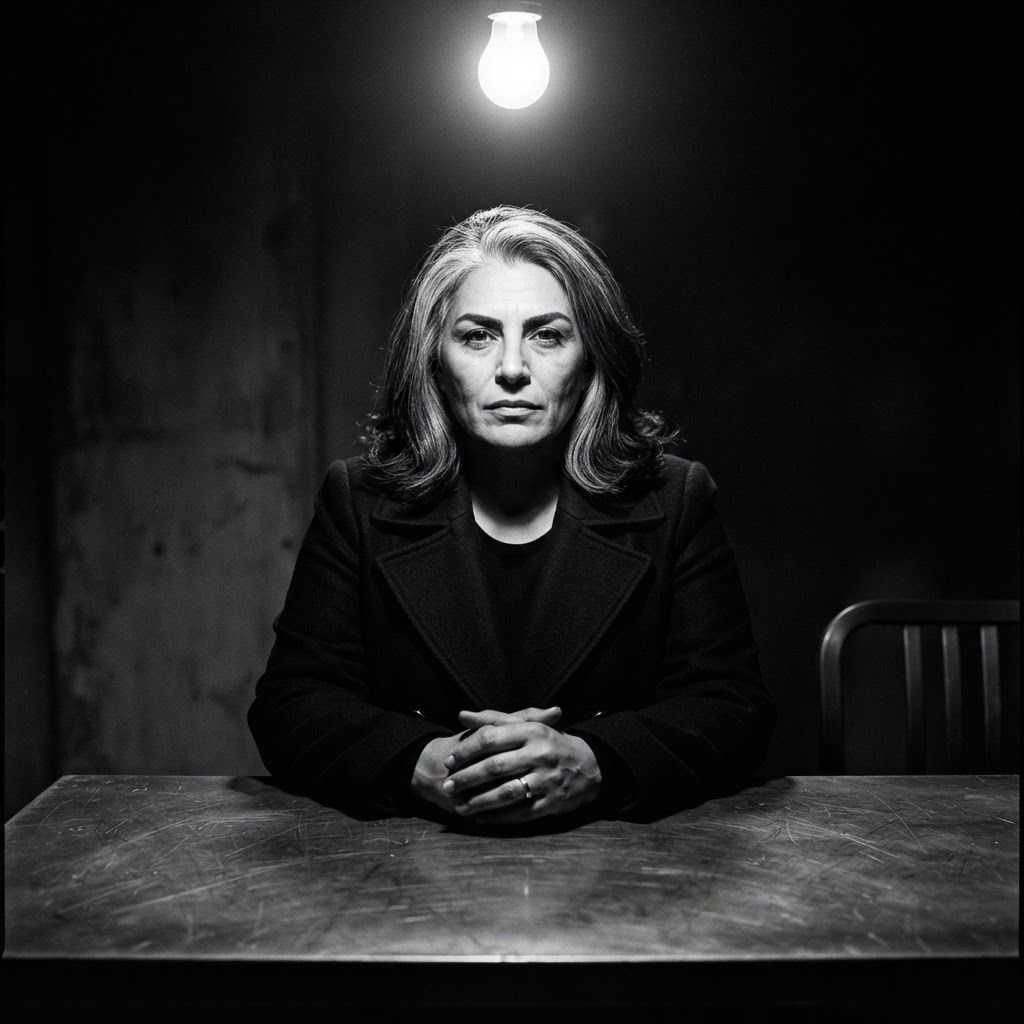
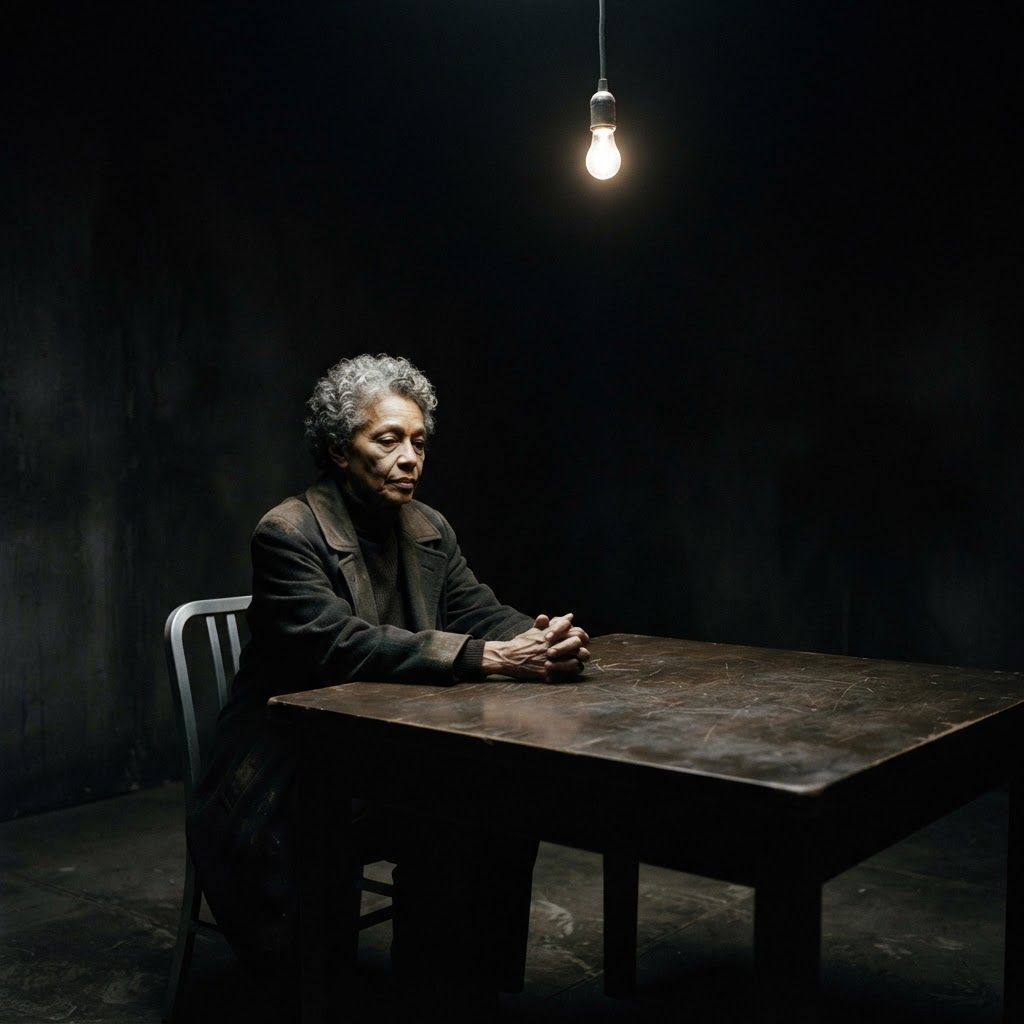
The interrogation lamp setup is about pressure. One hard light creates a small island of visibility, while the background falls into black. Your clasped hands, tight shoulders, and still face tell the story.
Choose this look when you want suspicion more than glamour. It can feel classic noir or modern crime thriller, depending on wardrobe. A plain shirt makes it raw. A suit makes it formal. The key is contrast between the bright table and the dark space around you.
Sit at a table with your hands clasped or flat in front of you. Place one bare lamp above or slightly to the side. Wear a plain shirt, loosened tie, or dark jacket. Keep the background empty and black. Avoid smiling, leaning too far back, or adding extra lights.
Choose a photo to create your version
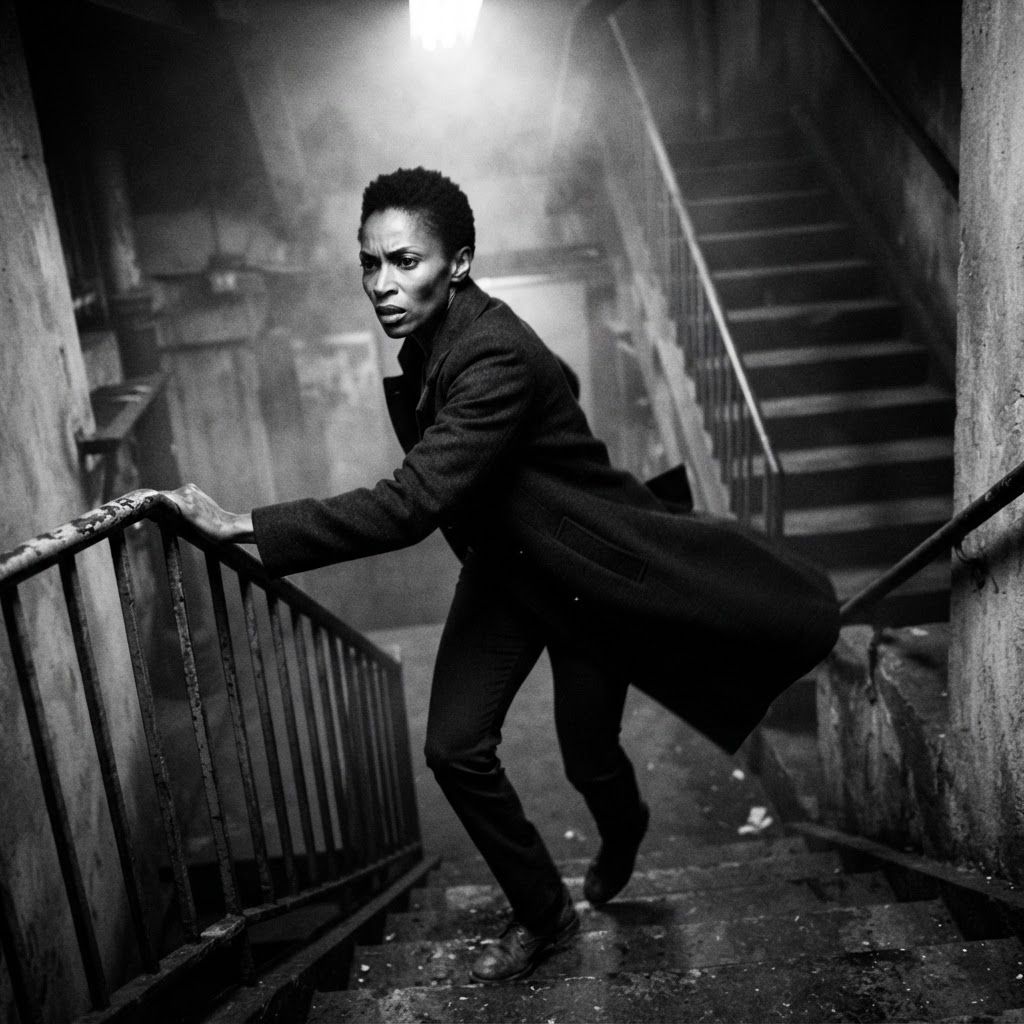
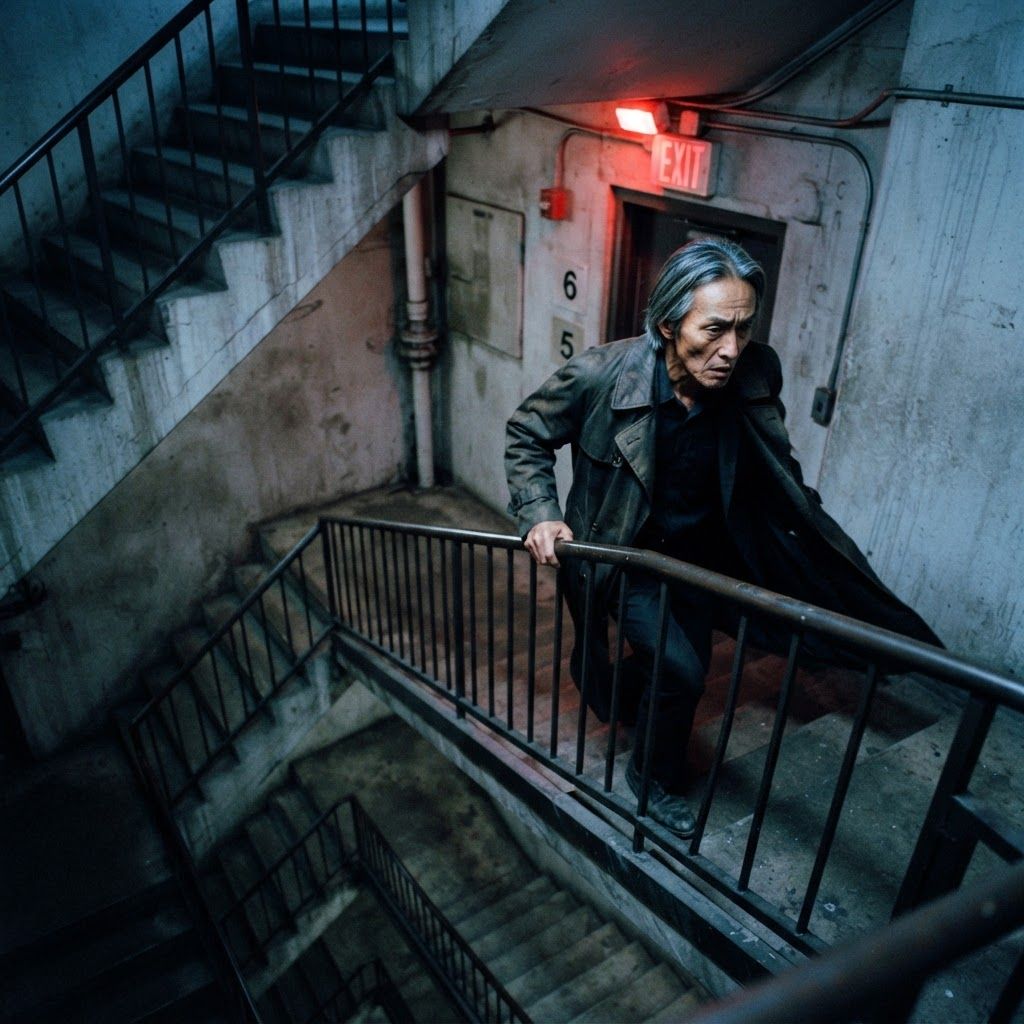
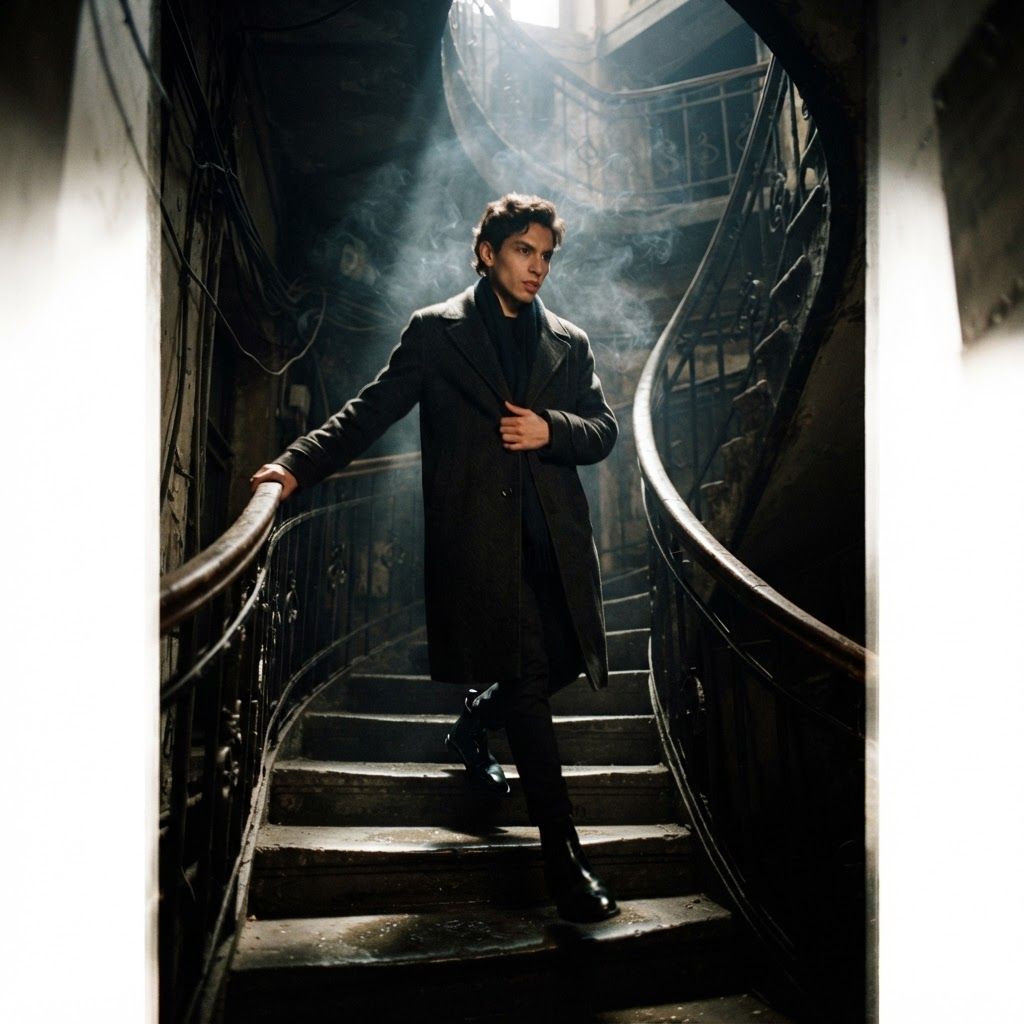
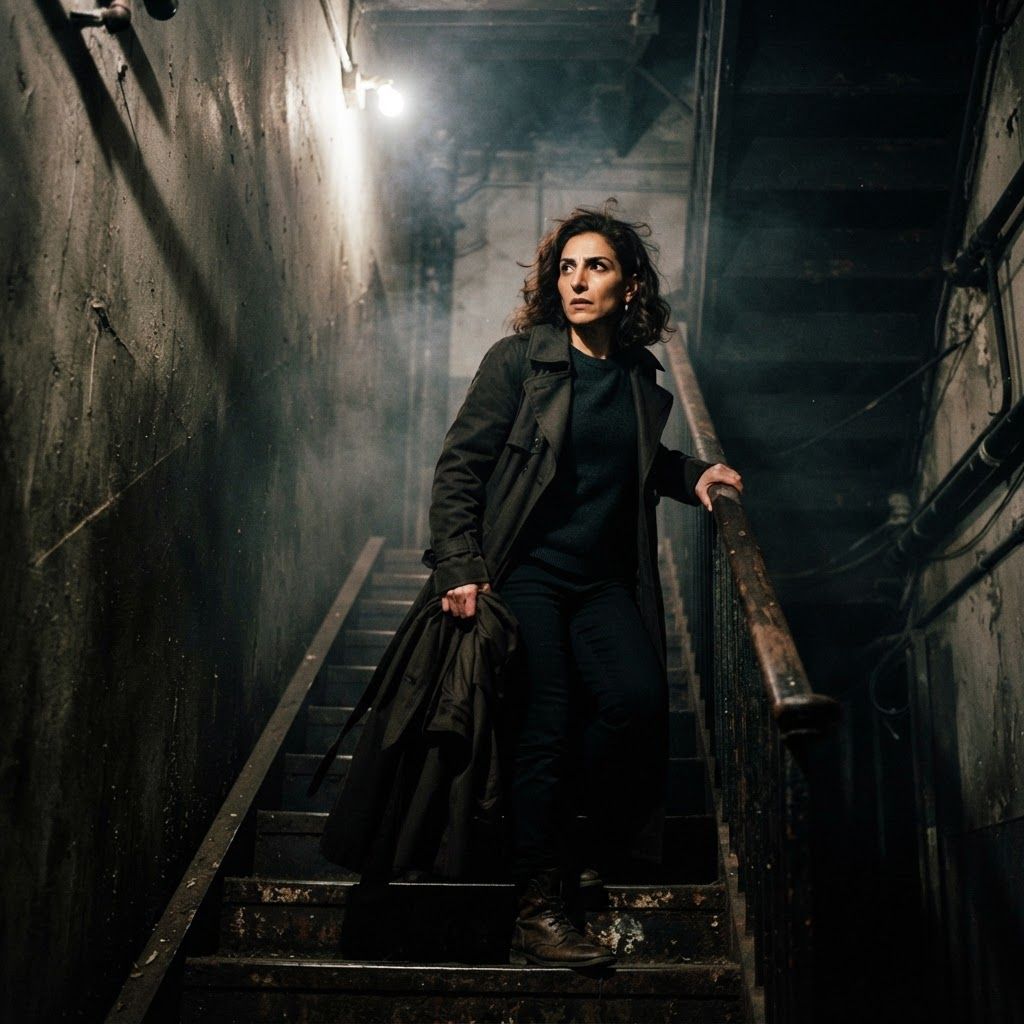
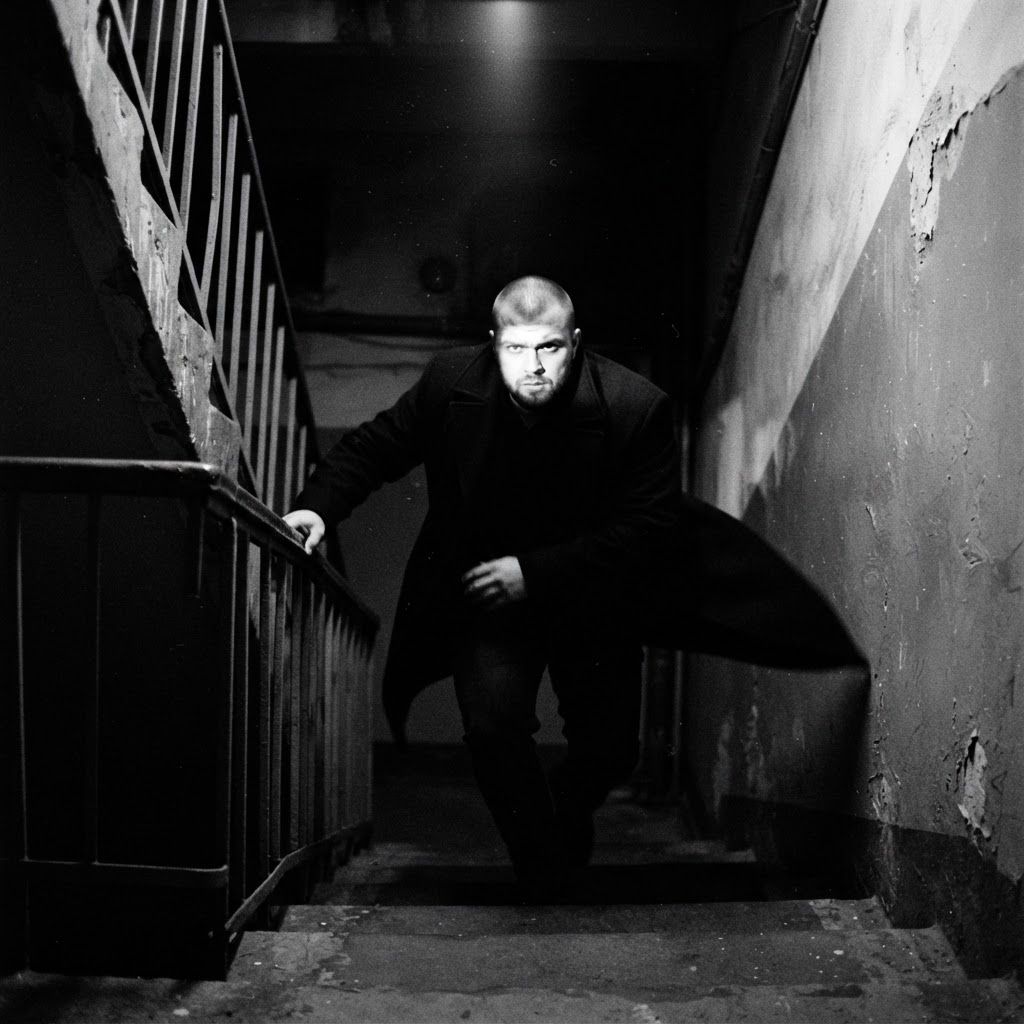
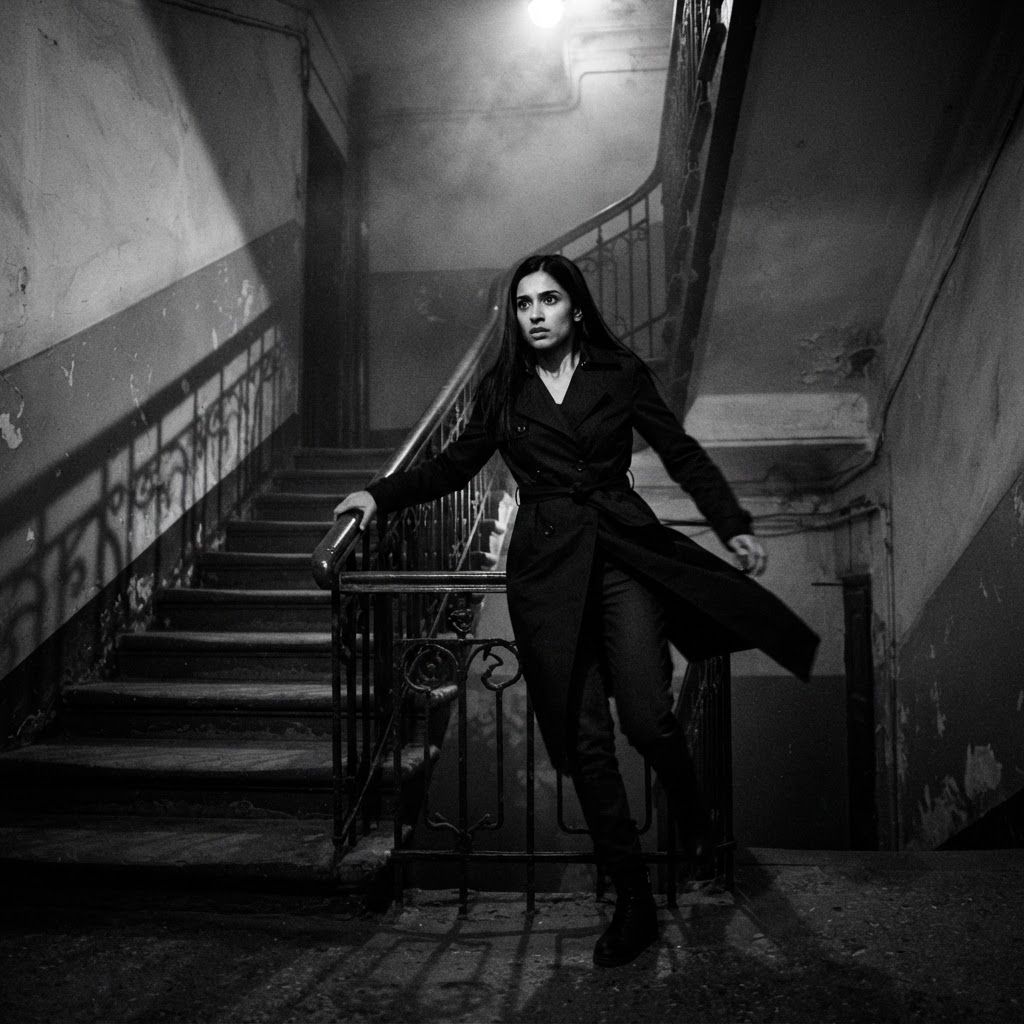
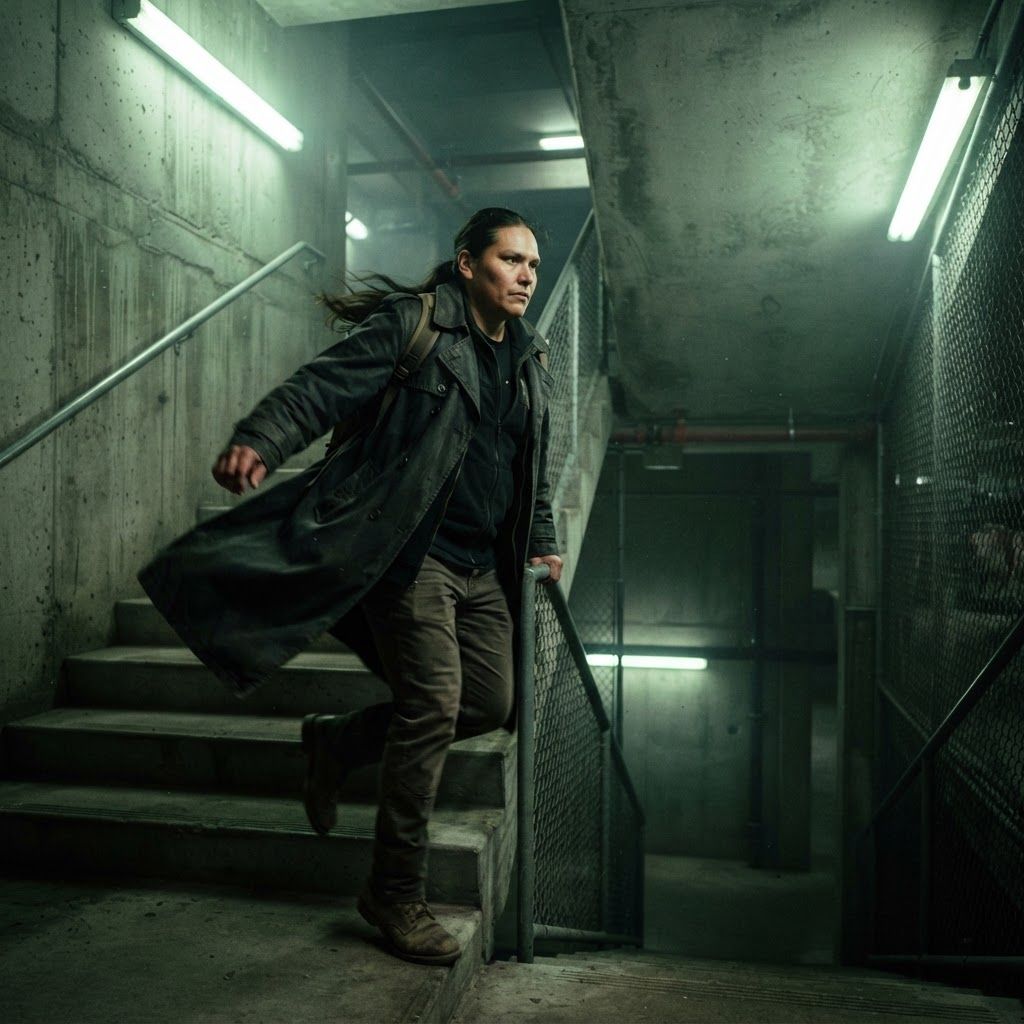
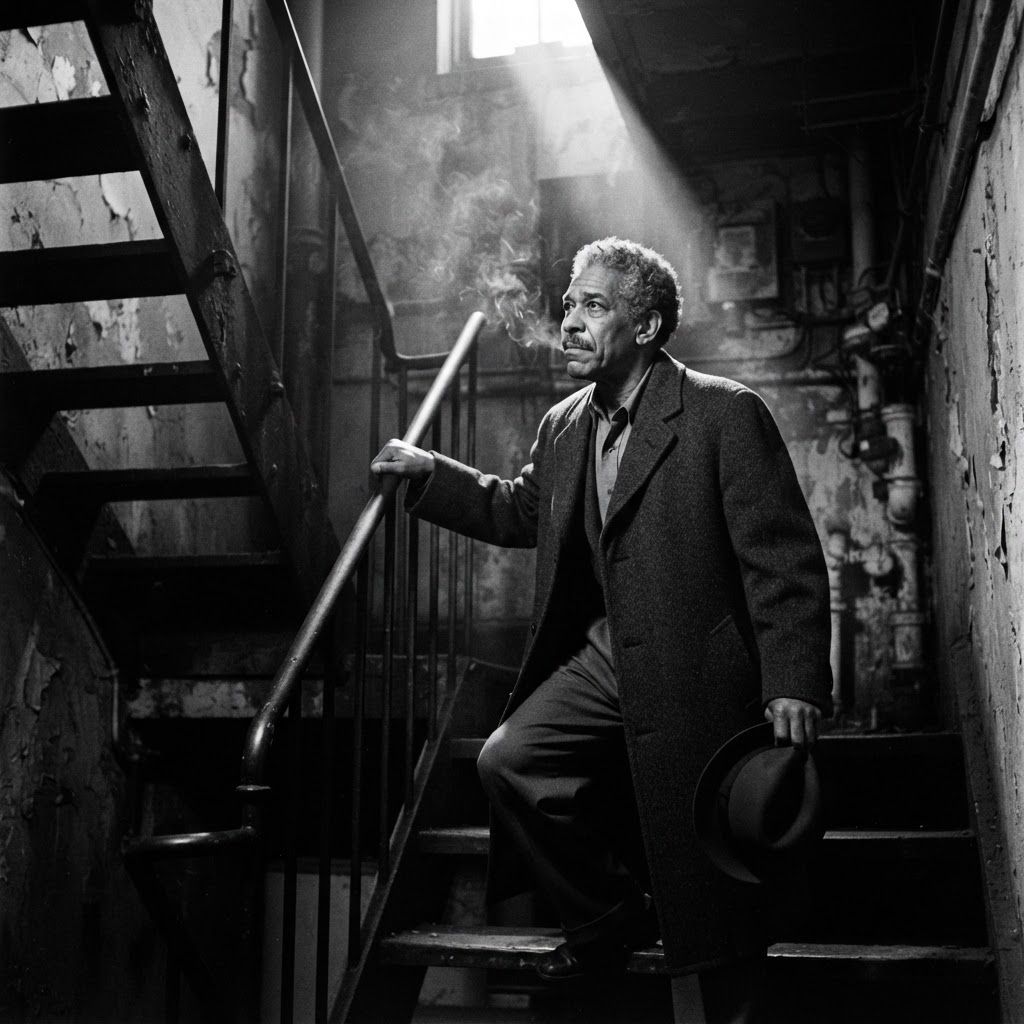
Stairwell Escape
A stairwell adds motion without needing a chase scene. Diagonal steps cut across the frame, and a hand on the rail gives your body a clear action. It suggests you have just heard something behind you.
This is a good choice when you want danger and speed. Let the coat trail or twist slightly, but keep the face visible enough to read the emotion. A blurred or hidden face can look accidental instead of cinematic.
Place one foot higher on the stairs and hold the rail with one hand. Turn your head back or down the stairwell. Use hard side light or a light from above. Wear a long coat, narrow trousers, or clean dark layers. Avoid messy stair clutter and stiff standing poses.
Choose a photo to create your version
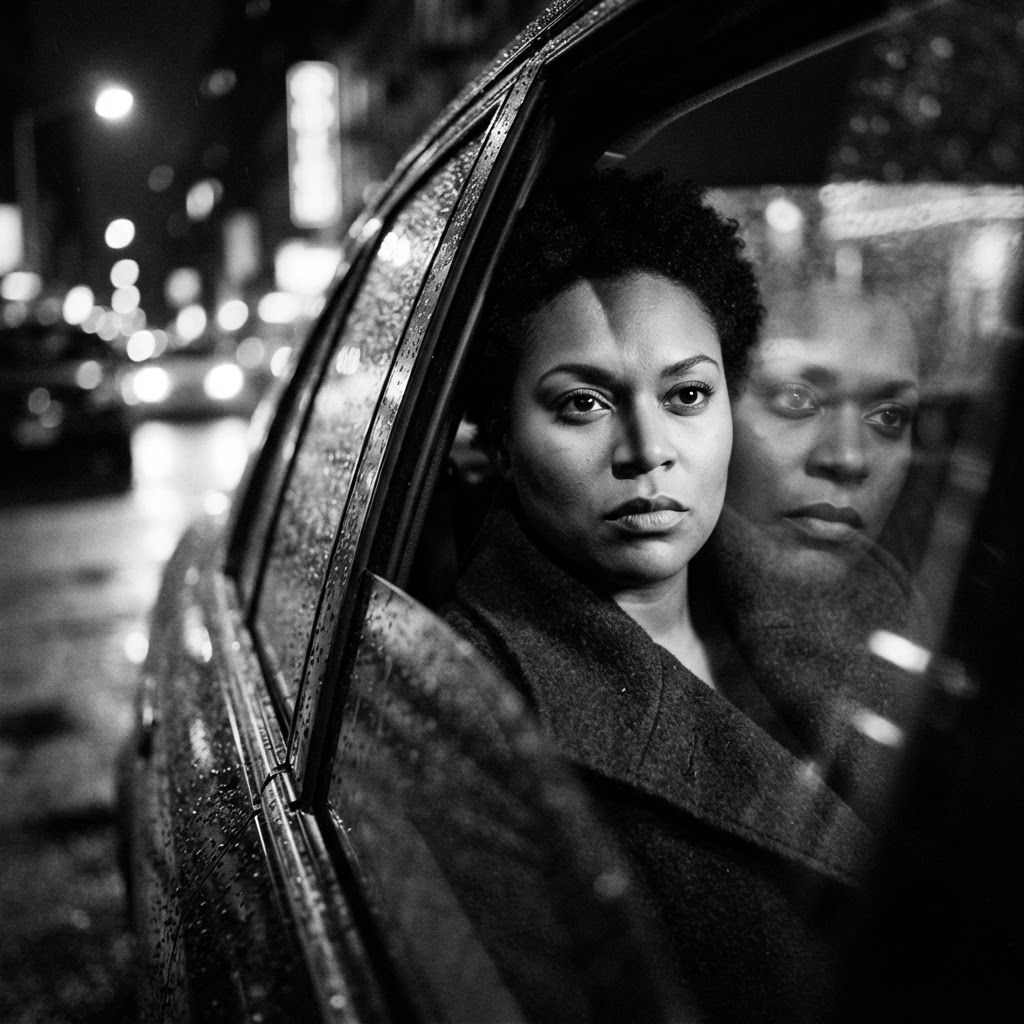
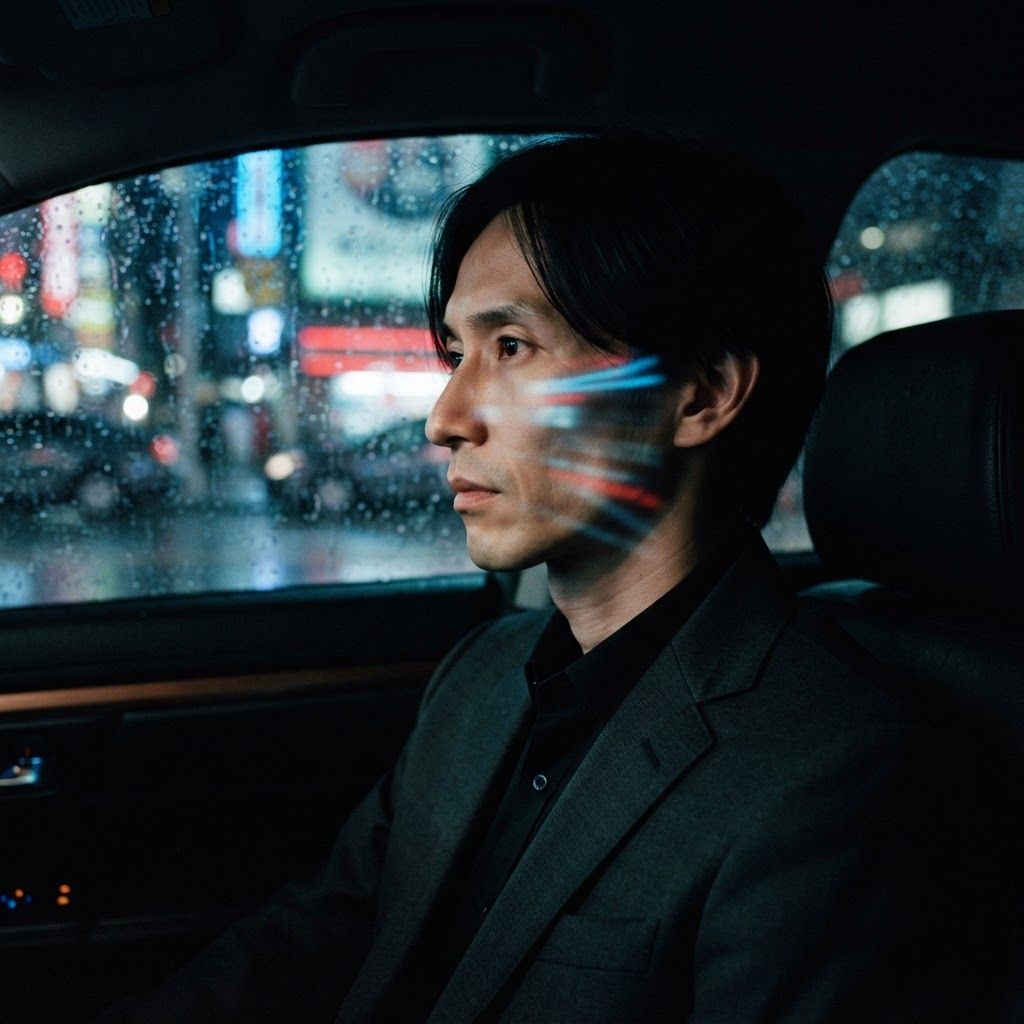
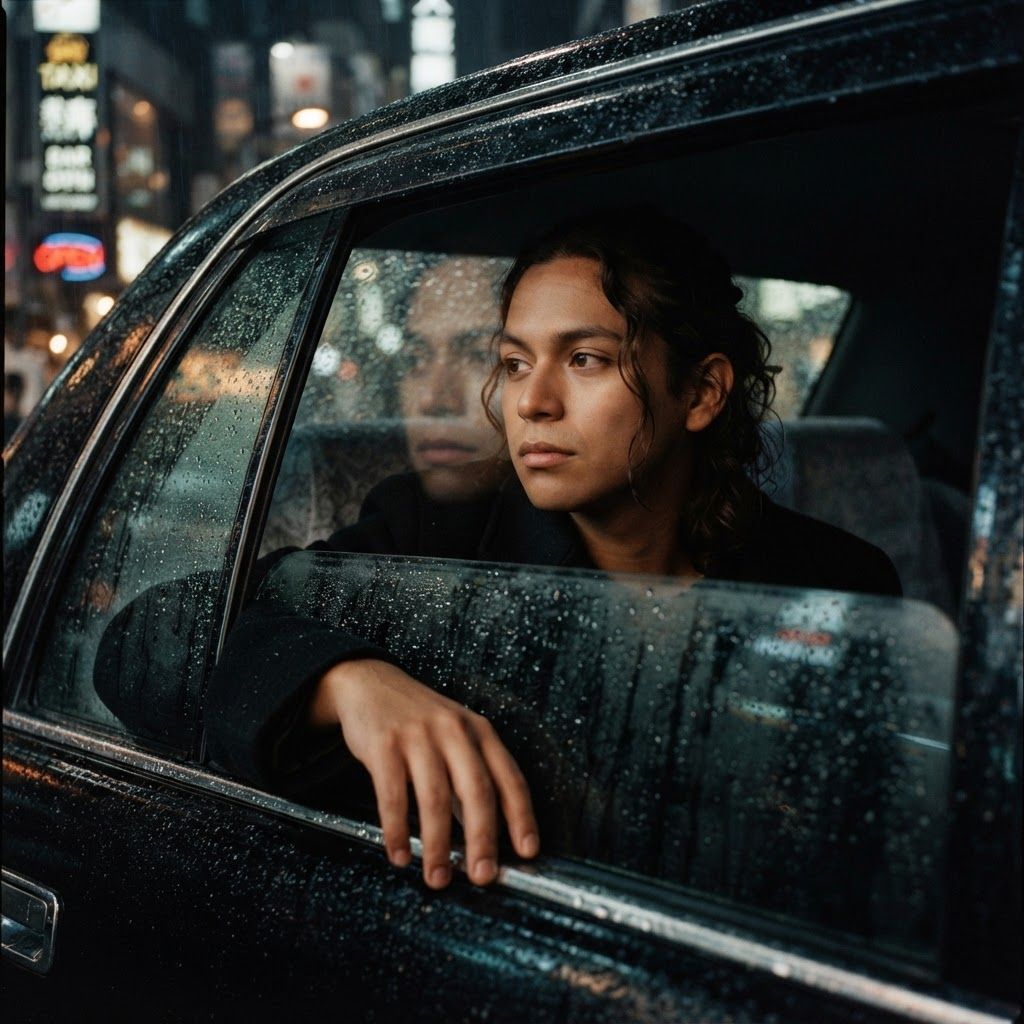
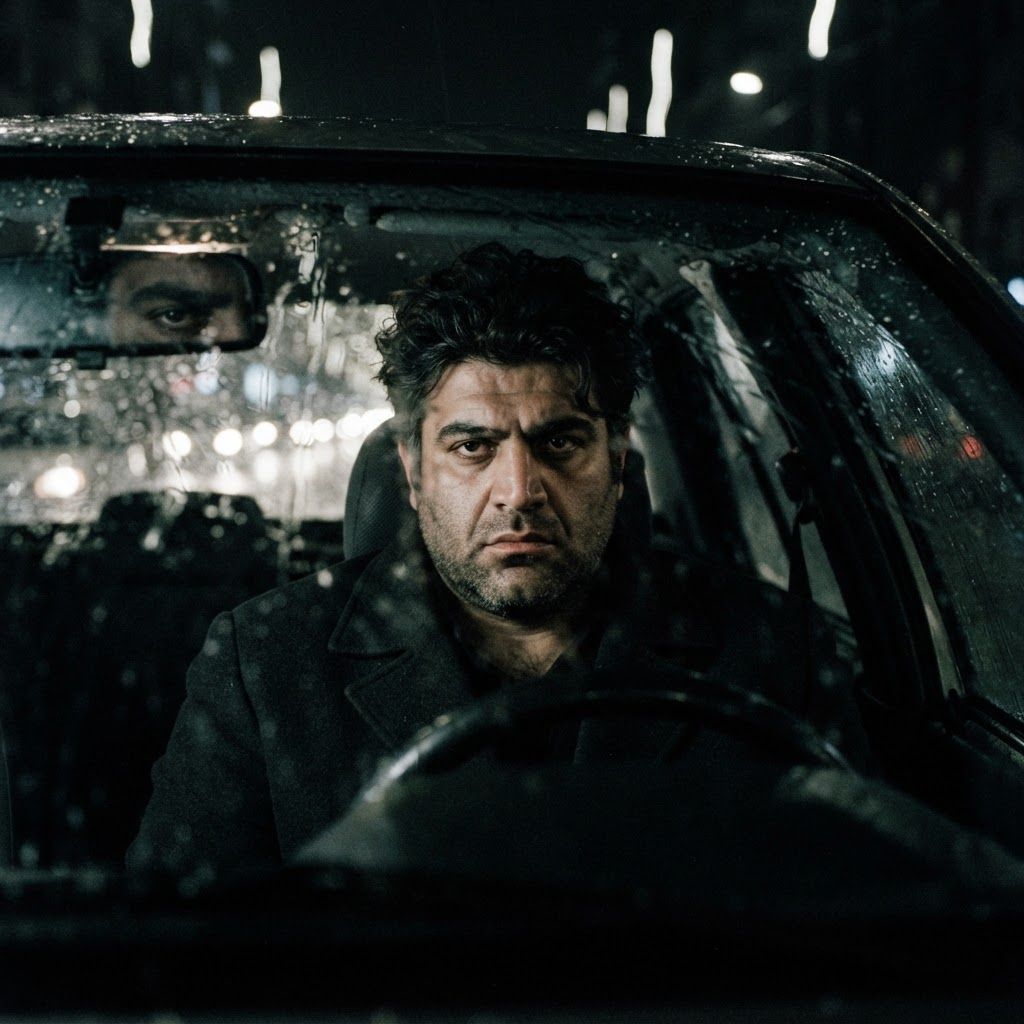
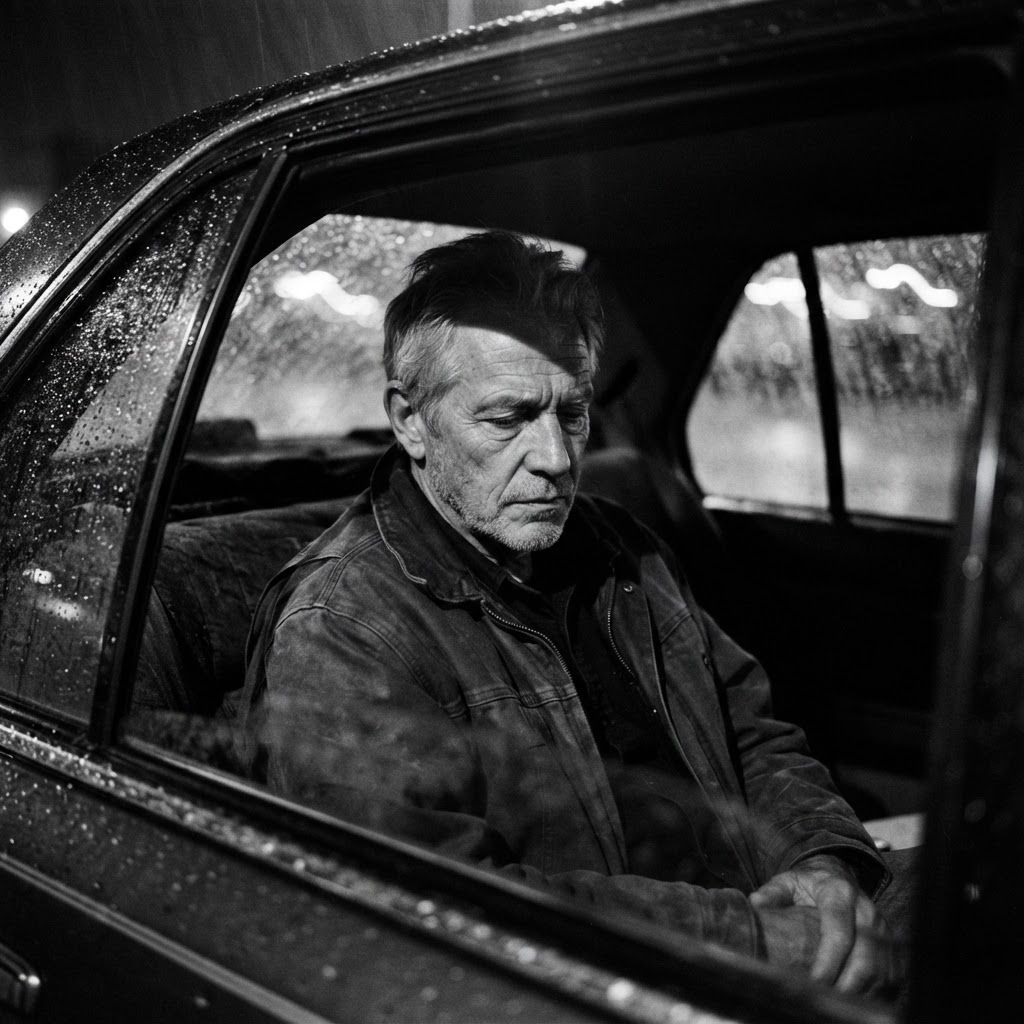
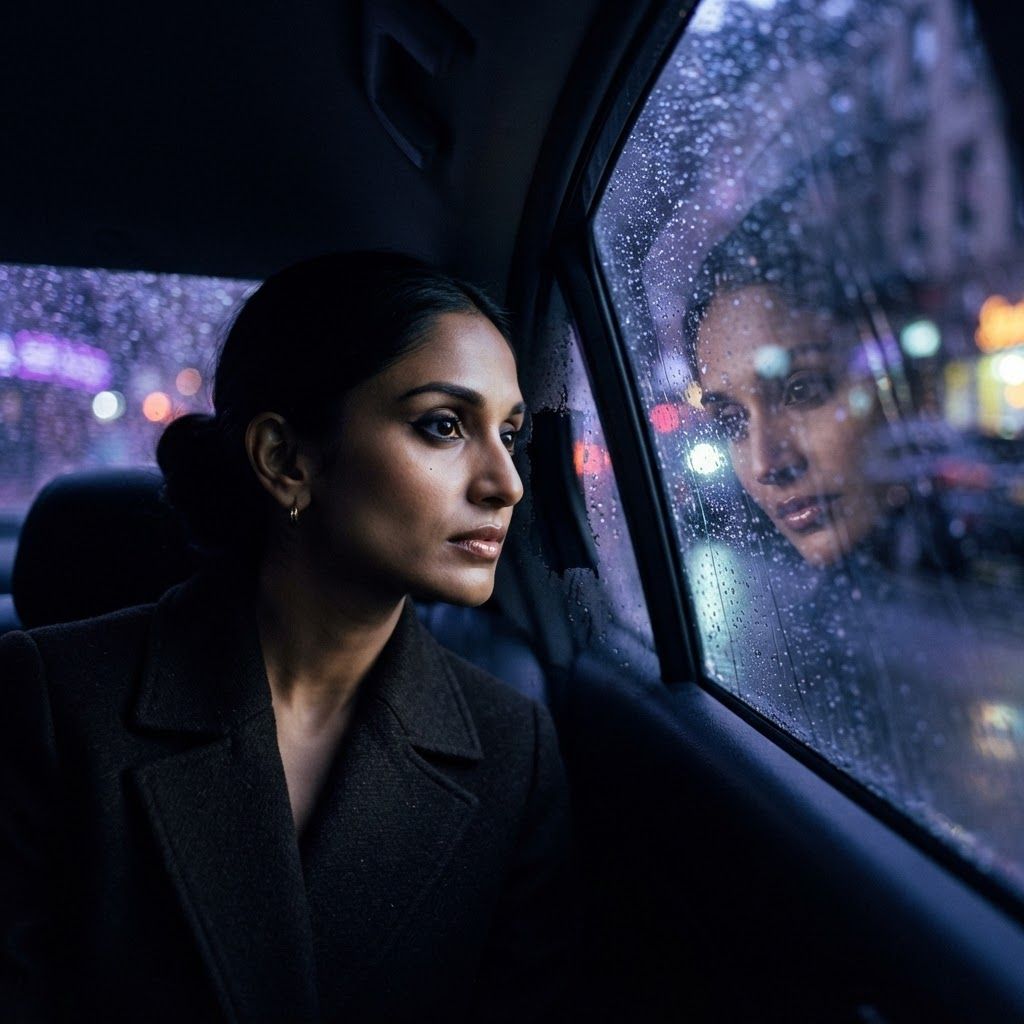
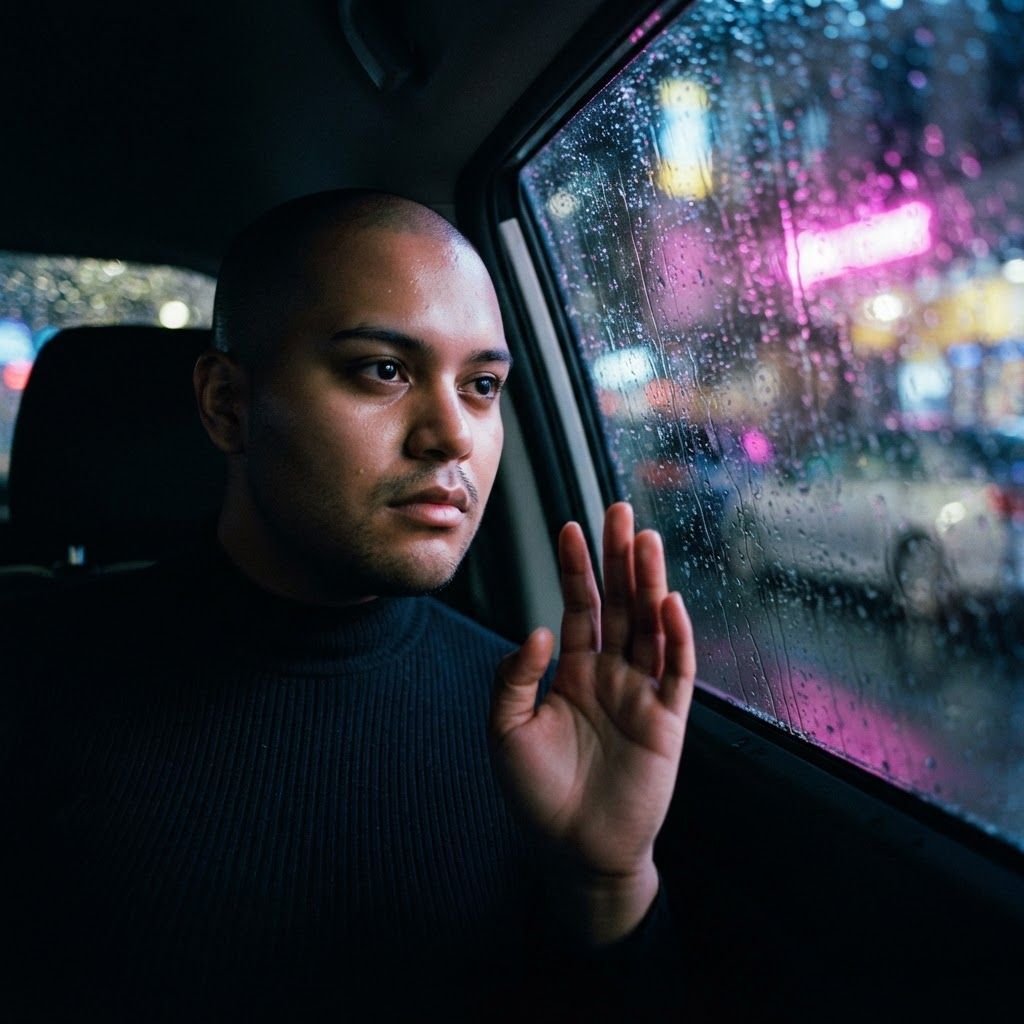
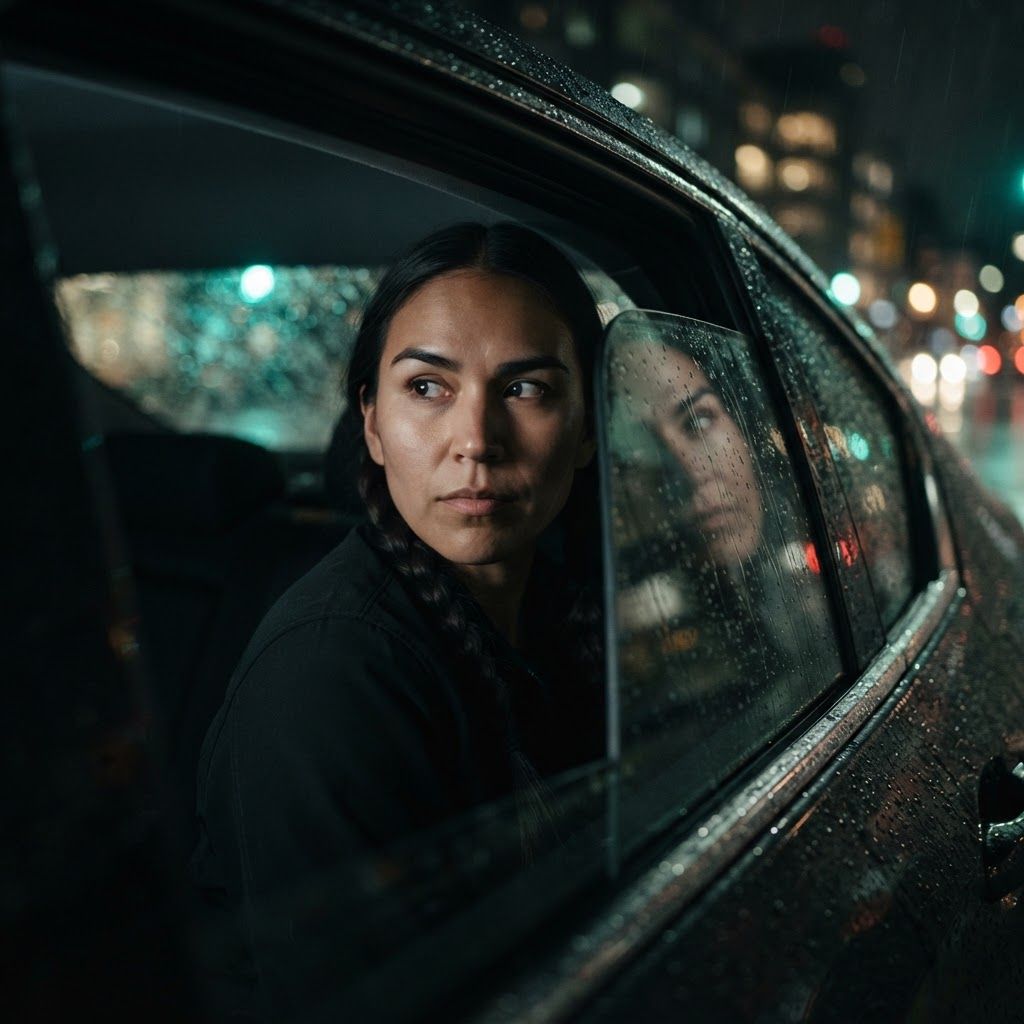
Car Window Reflection
A rain-specked car window gives neo-noir a private, modern feel. The glass doubles the face, breaks the light, and adds distance. It can look like you are watching the city while hiding your own thoughts.
This idea works best in close framing. The mood comes from reflection, water, and blurred city lights, not from showing the whole car. Keep your face near the glass. If you sit too far back, the reflection becomes weak and the portrait loses intimacy.
Sit beside a wet car window and turn your face toward the glass. Use streetlights, neon, or passing city light outside. Wear a dark coat, knit, or suit collar. Let raindrops stay sharp in front. Avoid clean dry glass, bright cabin light, and a wide smile.
Choose a photo to create your version
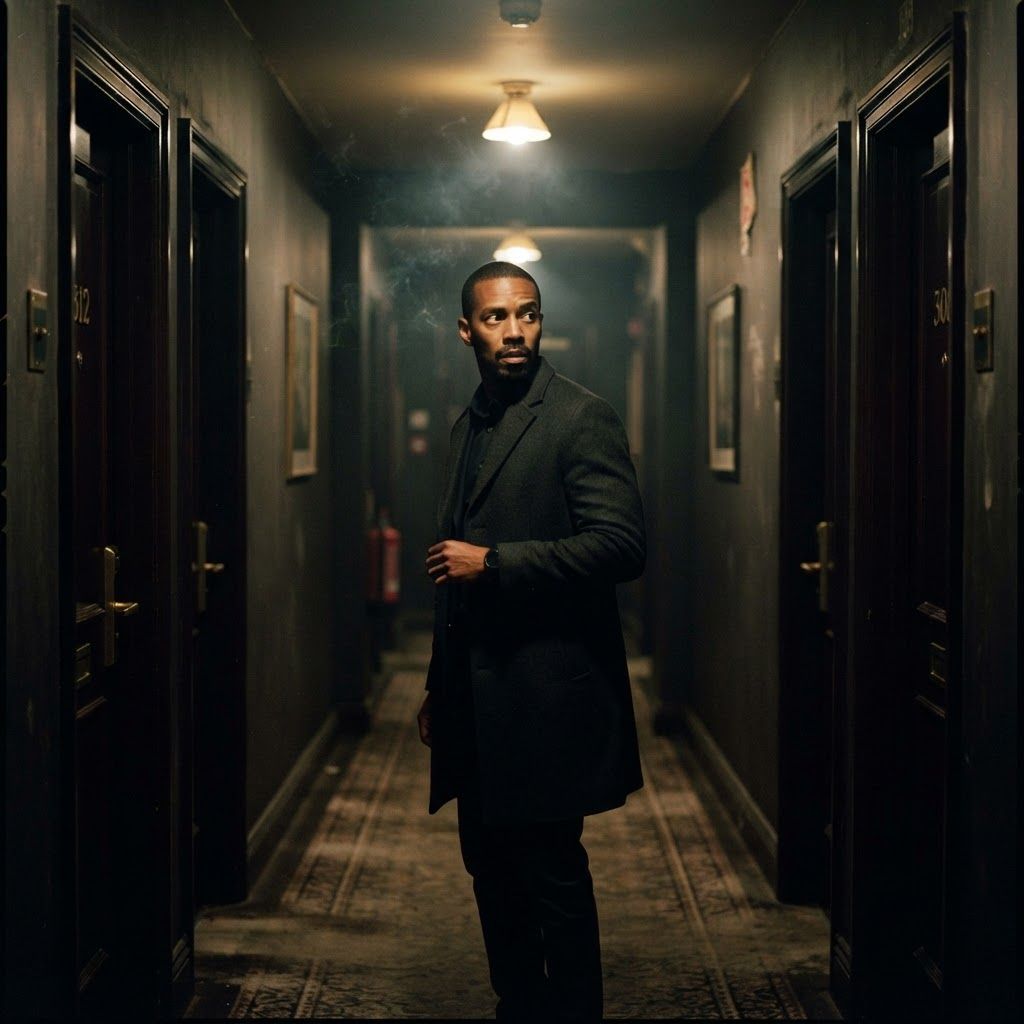
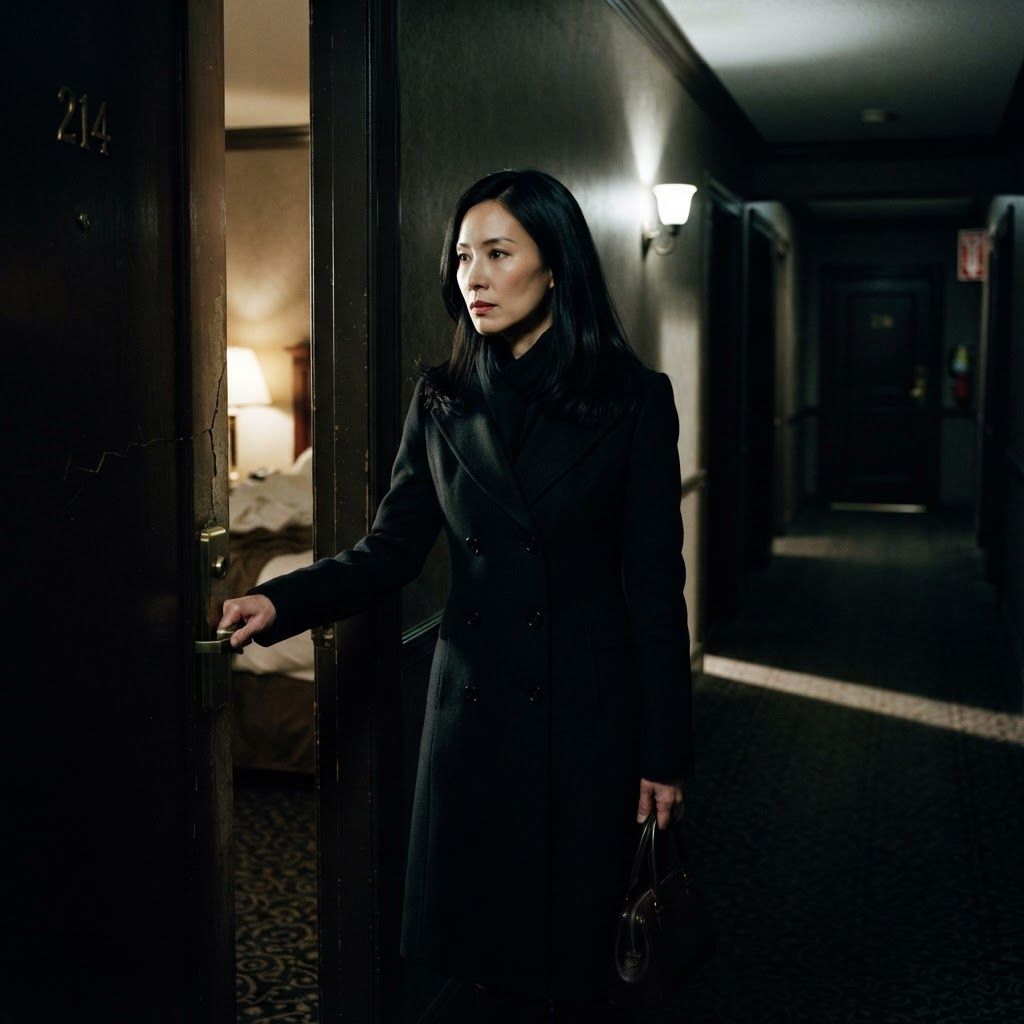
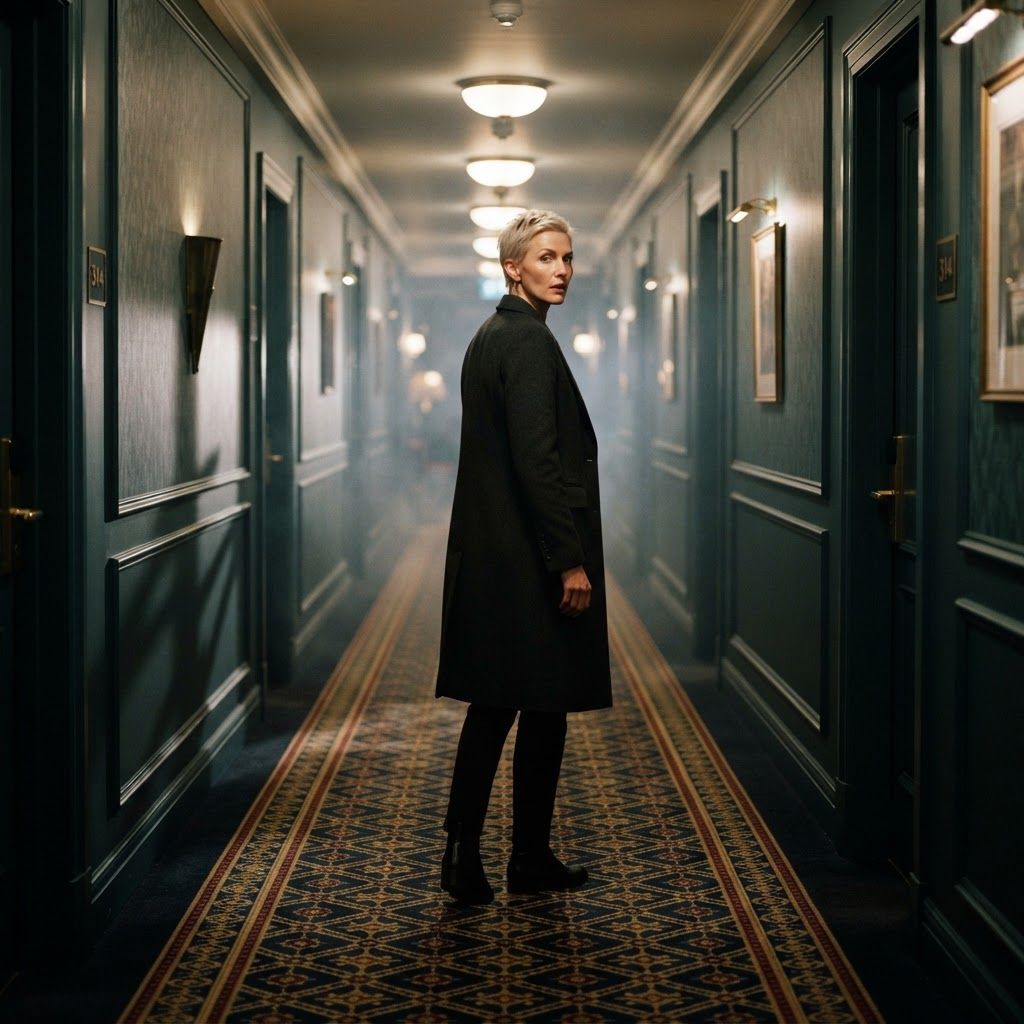
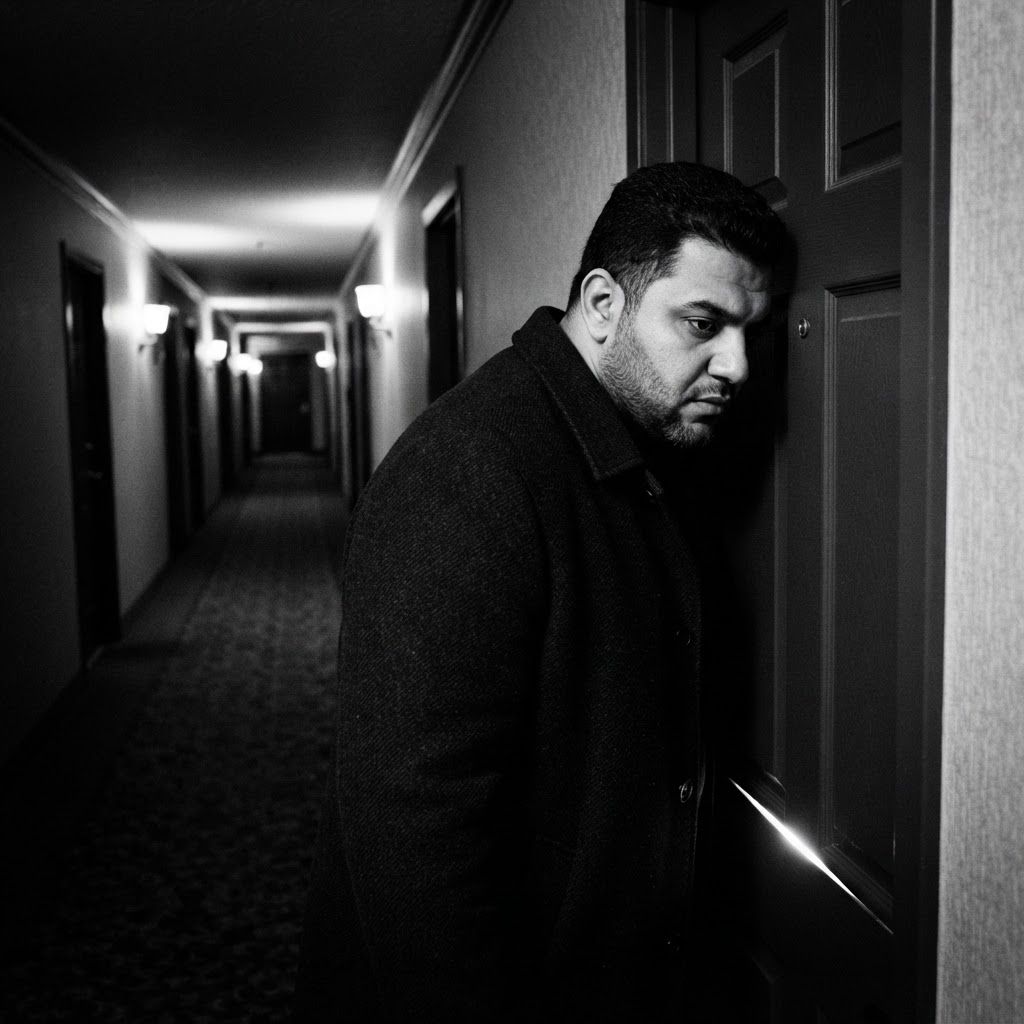
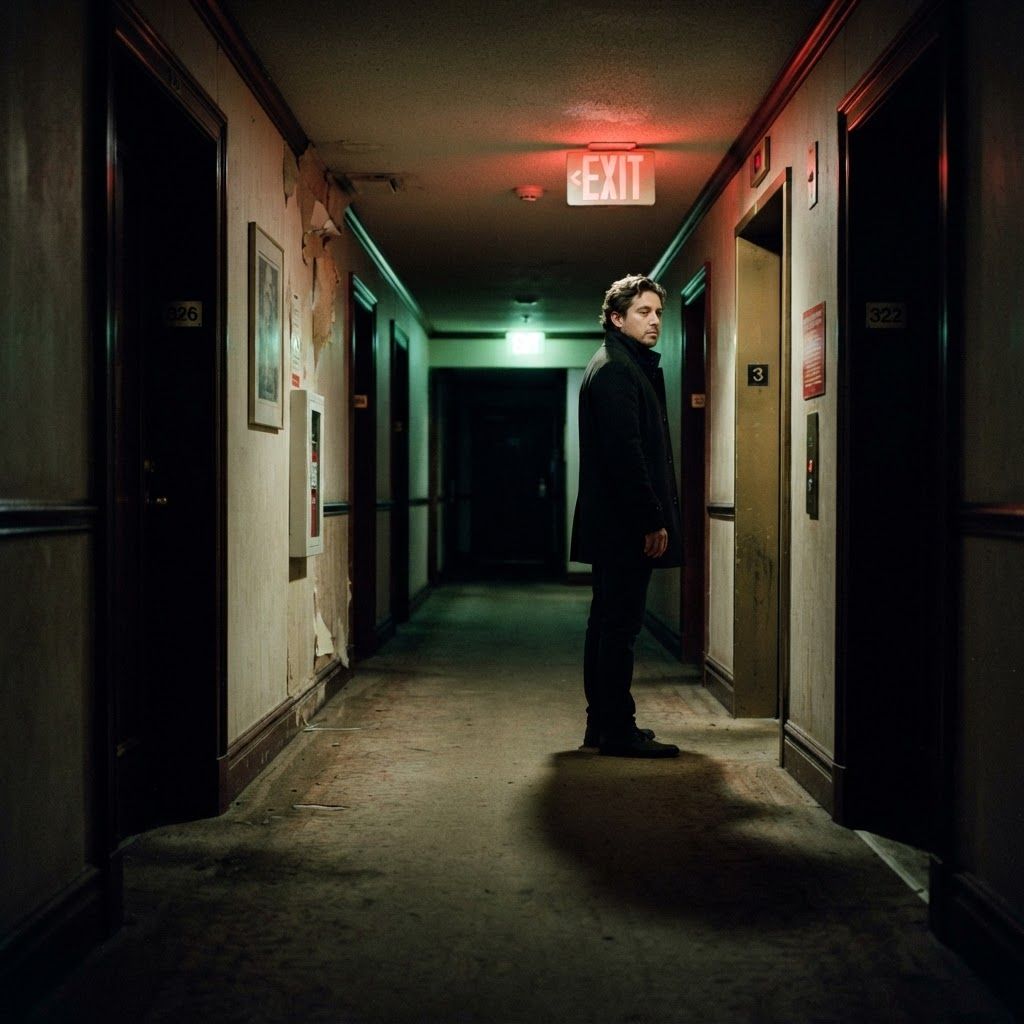
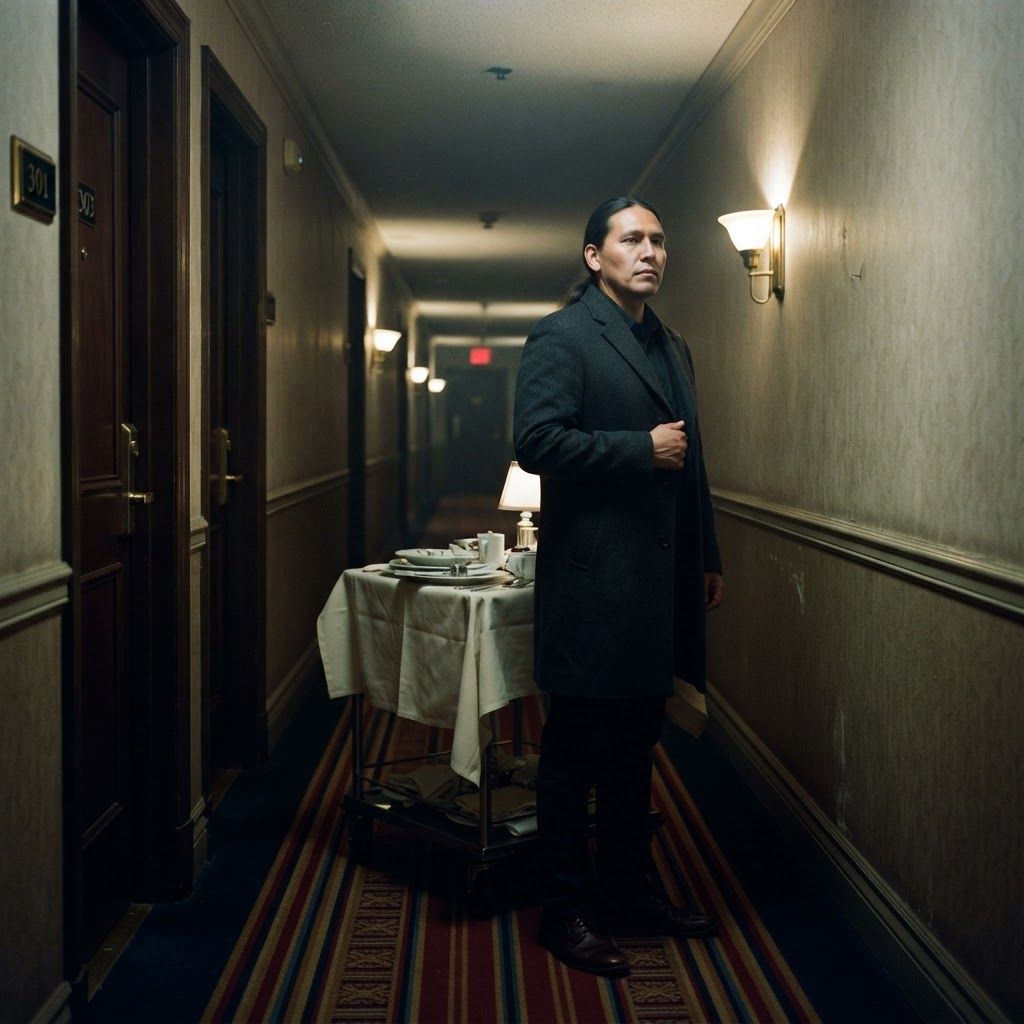
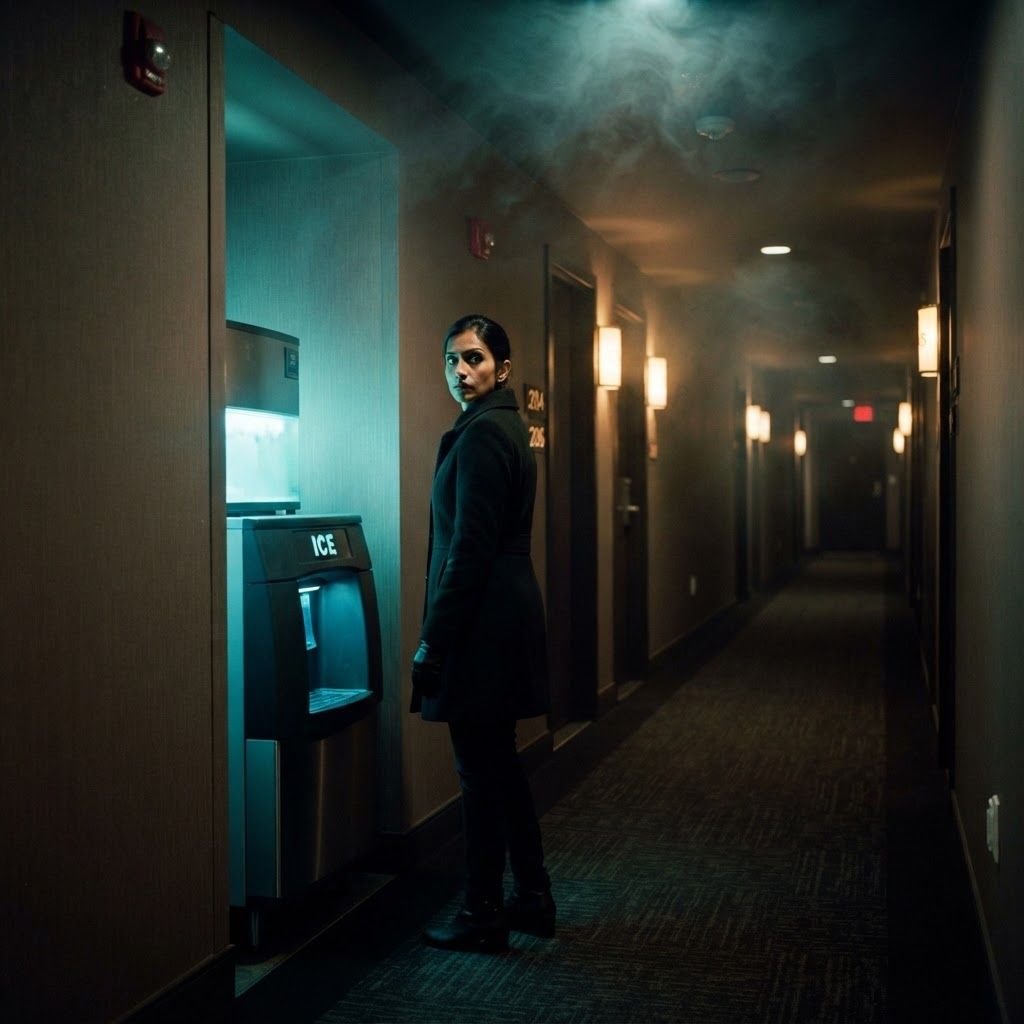
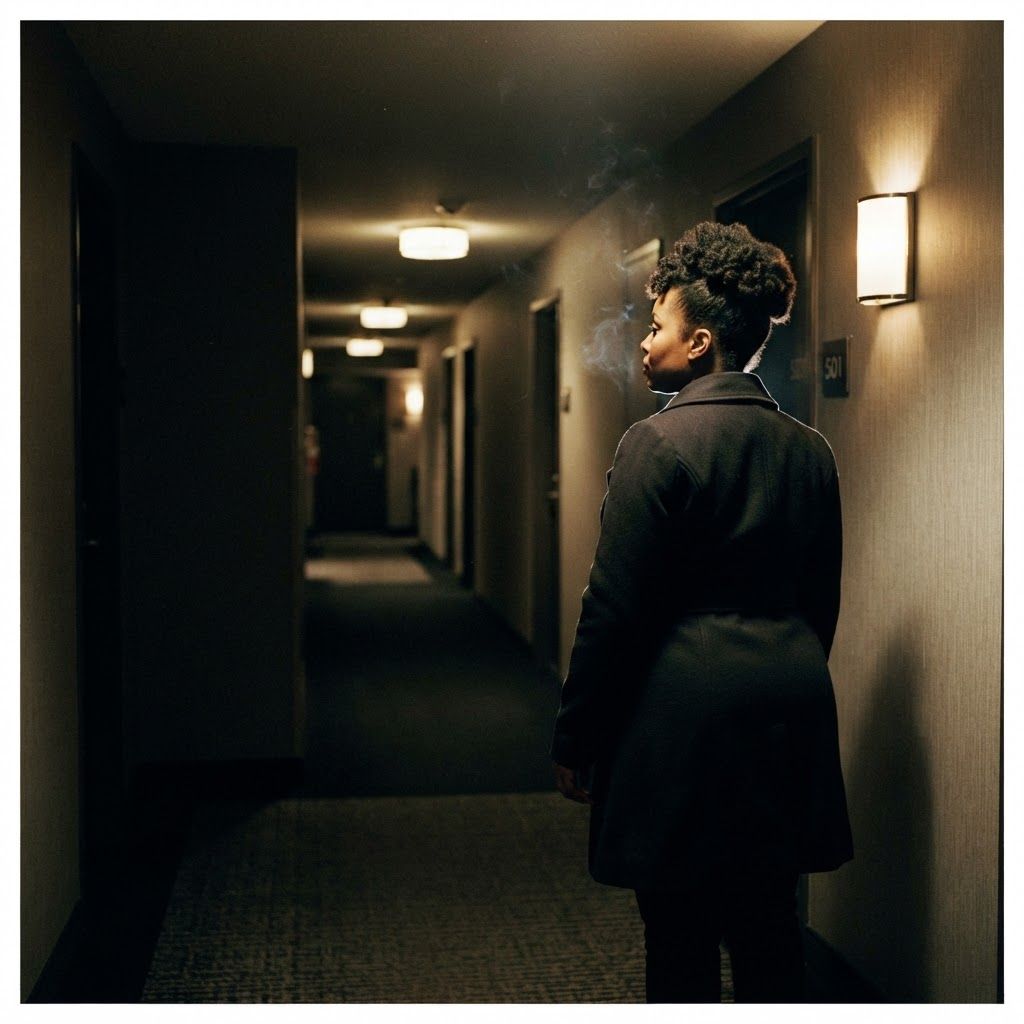
Hotel Corridor Tension
A long hotel corridor builds suspense through lines and distance. Repeating doors, carpet patterns, and ceiling lights pull the eye toward you. A small pause in the hallway can feel like a whole story.
Use this setting when you want a polished noir thriller mood. Your body should look mid-decision. A turned shoulder, one hand near a pocket, or a slight glance back can show doubt. Do not stand square and relaxed unless you want the tension to fade.
Stand off-center in a long hallway and turn one shoulder toward the camera. Use overhead lights, door frames, and a vanishing point behind you. Wear a fitted coat, suit, or dark dress. Avoid open doors, bright luggage, and a casual tourist posture.
Choose a photo to create your version
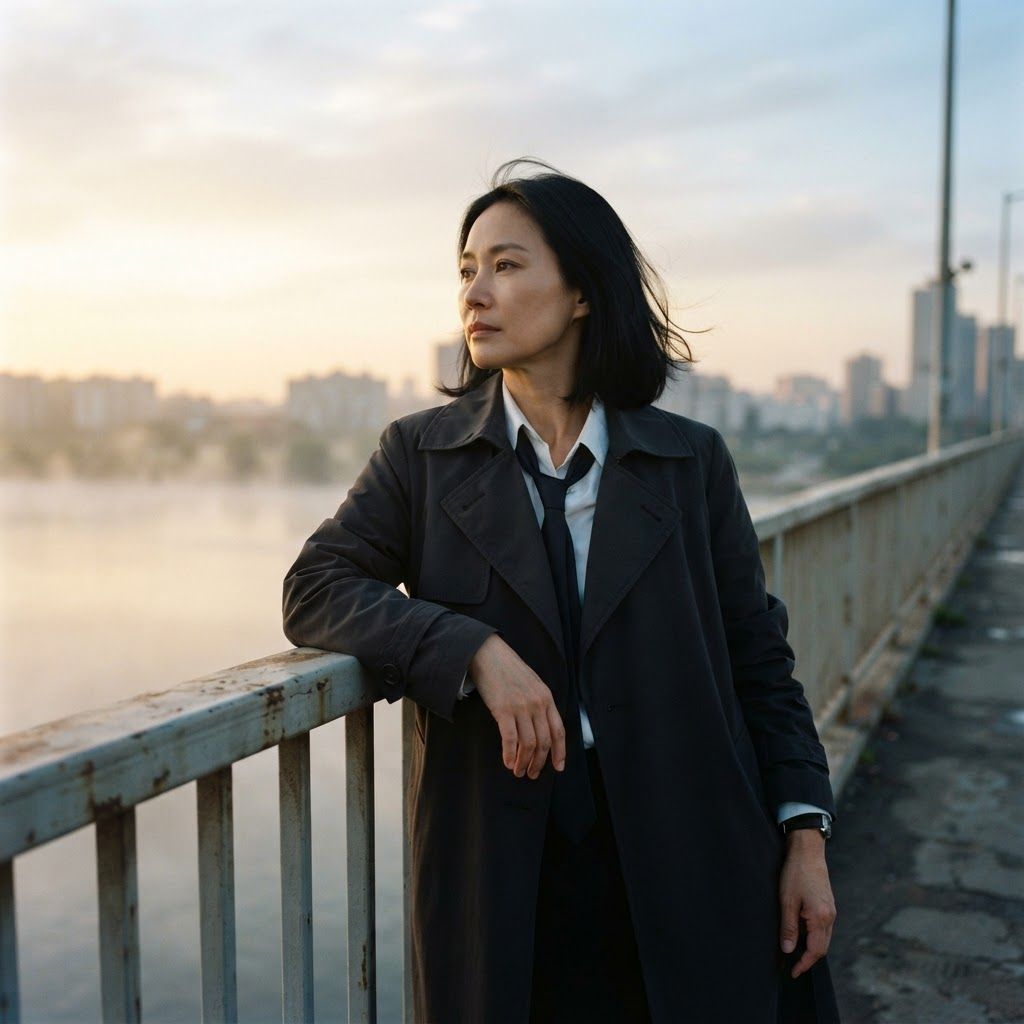
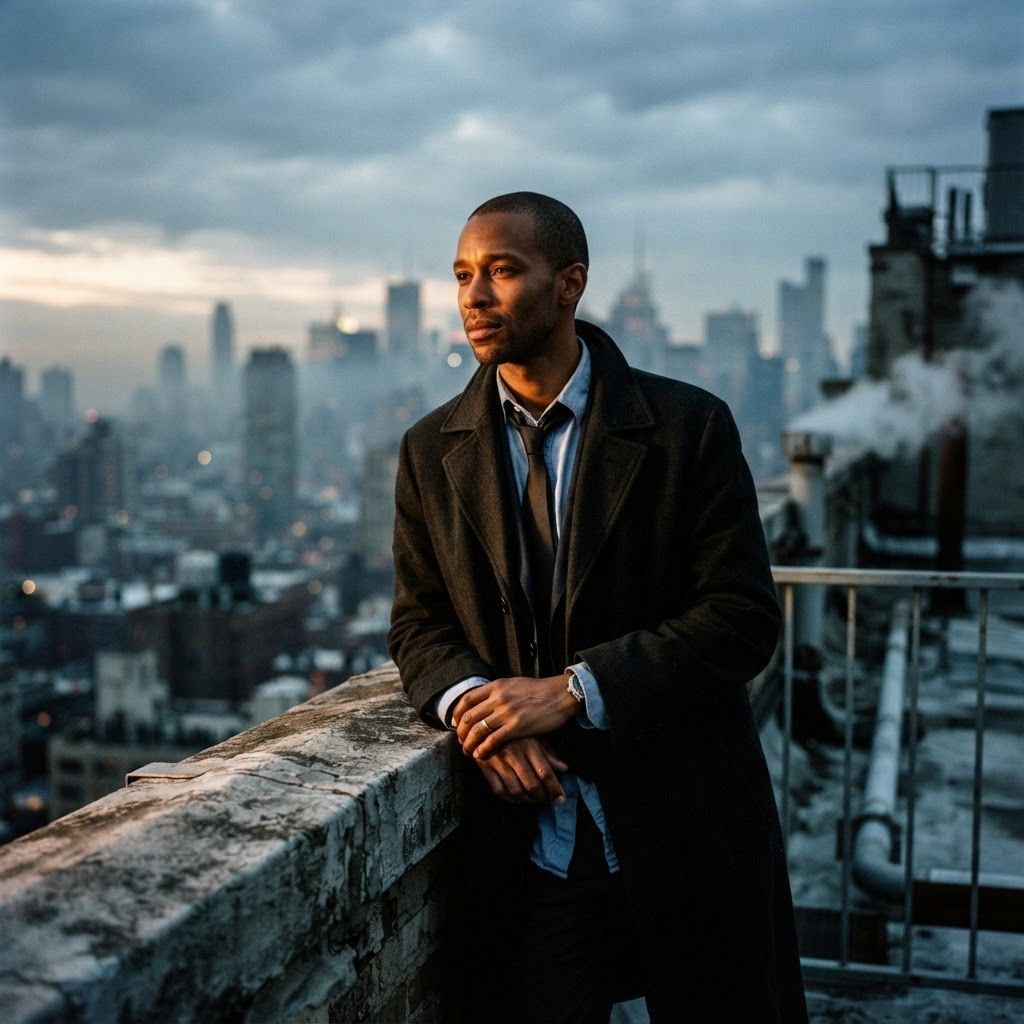
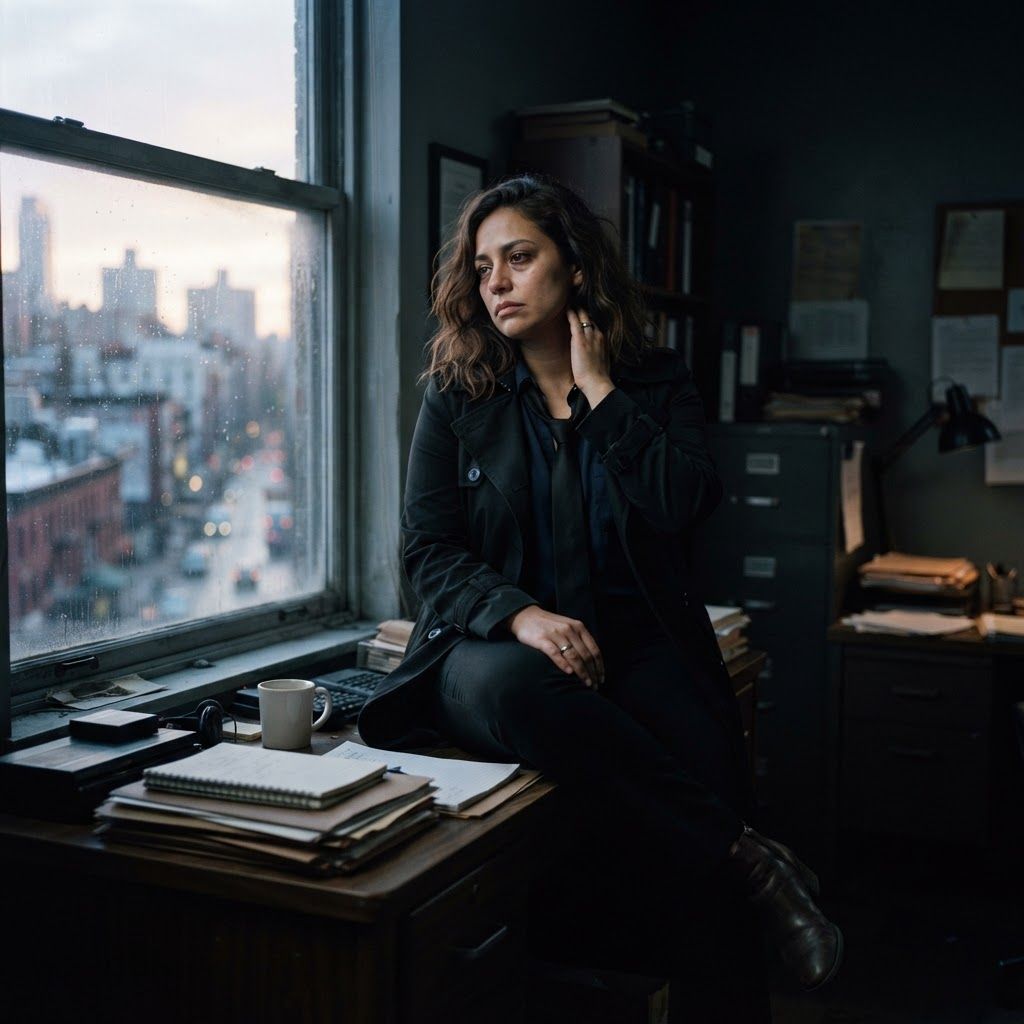
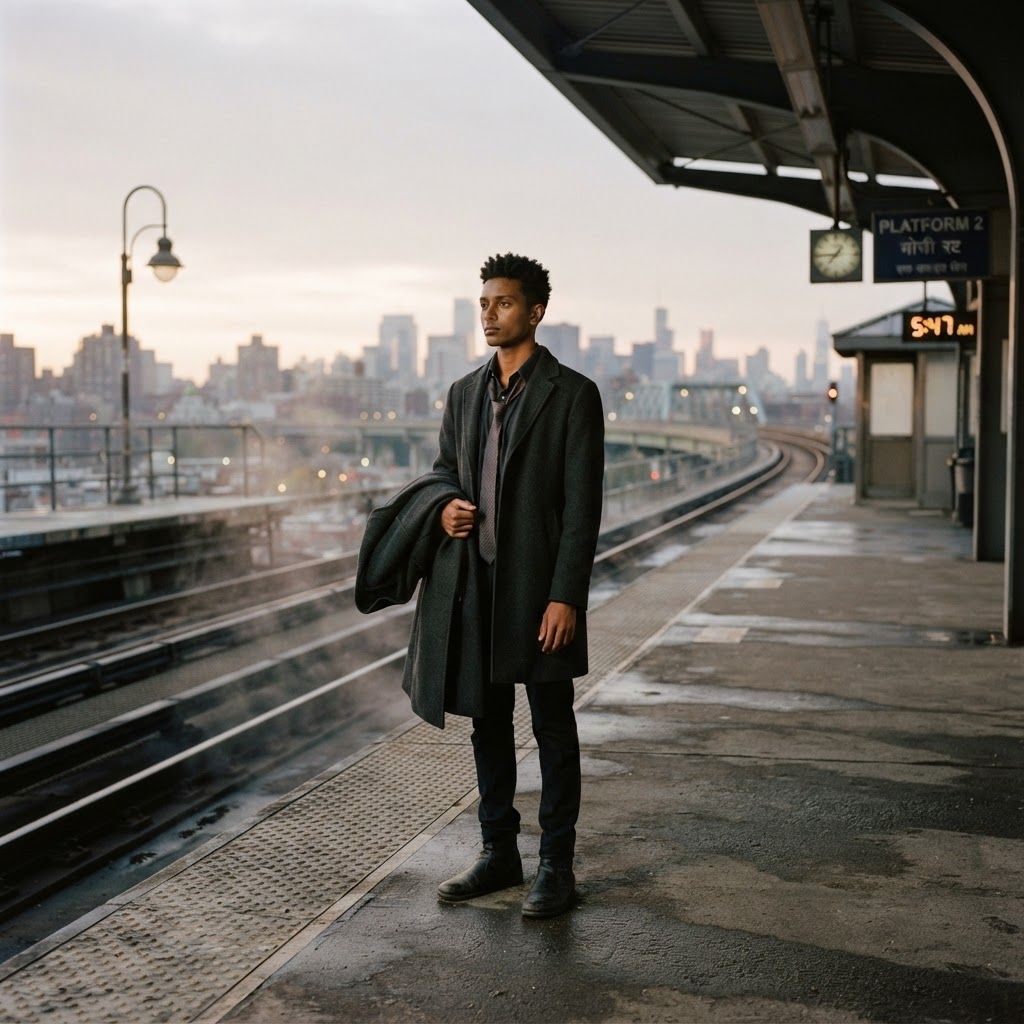
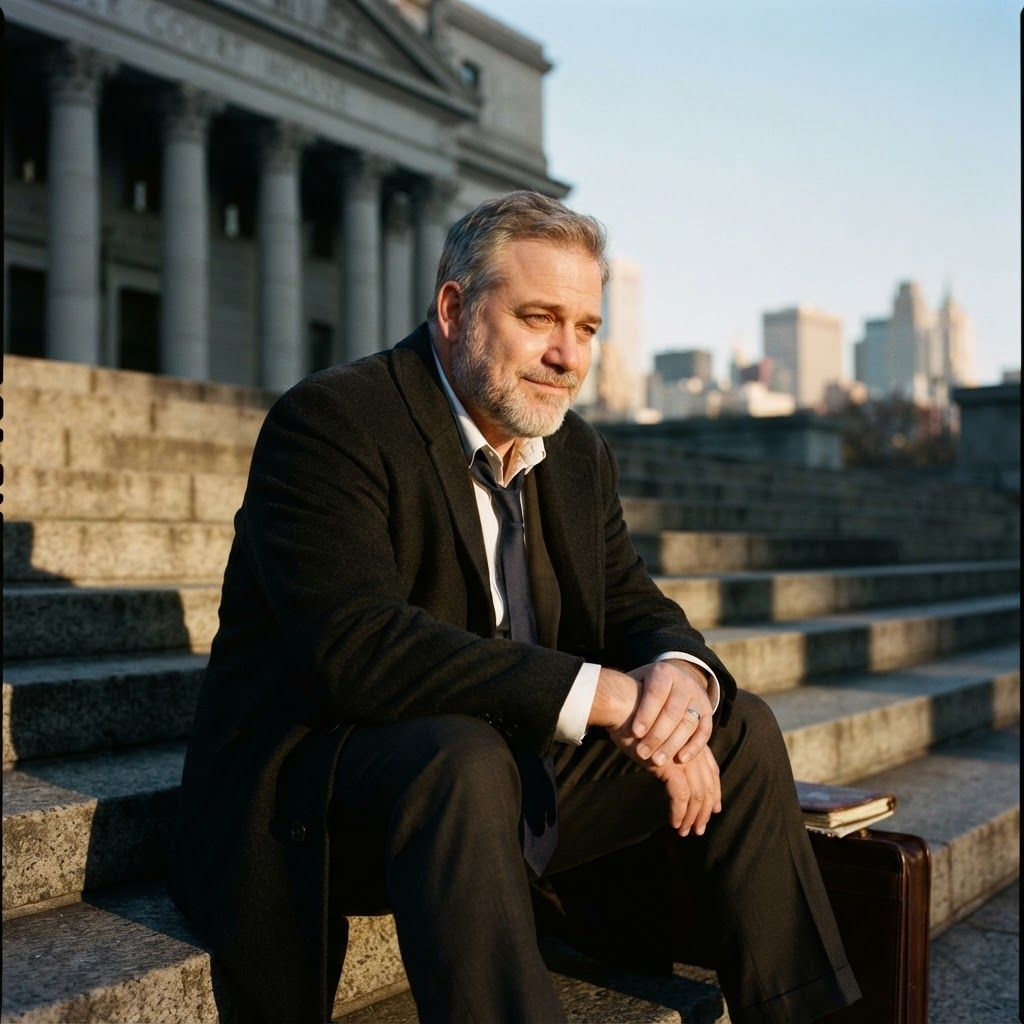
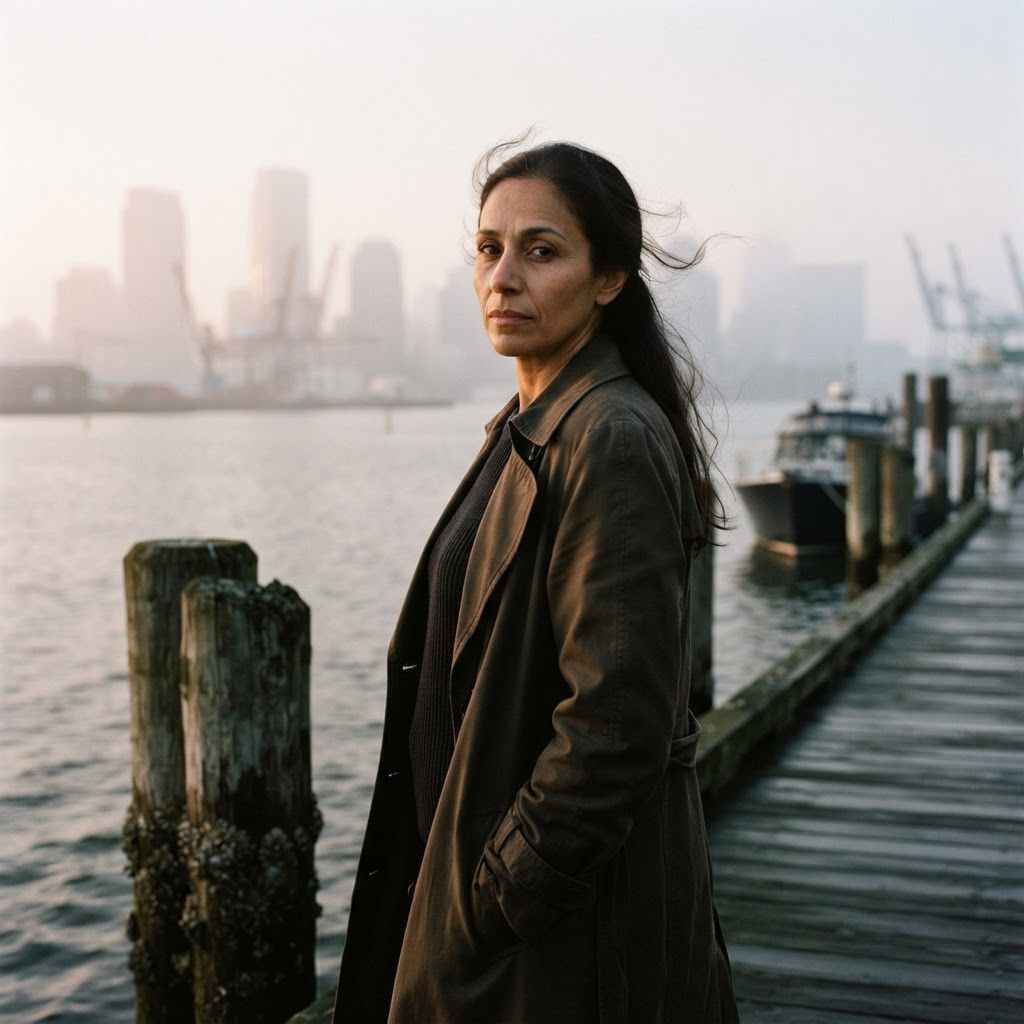
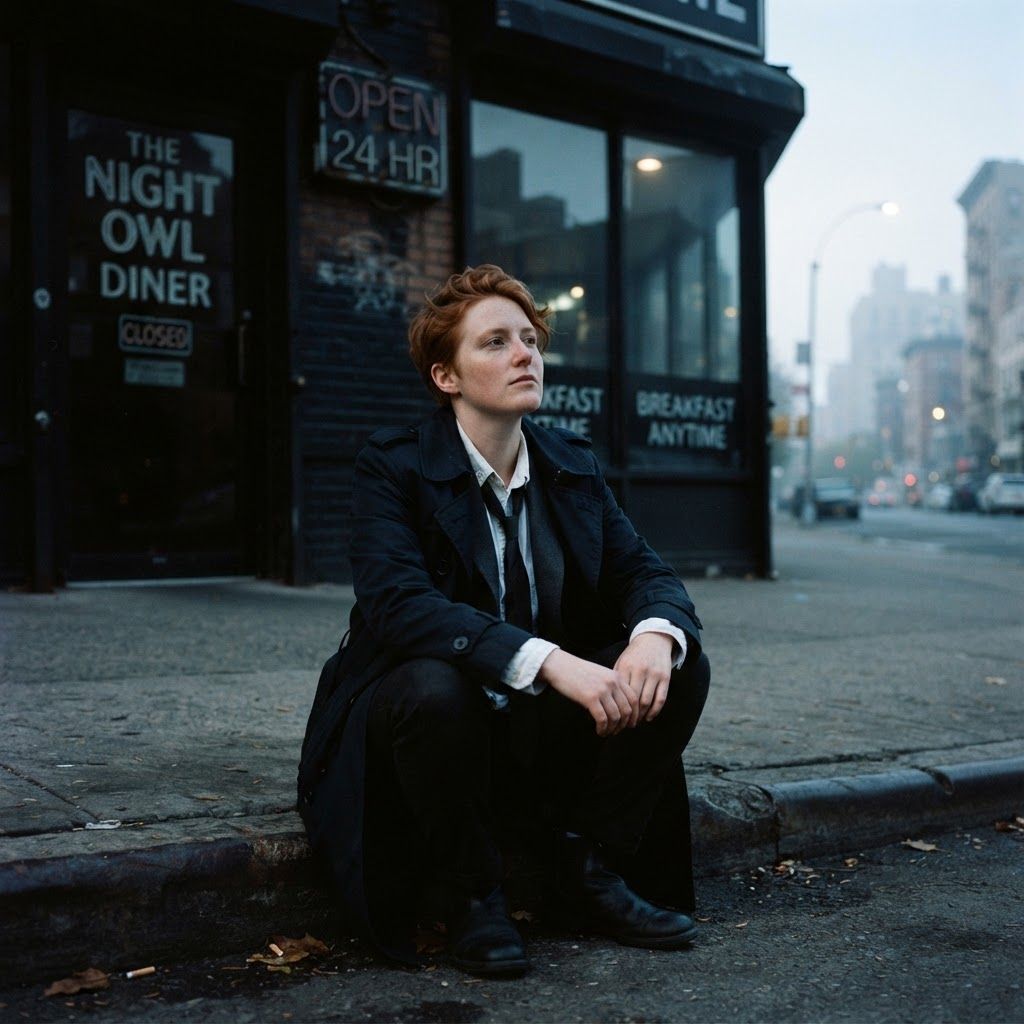
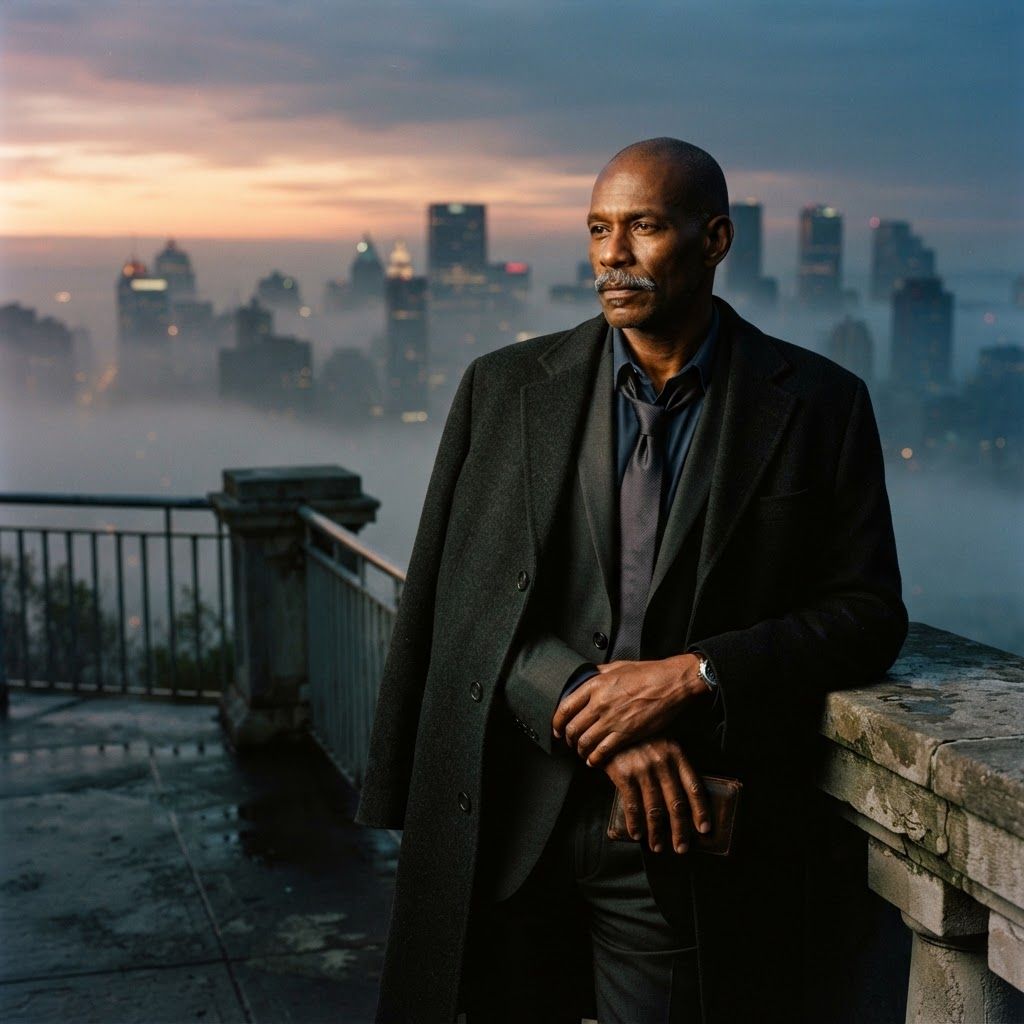
Dawn After The Case
Dawn changes the noir mood from threat to aftermath. Pale light softens the face, and the city behind you feels tired instead of dangerous. It is the quiet moment after the case, when the lead has survived but not fully won.
This look is useful when you want emotion without heavy shadows. Keep the styling slightly undone. A loosened tie, open coat, messy hair, or tired eyes can say more than a dramatic pose. The light should feel early and thin, not golden and cheerful.
Face the sunrise at a slight angle and let soft light touch one side of your face. Wear a coat, shirt, or tie that looks a little worn from the night. Use rooftops, empty streets, or a hazy skyline behind you. Avoid bright midday color, perfect styling, and triumphant poses.
Choose a photo to create your version
Choose Your Noir Moment
Pick the idea by the kind of story you want your portrait to tell. For instant classic film noir, start with the private eye close-up, venetian blind shadows, or interrogation lamp. For a more neo-noir feel, try the rainy alley, car window reflection, hotel corridor, or dawn scene.
Keep your choices simple. One strong light source, one clear mood, and one main action are enough. If the frame feels too busy, remove props before adding more drama. The strongest noir portraits leave space for a secret.