Fall 2026 Fashion Trends: Shapes and Styling to Know
Want to try fall 2026 fashion trends without replacing your whole wardrobe? Start with shape. A cape, a rounded coat, or a sharp blazer changes your outline more than a small accessory does.
Pick one strong shape and give it a simple base. Narrow trousers balance a roomy coat. A close-fitting top keeps a long coat from looking heavy. Before you settle on a look, check that you can move your arms, climb steps, and carry your usual bag.
These eight looks show how different shapes work on city days. Notice where each one adds volume. Then use the setting and camera angle to see that shape clearly. The best choice is one you like both in a photo and on your usual route.
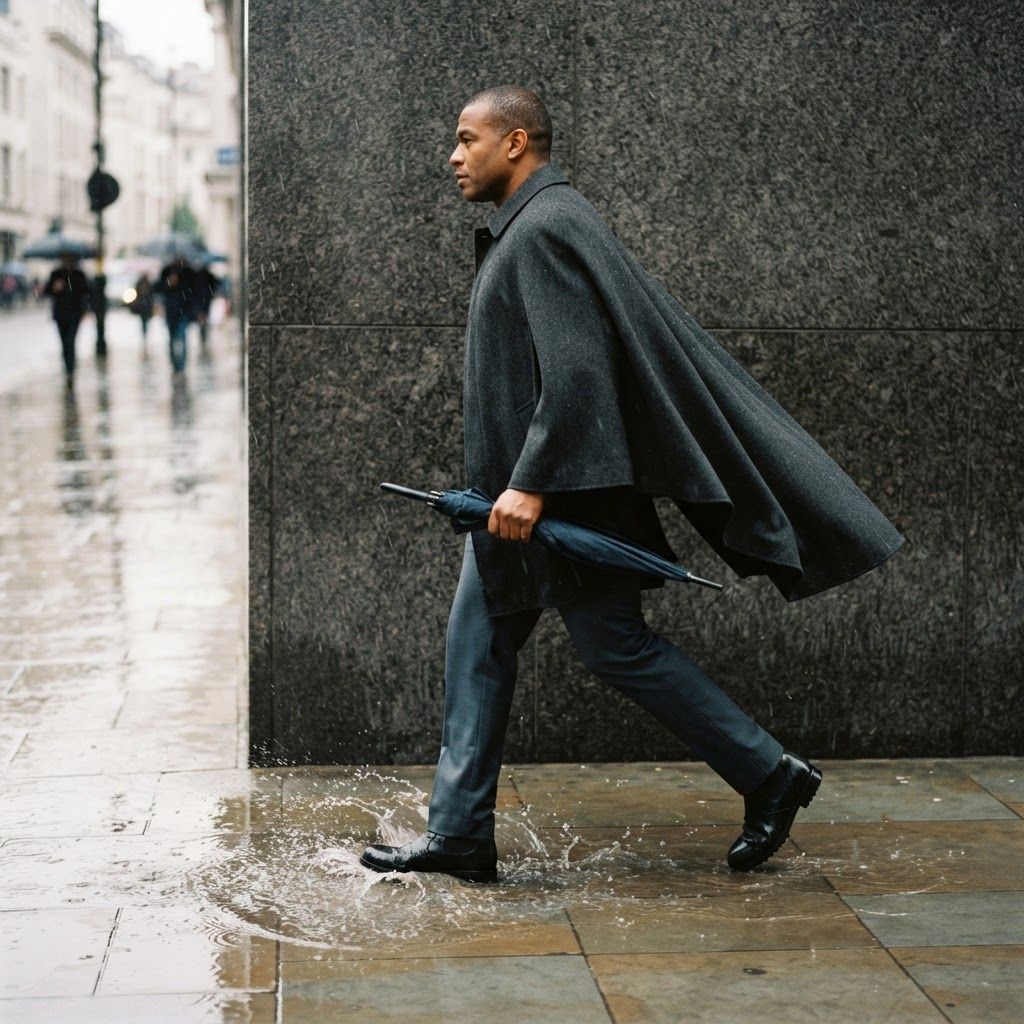
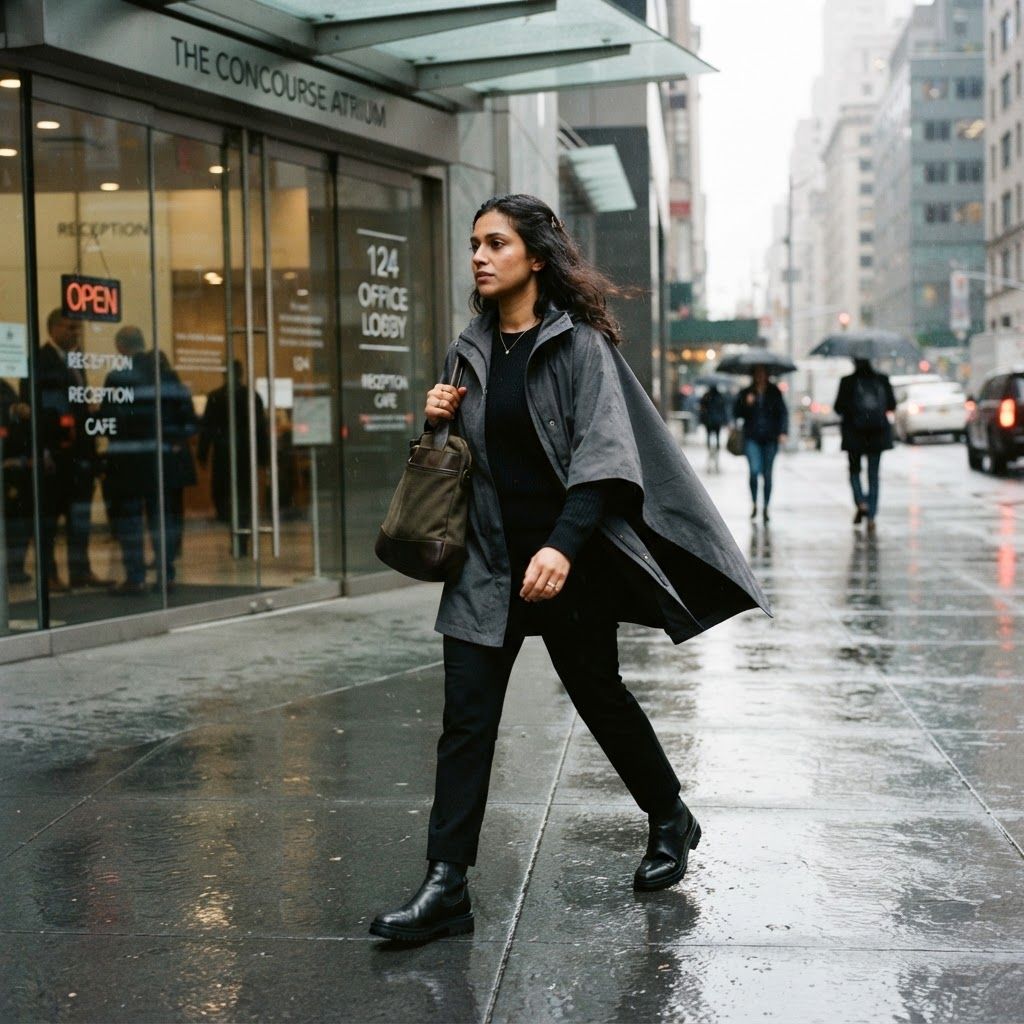
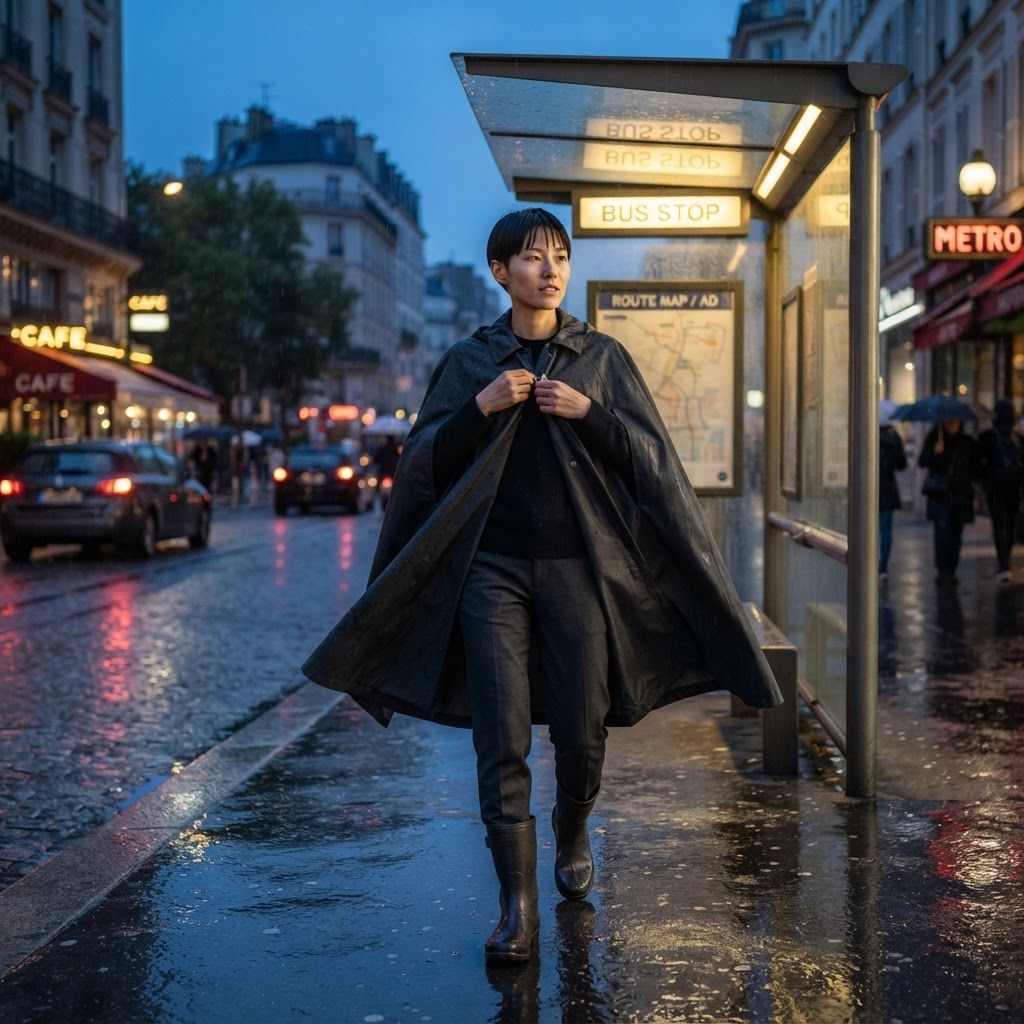
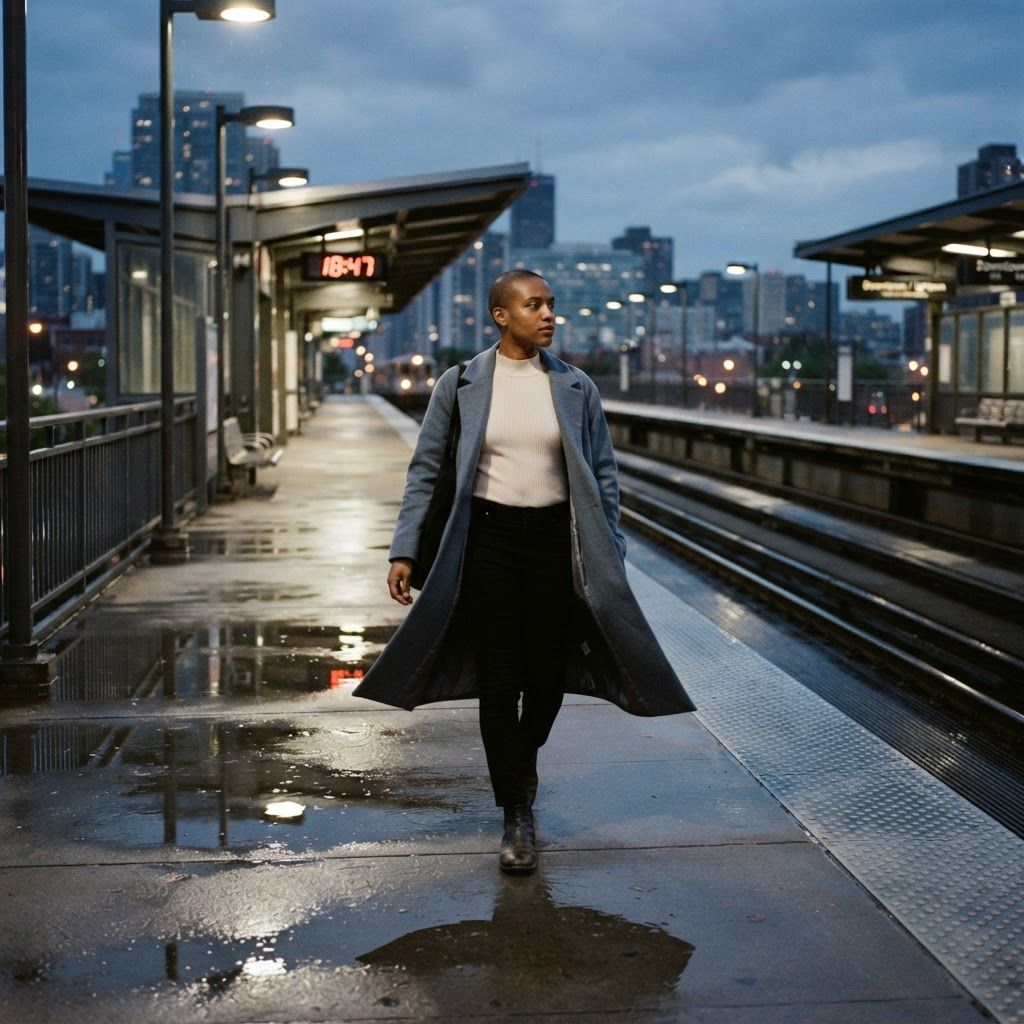
Rain-Swept Cape Commute
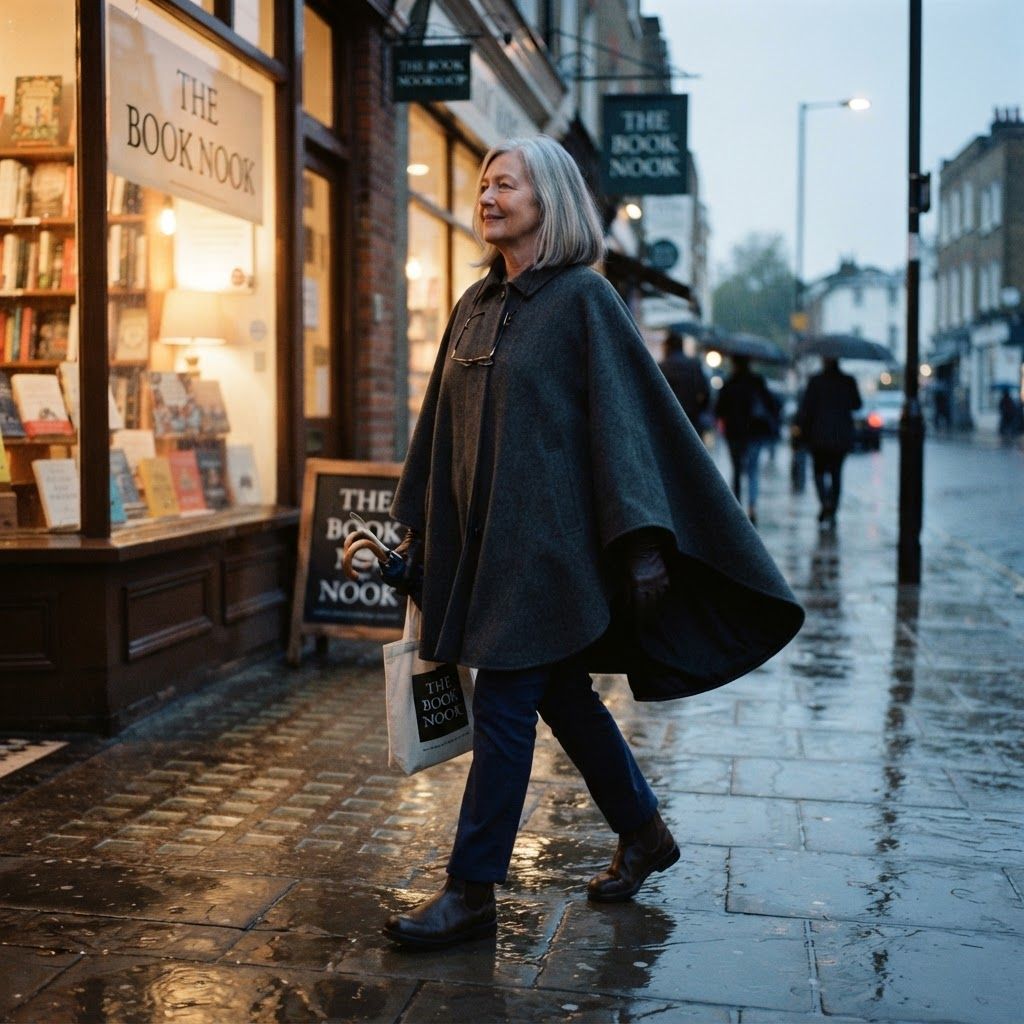
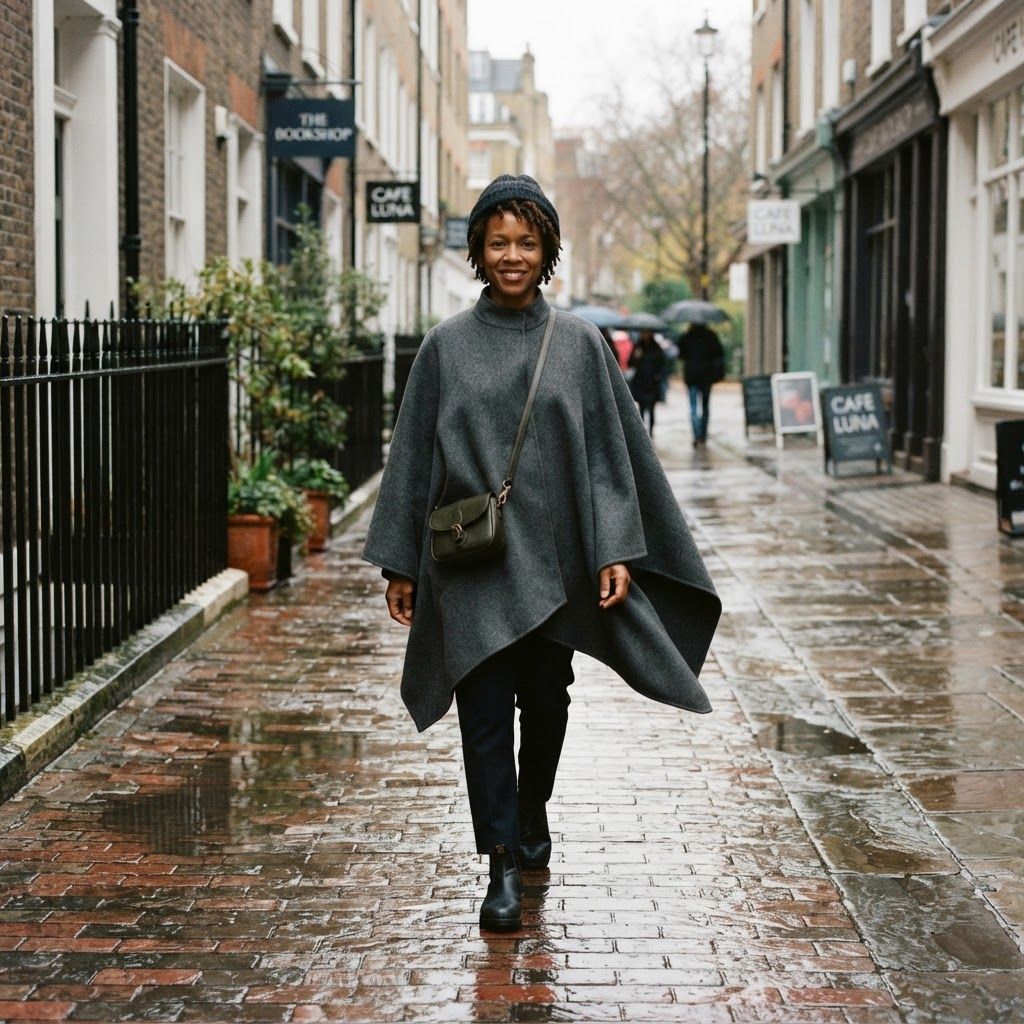
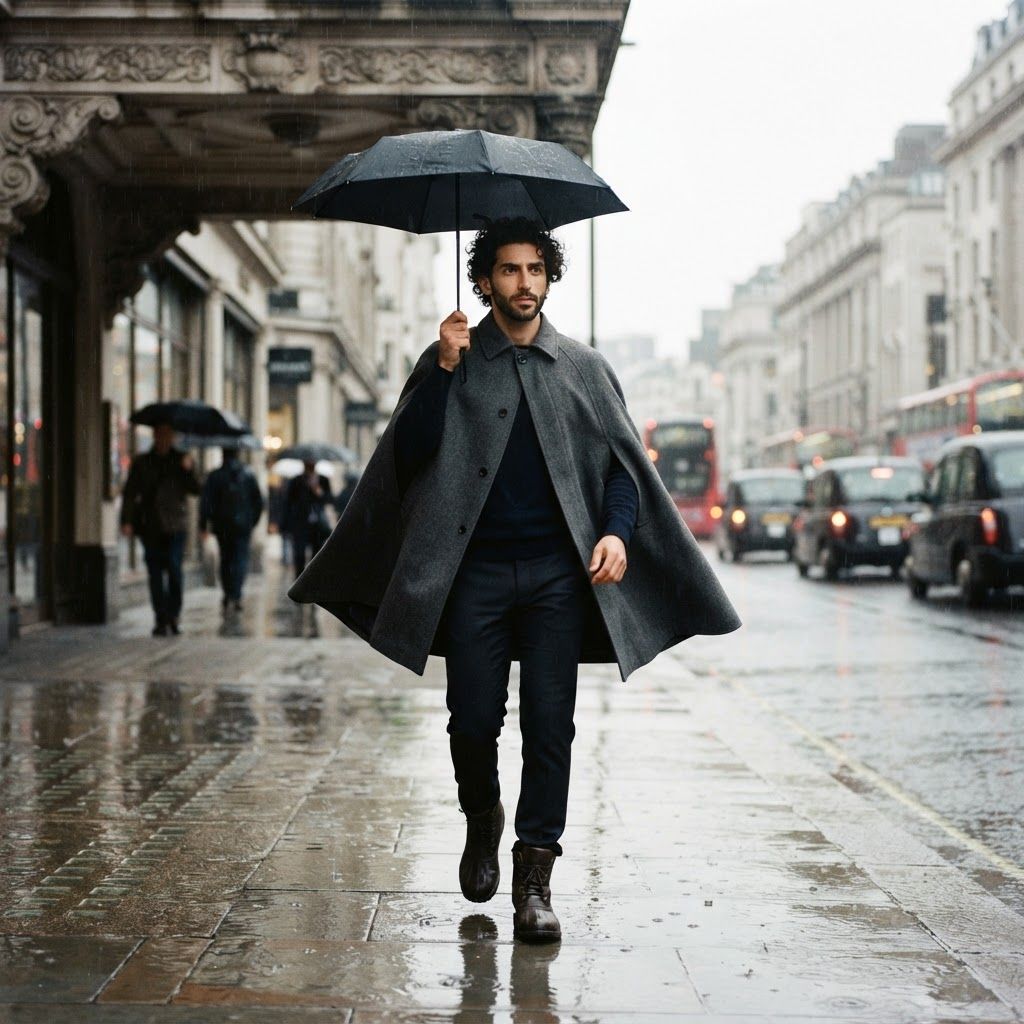
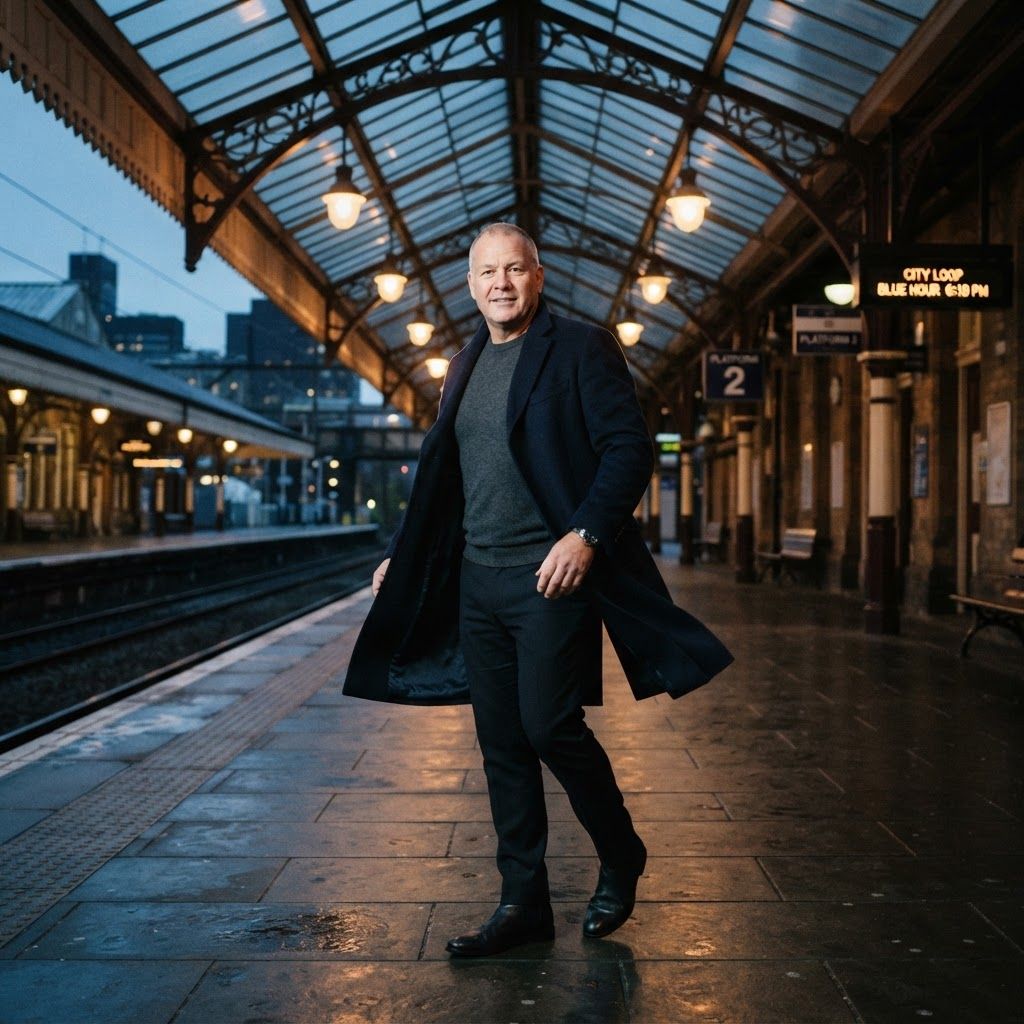
A cape brings movement to a rainy-day outfit without the firm fit of a tailored coat. Try one that falls past your hips. Straight trousers and boots with grip give its wide shape a steady base.
Check the opening before you head out. Rain can reach your arms through open sides, and a shoulder bag may bunch the fabric. On a wet sidewalk, the swinging hem makes the cape’s shape easy to see. A walking pose shows more than standing still.
Walk toward the camera at a slight angle, with a calm, focused face. Use soft, cloudy light. Let a charcoal cape swing over straight trousers and weather-ready boots. Avoid deep puddles and bags that hide the hem.
Choose a photo to create your version
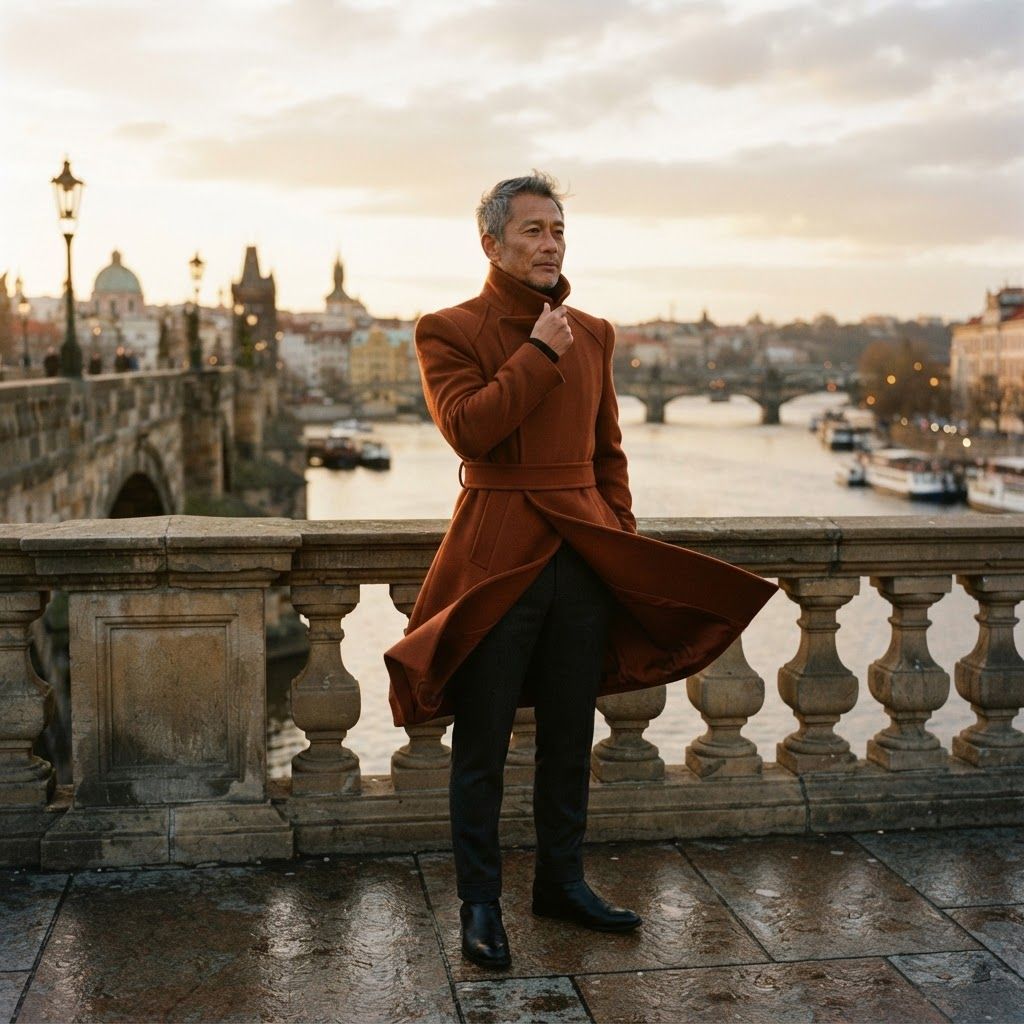
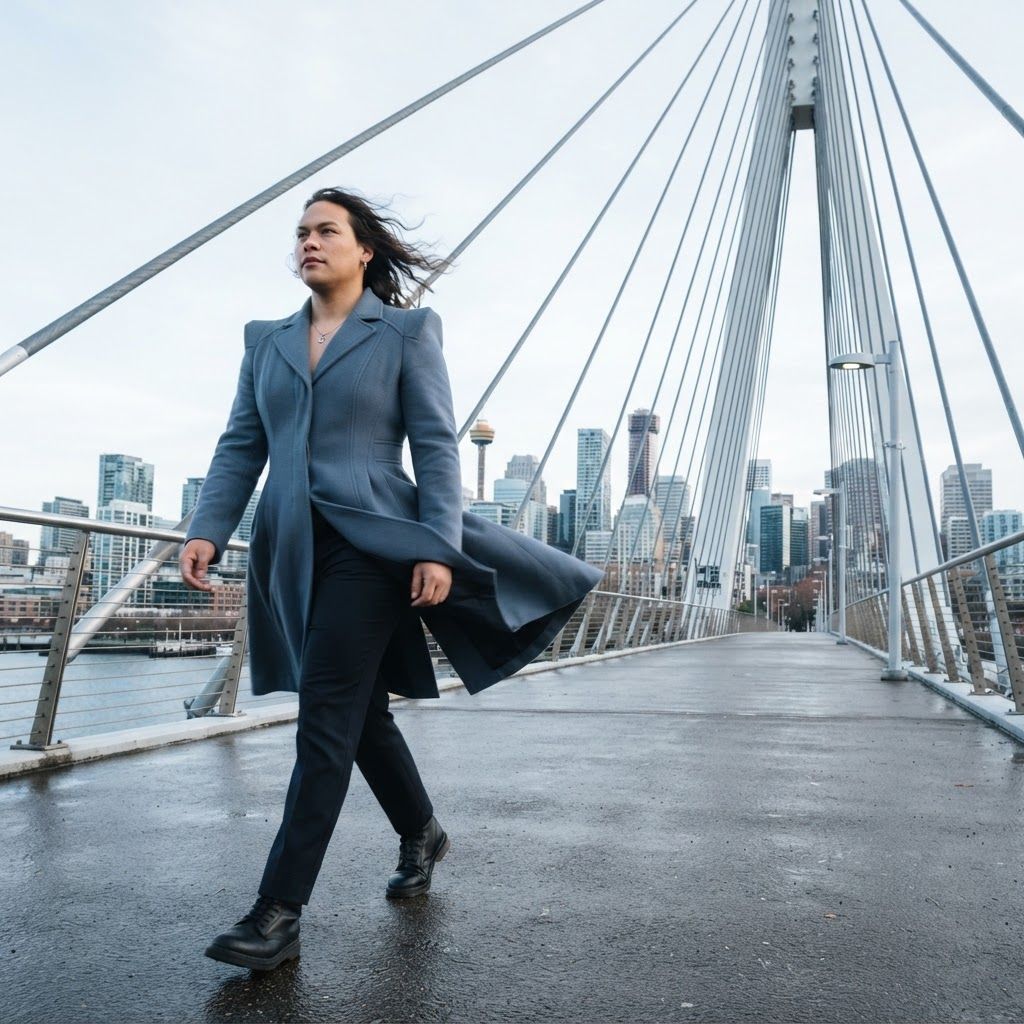
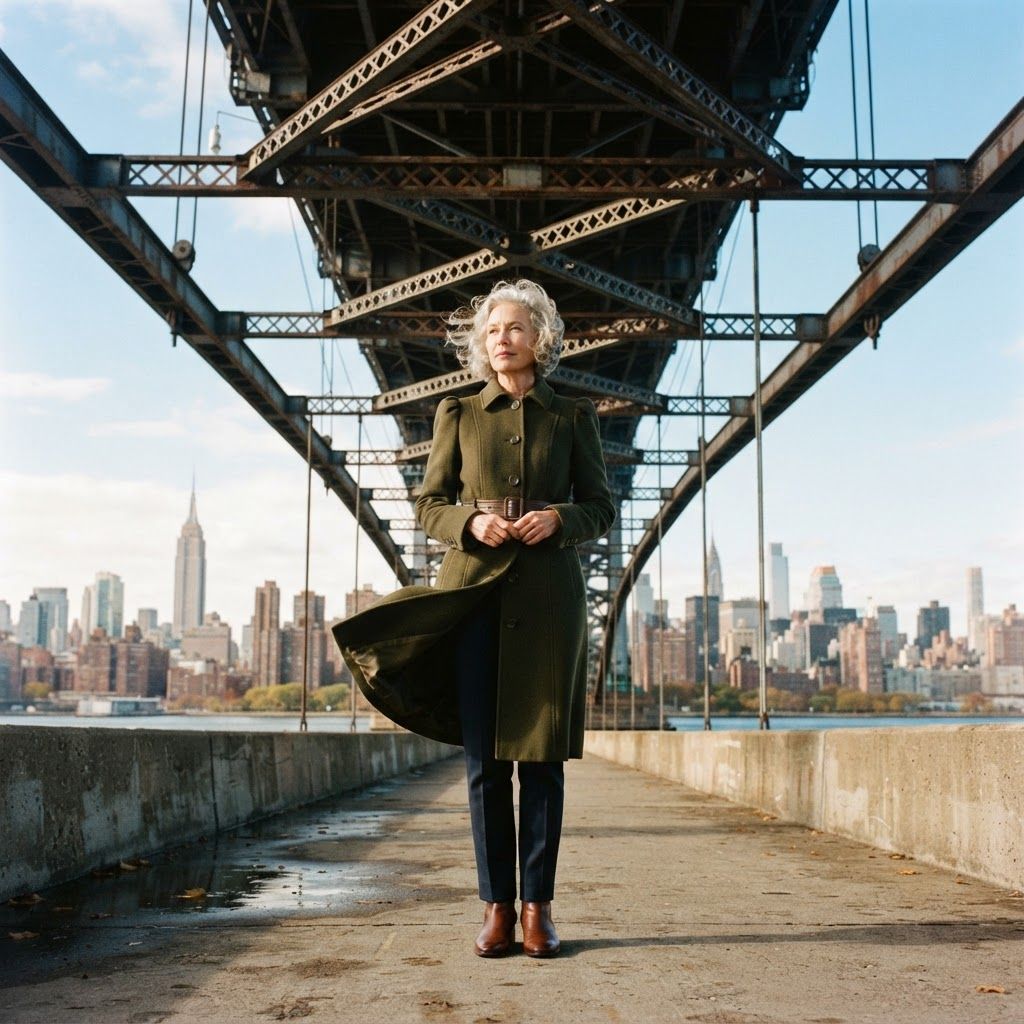
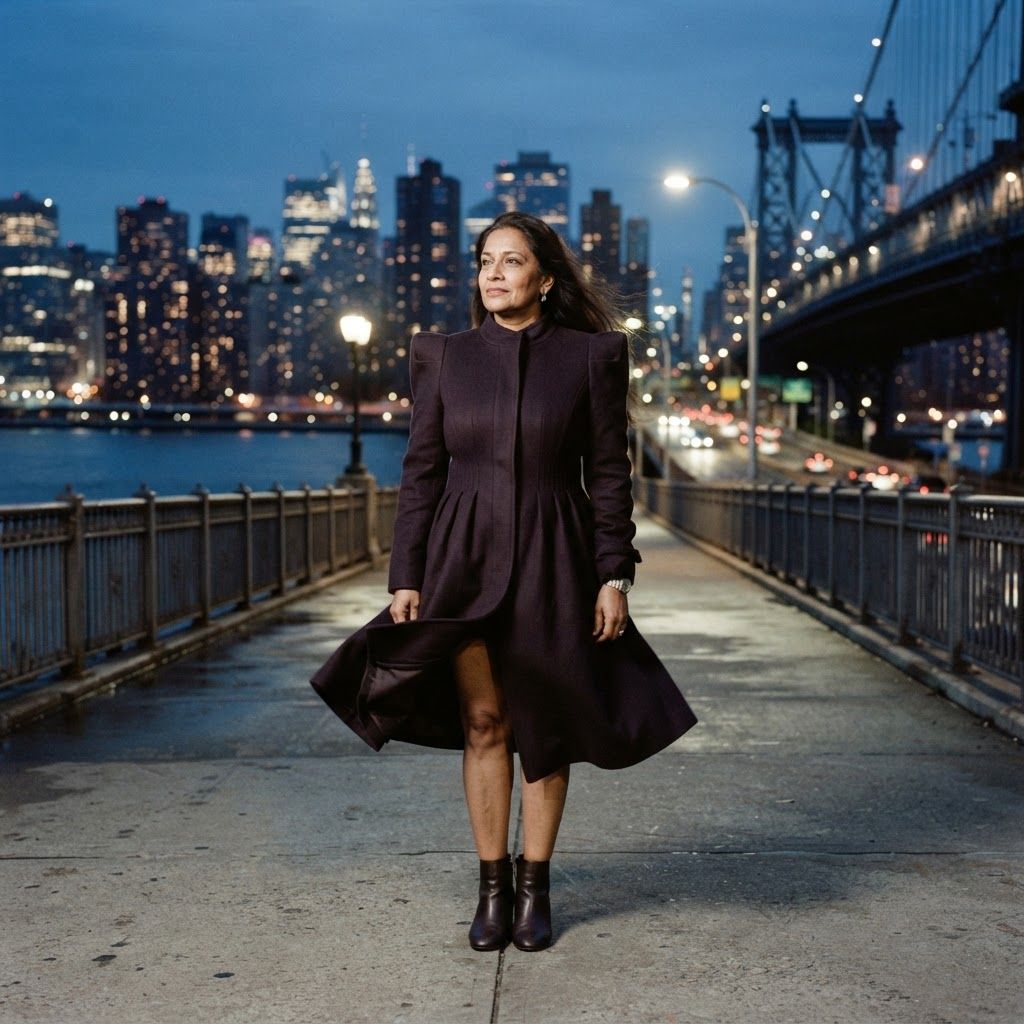
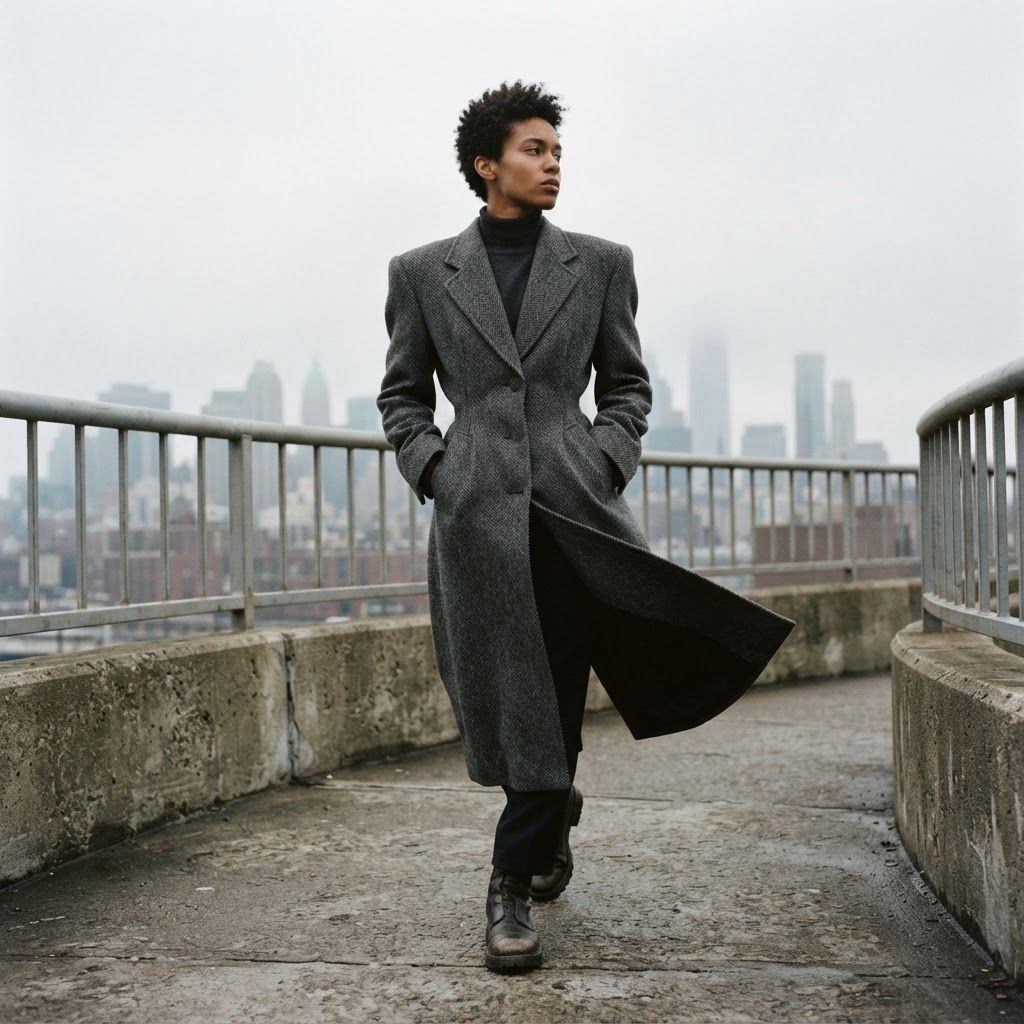
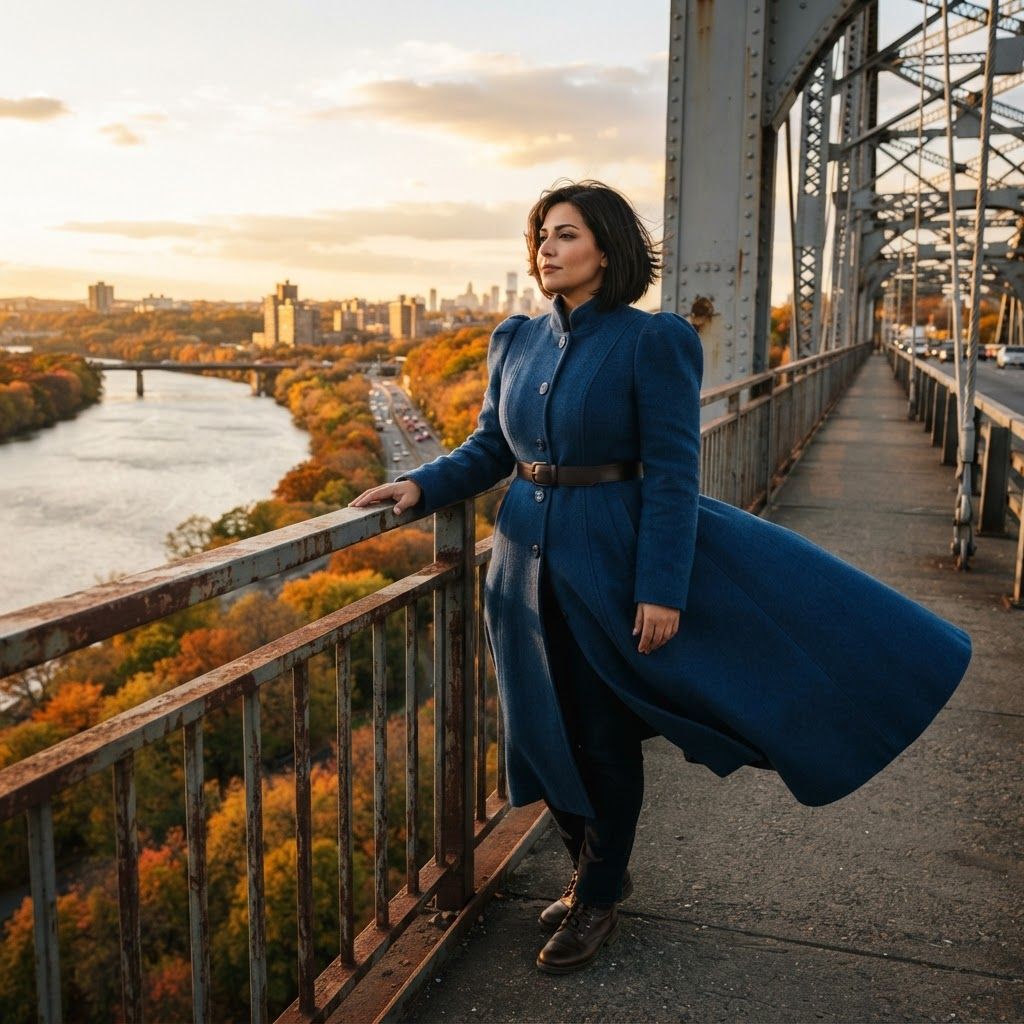
Sculptural Coat on a Windy Bridge
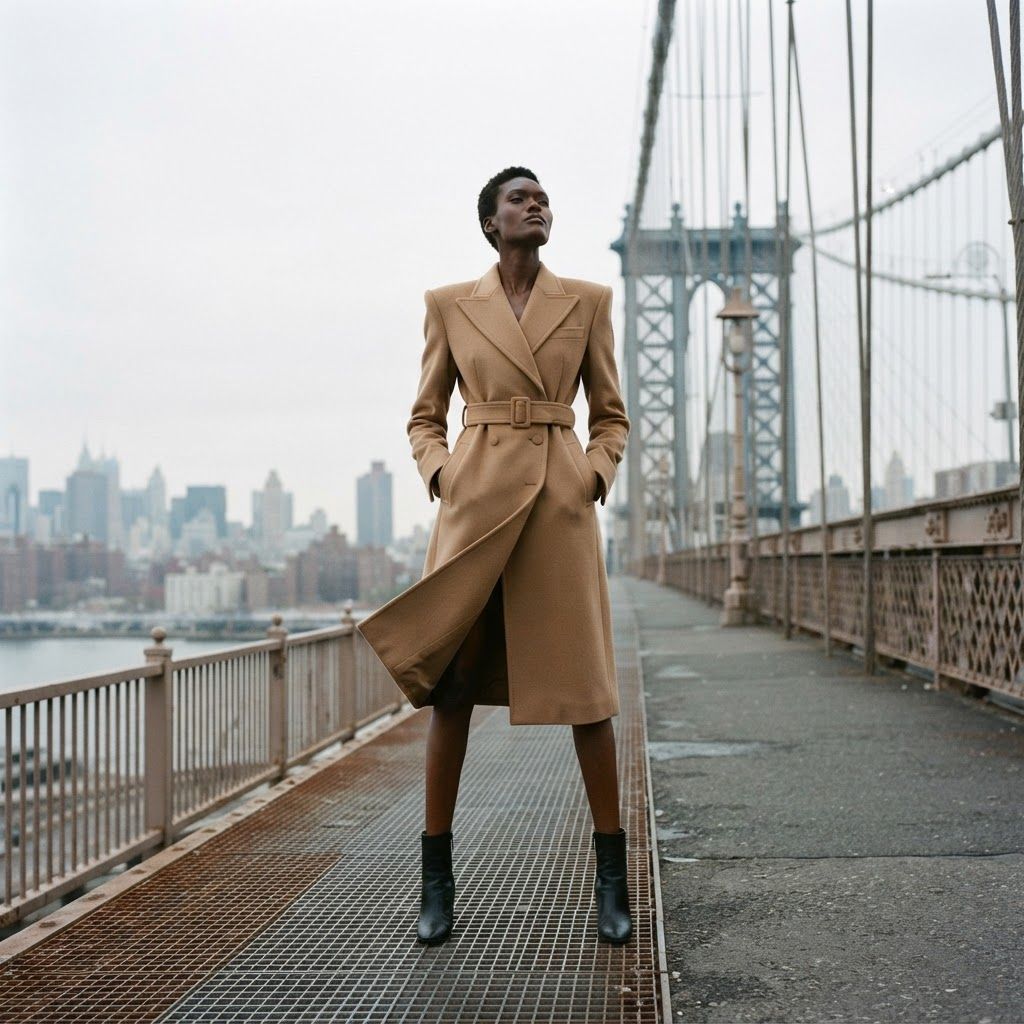
A coat with strong shoulders and a defined waist makes a bold outline. Keep the layers beneath it slim so the coat does the work. Try raising your arms before you choose one; a striking shoulder is less useful if it limits your movement.
Wind can show how the coat is built, but it can also blow a loose front across your waist. Fasten a belt or a button to keep that shape visible. A clear skyline and a low camera angle give the shoulders room without adding visual clutter.
Face into the wind for a full-length frame, standing well away from the bridge edge. Use open daylight, a simple skyline, and a coat with a secure waist. Keep your expression steady. Avoid a camera angle so low that it distorts your proportions.
Choose a photo to create your version
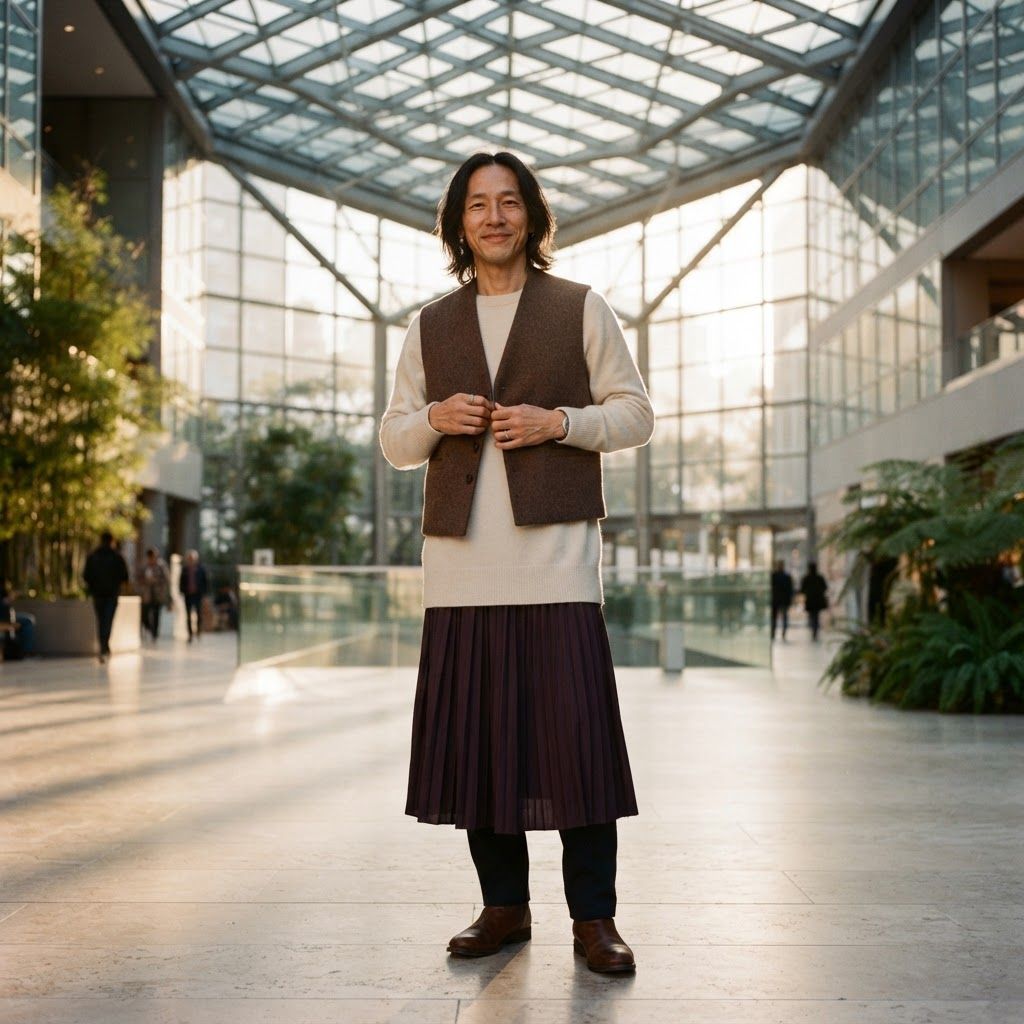
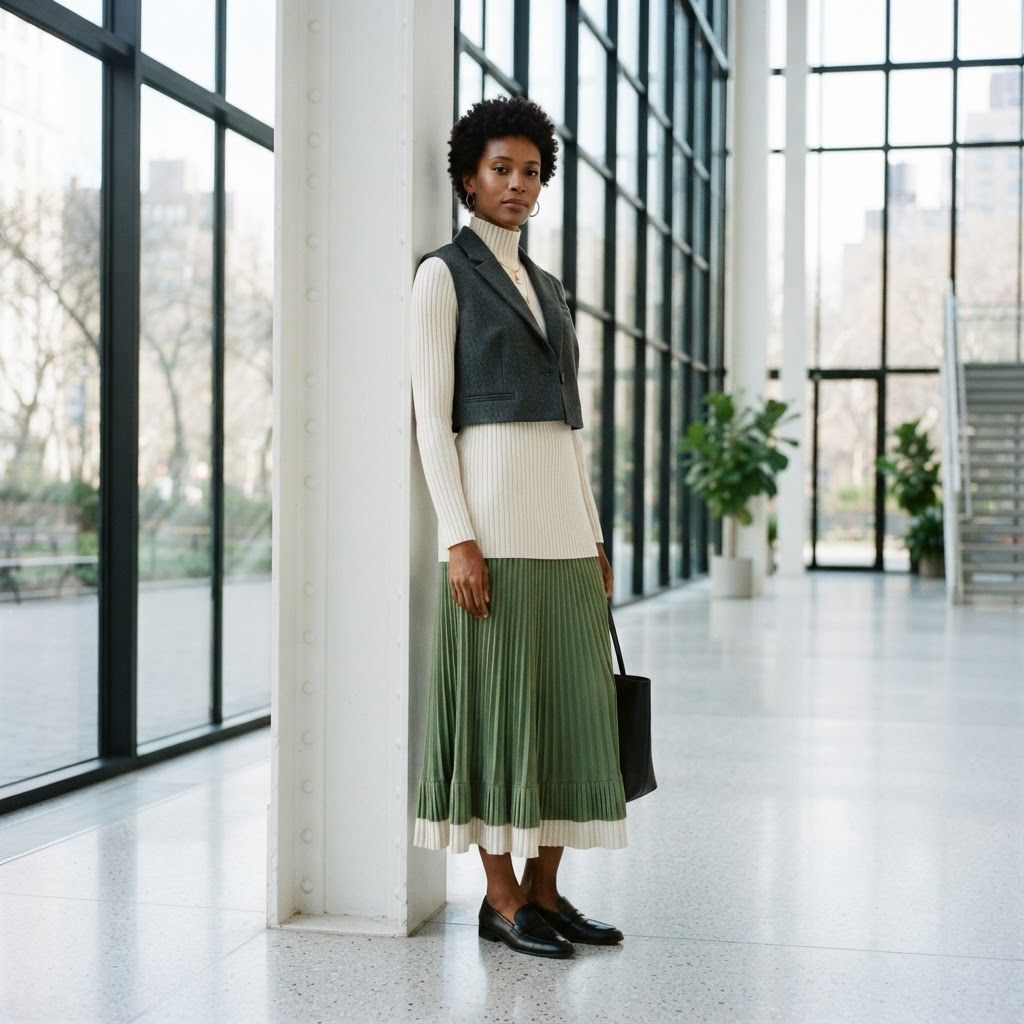
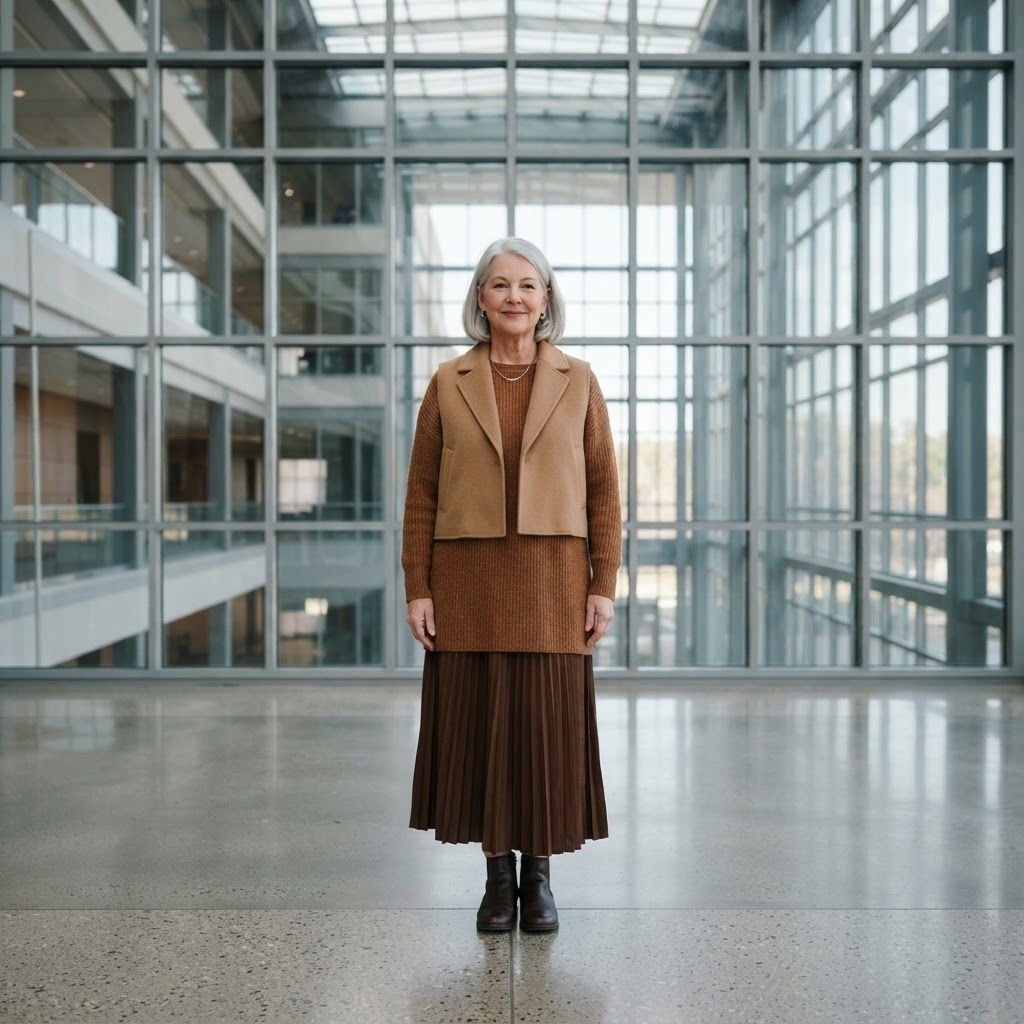
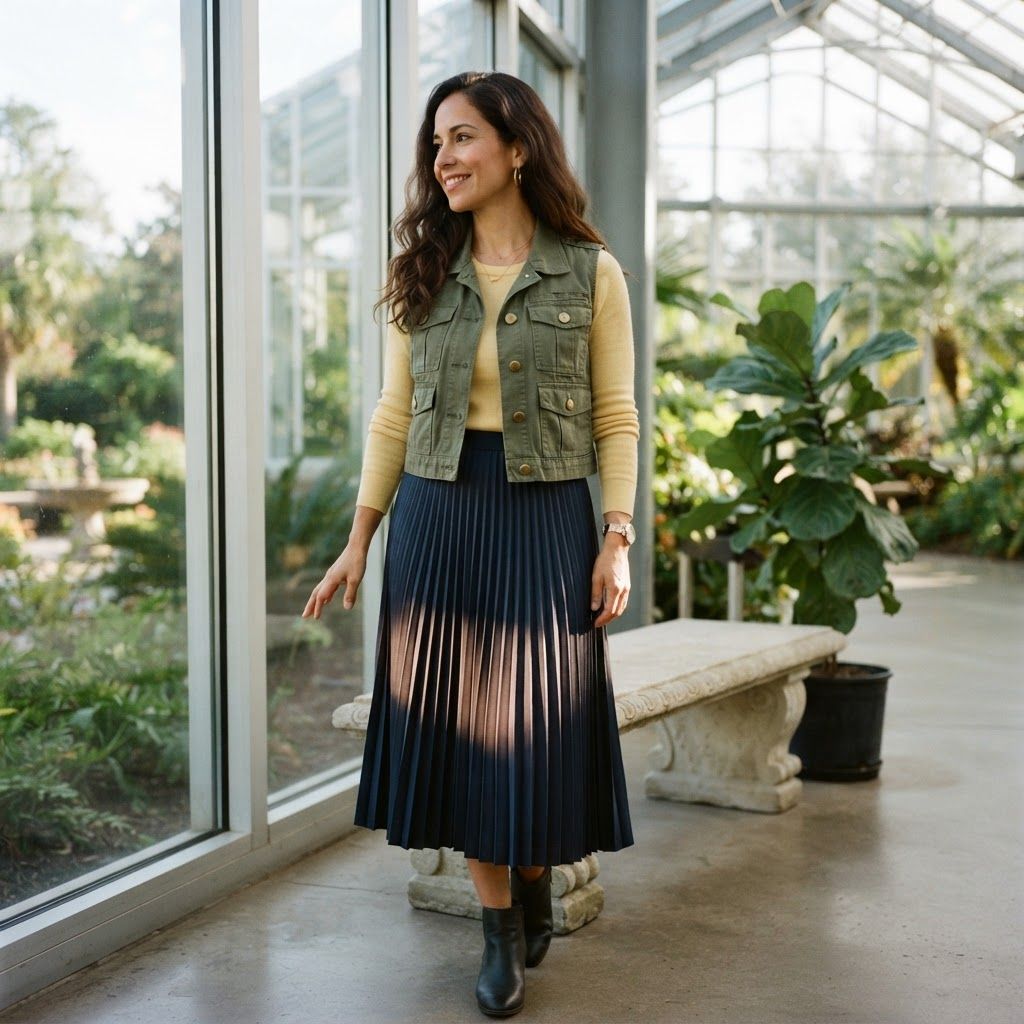
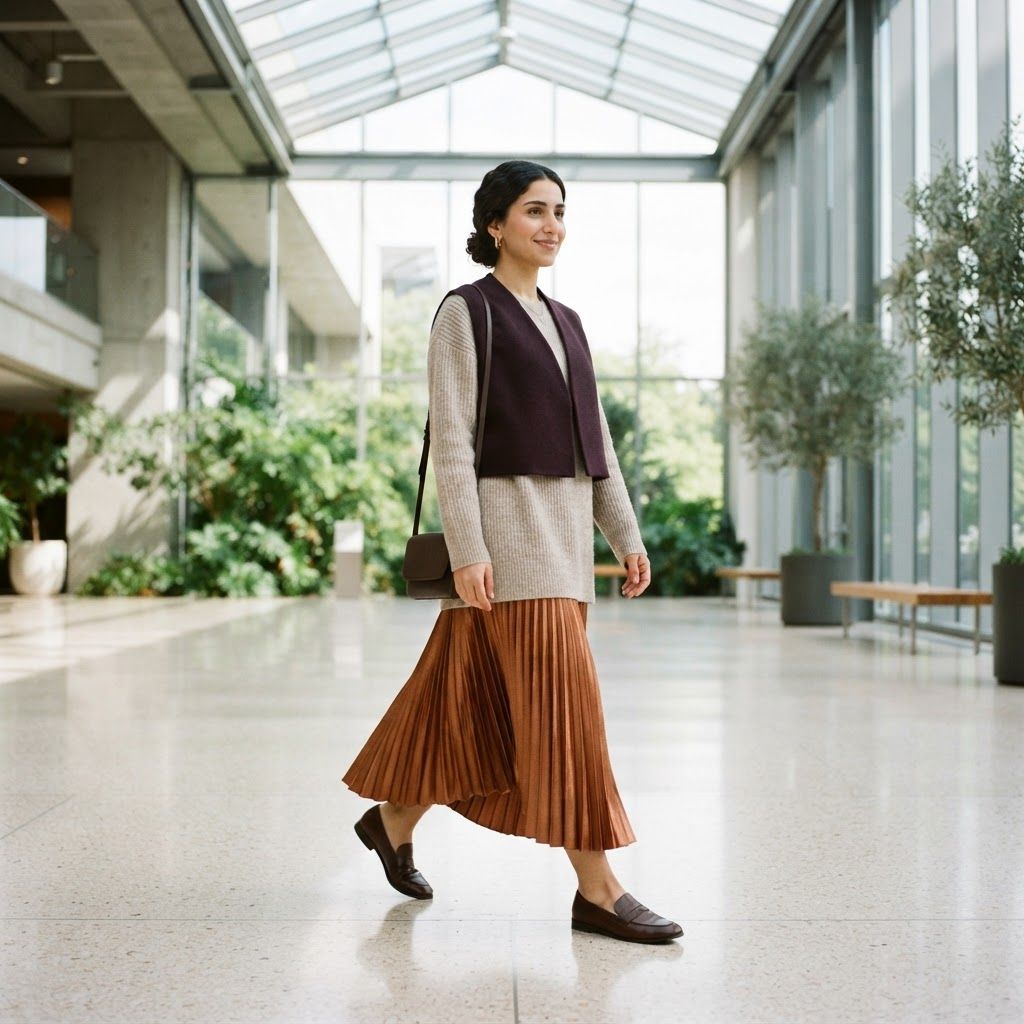
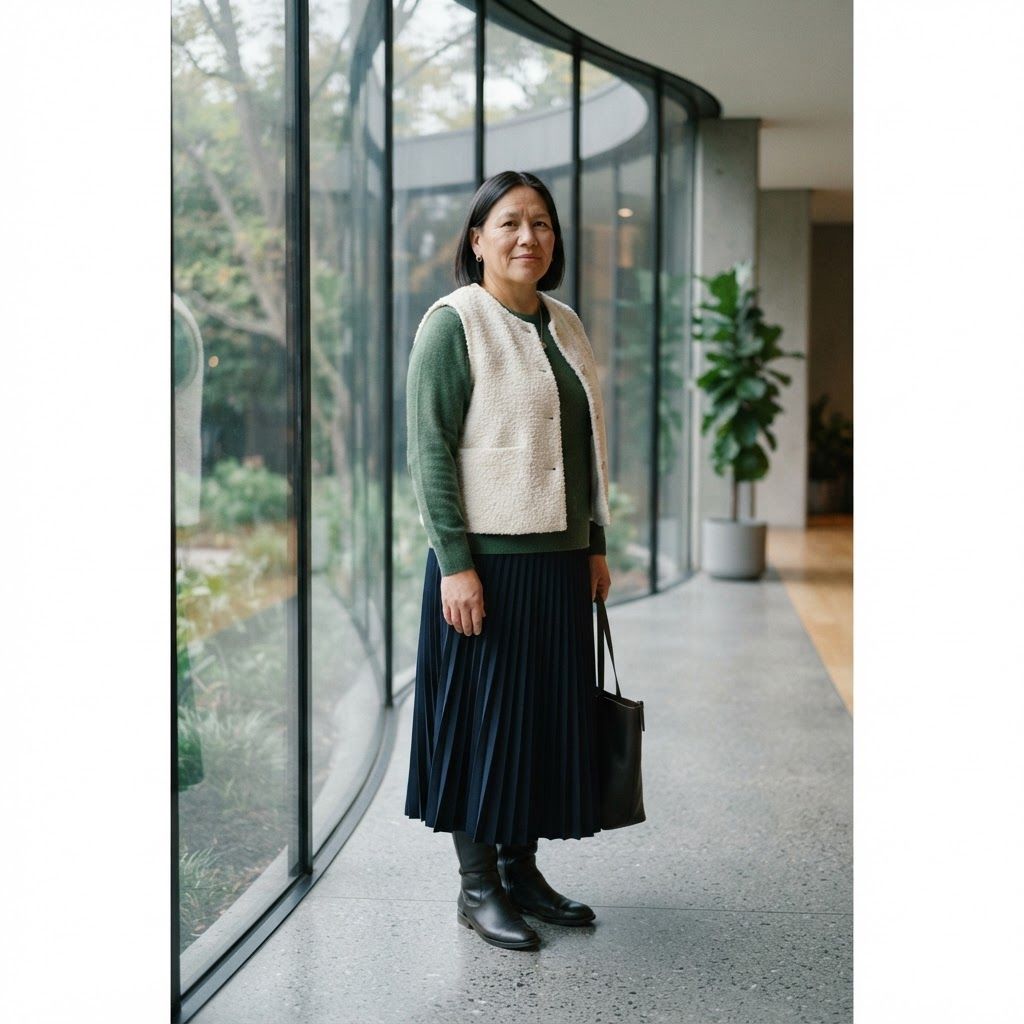
Layered Silhouette in a Glass Atrium
Layers look more deliberate when each length has a job. Put a short vest over a longer, fine knit, then let a pleated skirt fall below both. Leave enough space between the hems to see all three. Light fabrics help you avoid a bulky middle.
This mix works when you need warmth you can adjust indoors. You can remove the vest or change the knit without losing the full outfit. Glass and straight building lines make the lengths easy to compare in a photo, as long as reflections do not cover your outline.
Stand at a three-quarter angle with your arms relaxed and a natural expression. Use bright, even light near glass walls. Show the vest, knit, and skirt as separate layers. Avoid a busy reflection behind your body.
Choose a photo to create your version
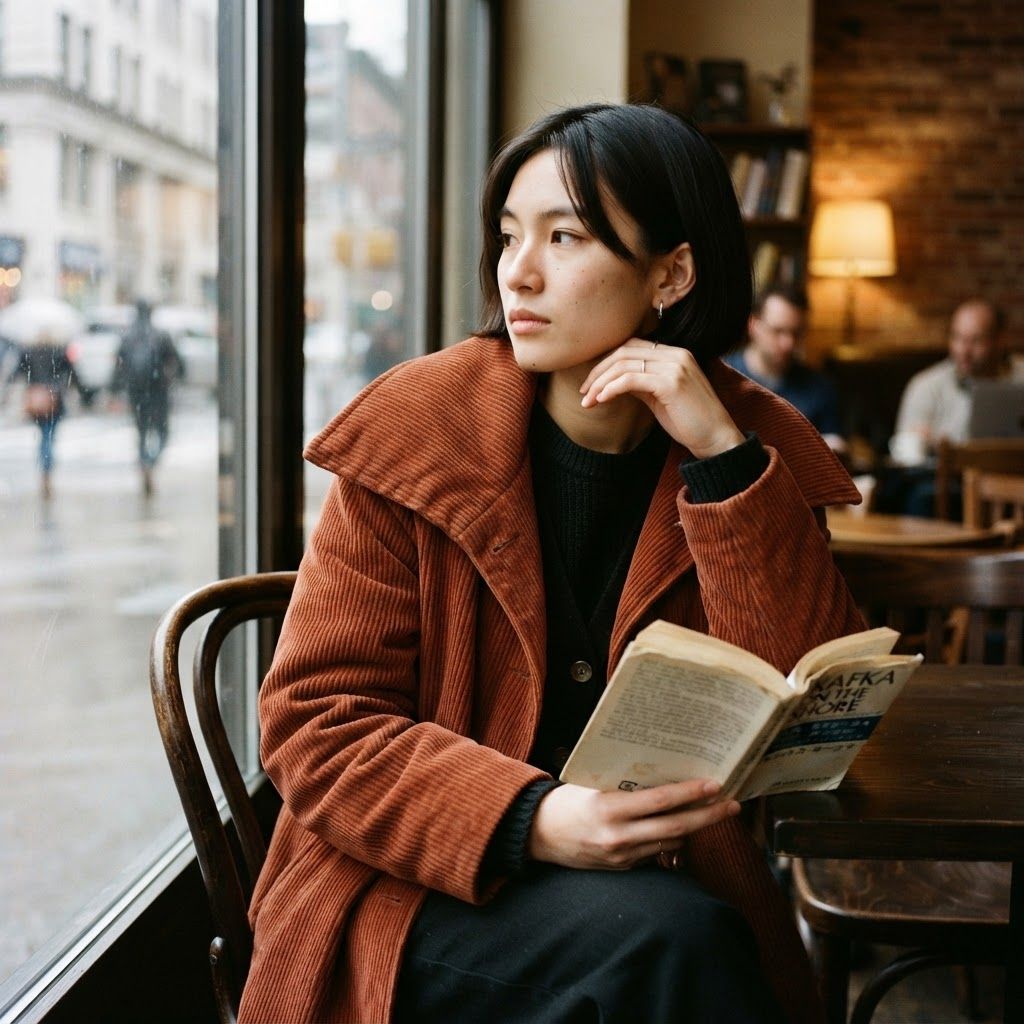
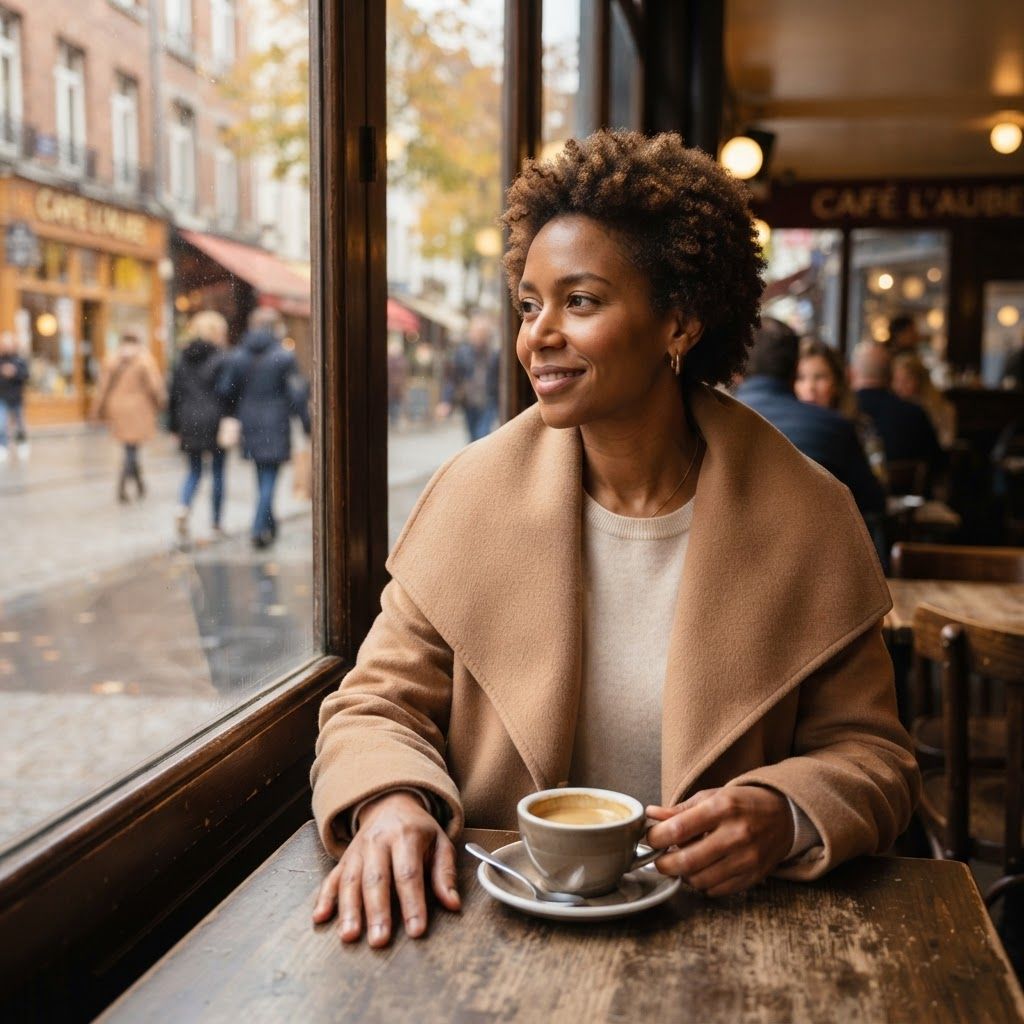
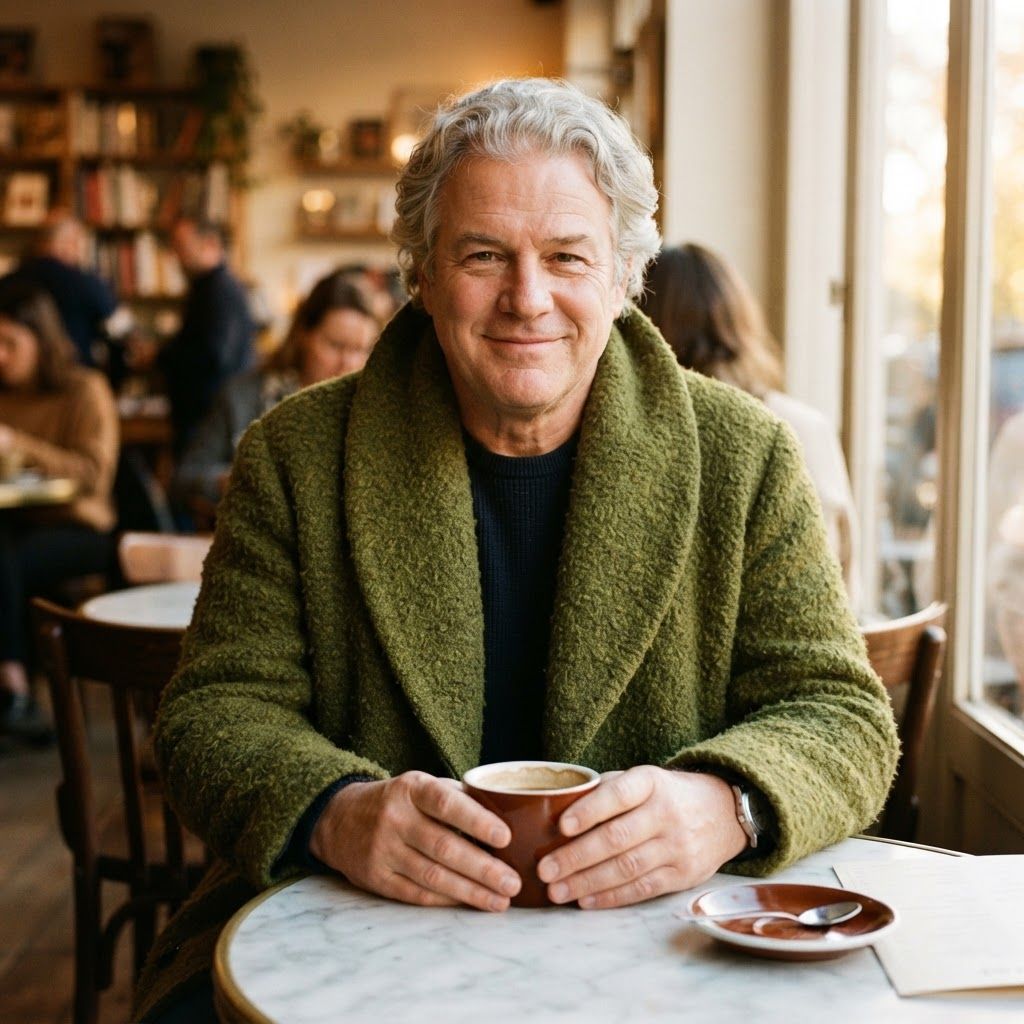
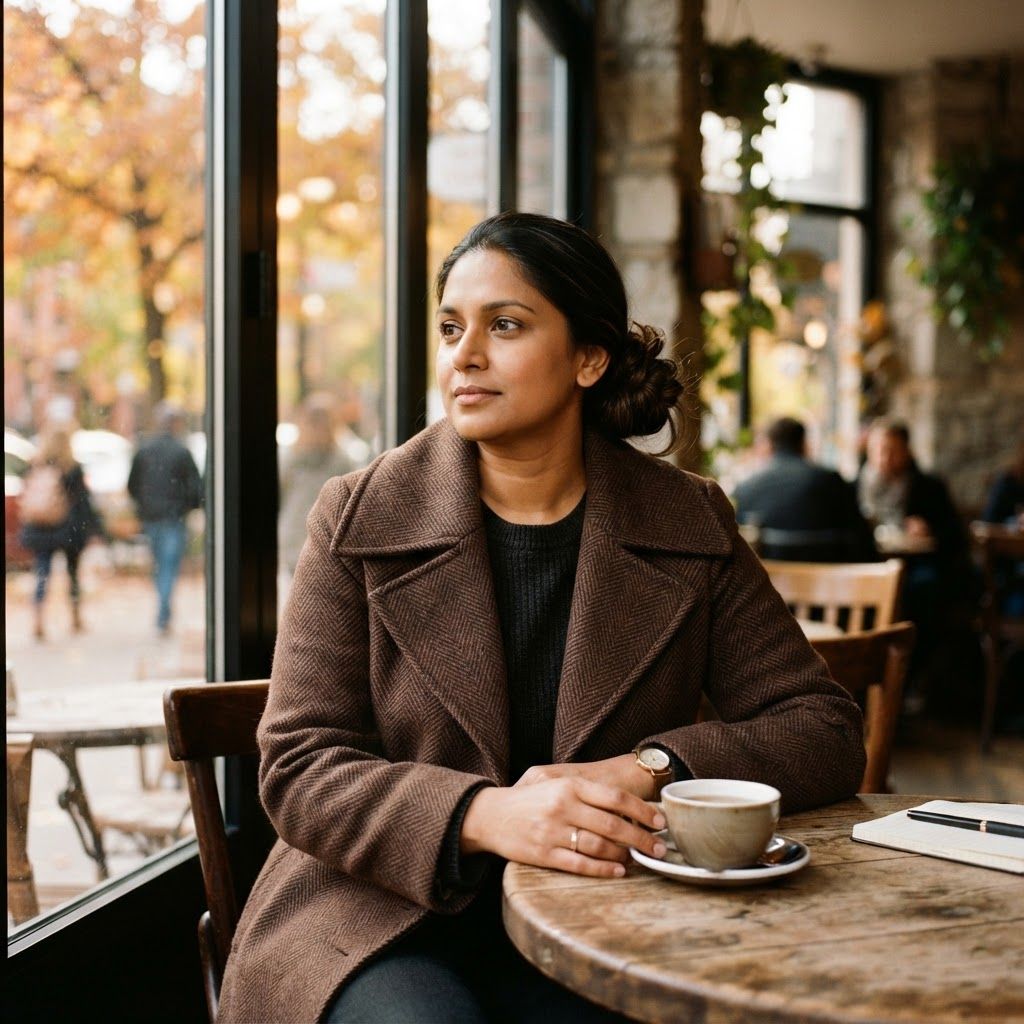
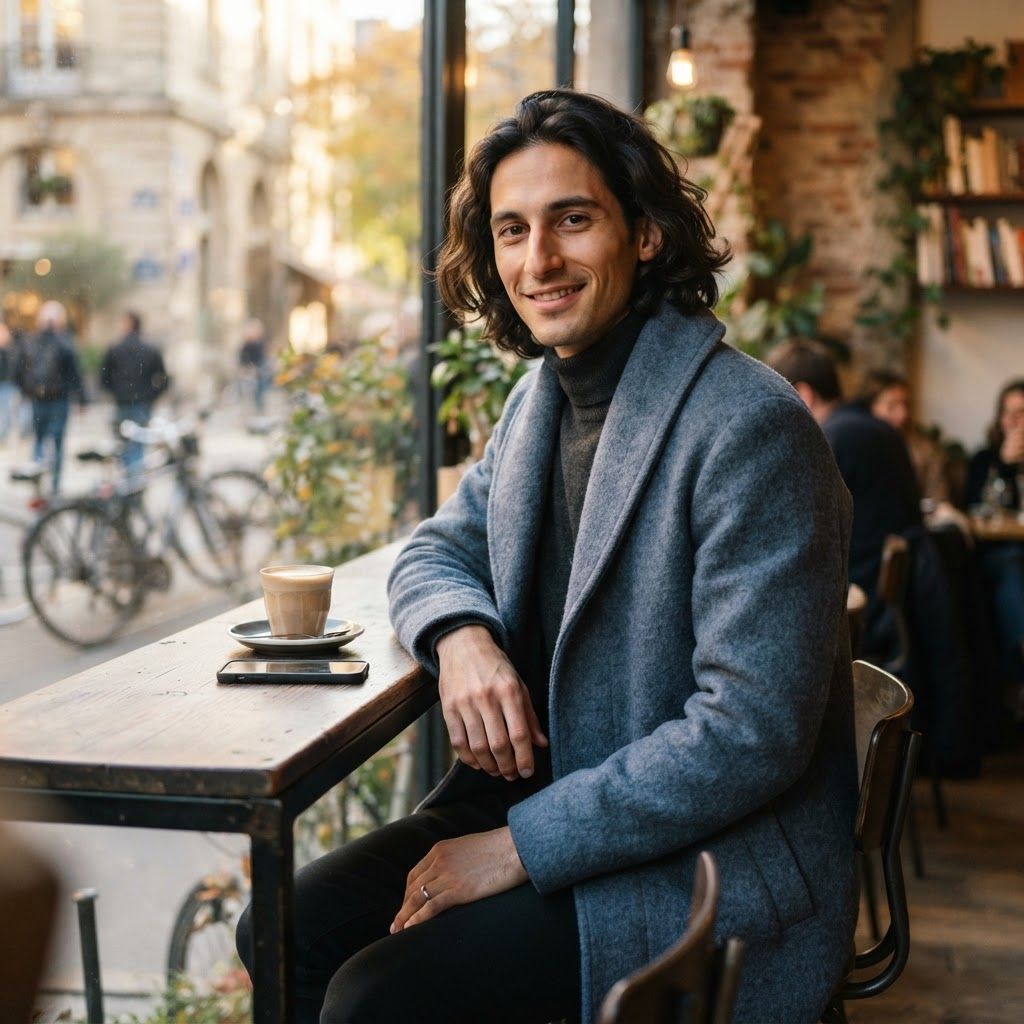
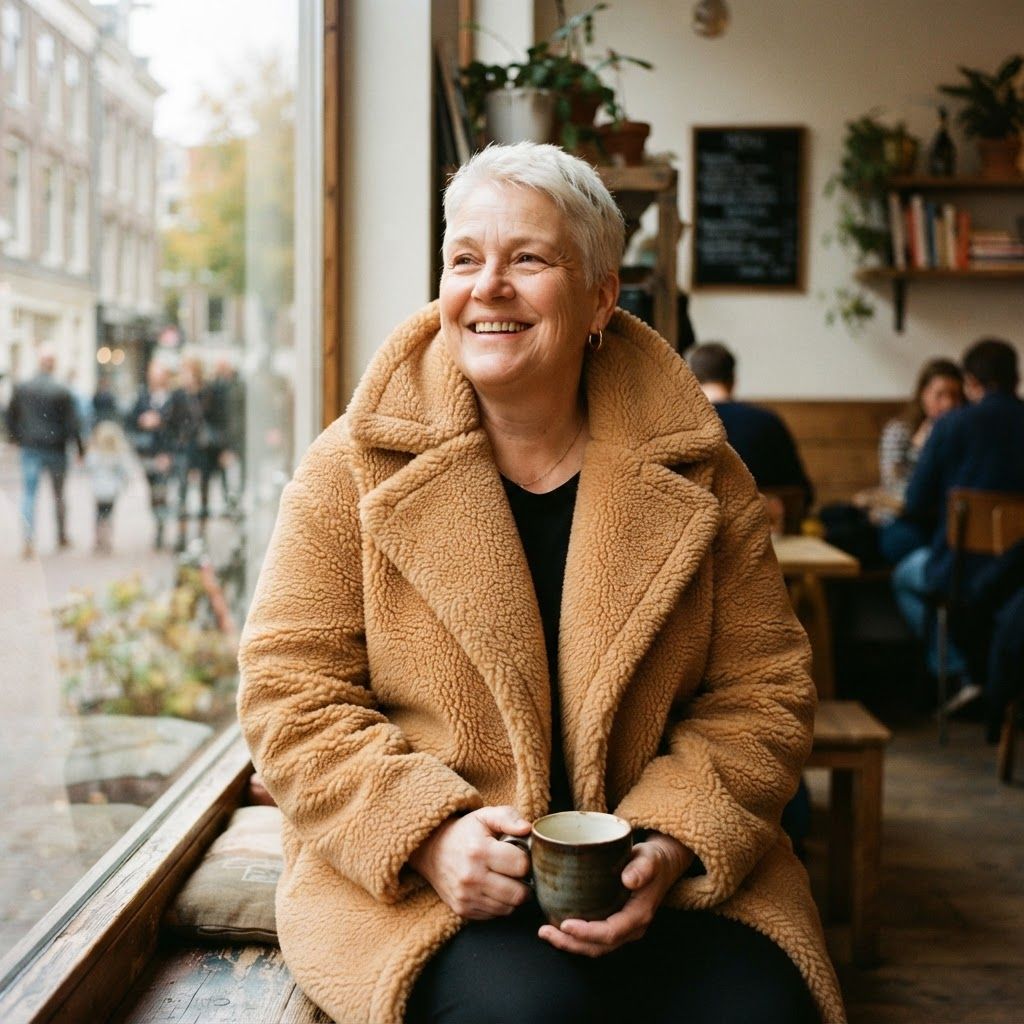
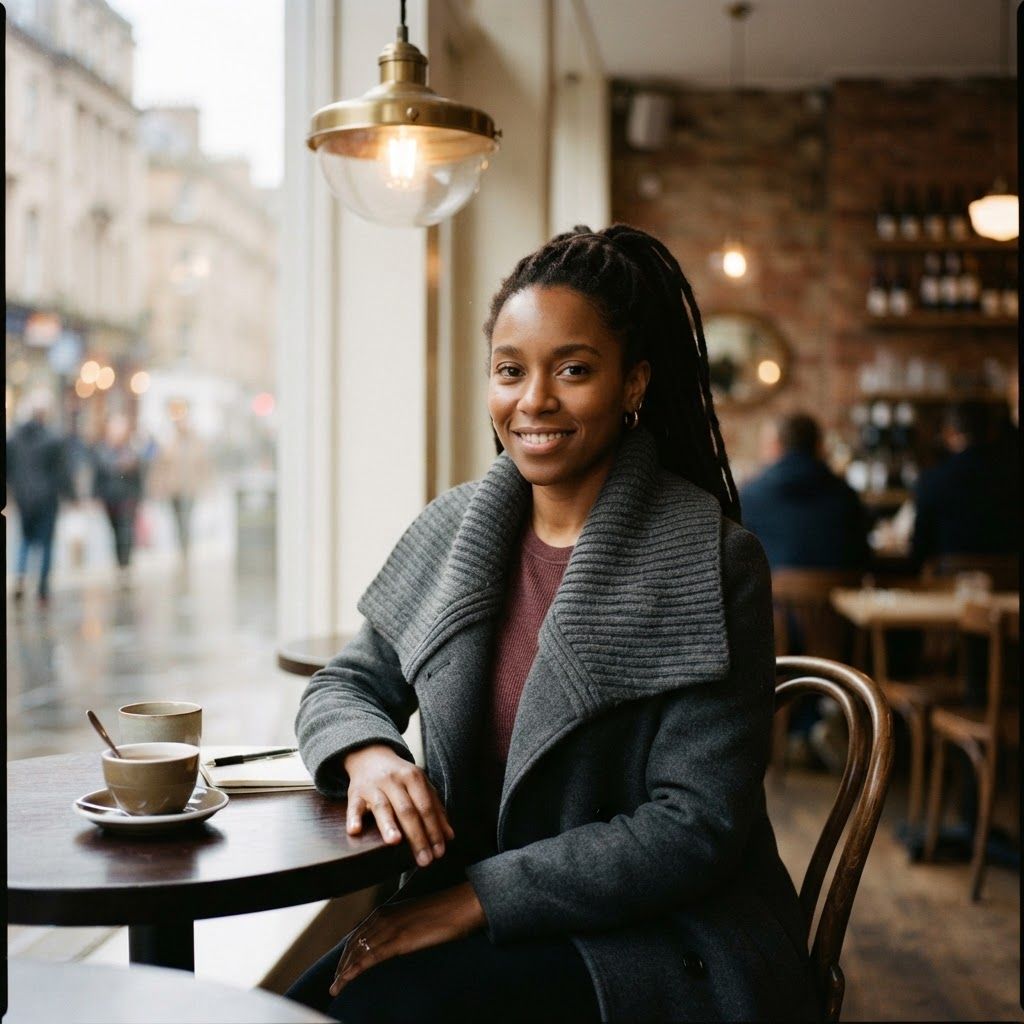
Oversized Collar at a City Café
A generous collar puts the focus near your face, so the rest of your coat can stay simple. Choose fabric soft enough to fold open. If the collar presses against your chin or blocks your view, it is too much for an easy everyday fit.
Try sitting down before you decide how to wear it. Some collars rise at the back or fall forward when you lean. A lower button can help hold one open. In a waist-up café portrait, warm window light shows the texture and keeps the collar inviting rather than heavy.
Sit near a window, turn slightly toward the light, and relax your shoulders. Fold the collar open around your face and wear a simple top beneath it. Keep the café background quiet. Avoid tucking your chin into the fabric.
Choose a photo to create your version
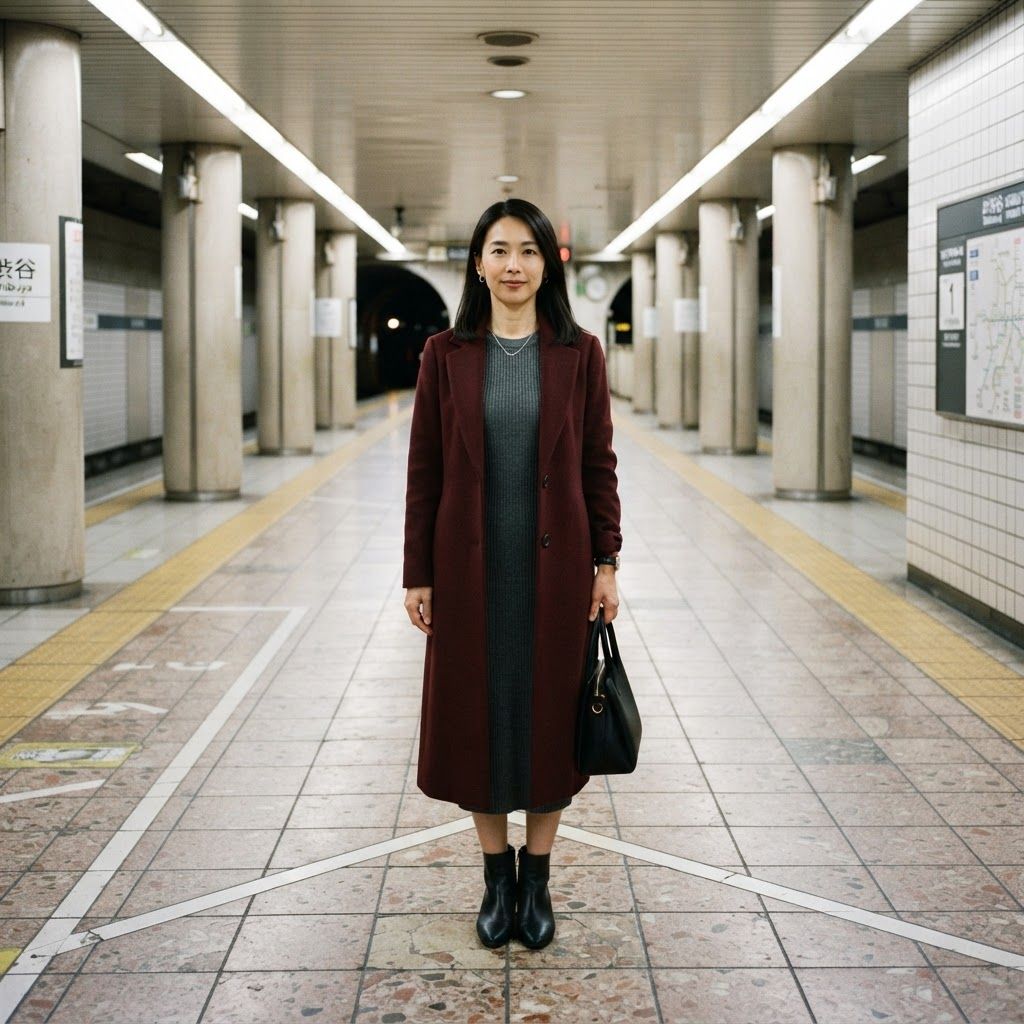
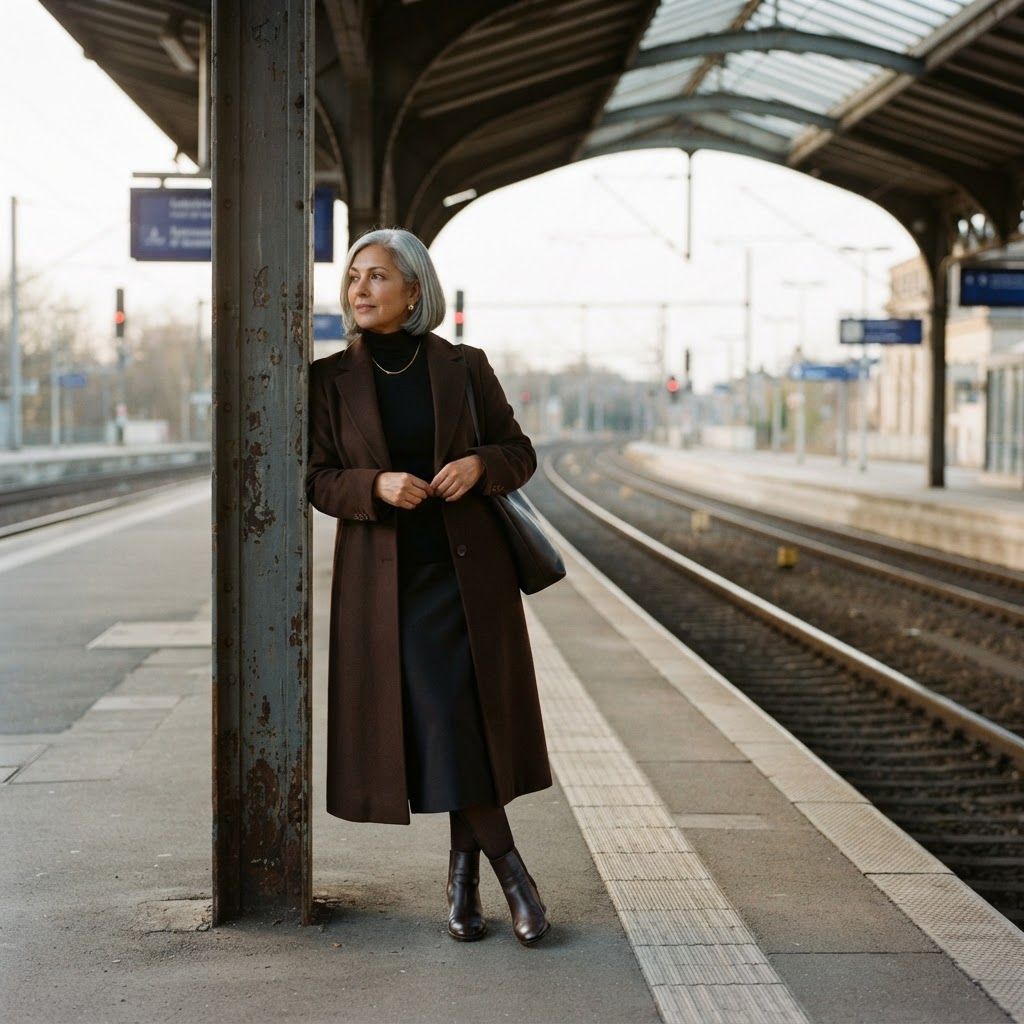
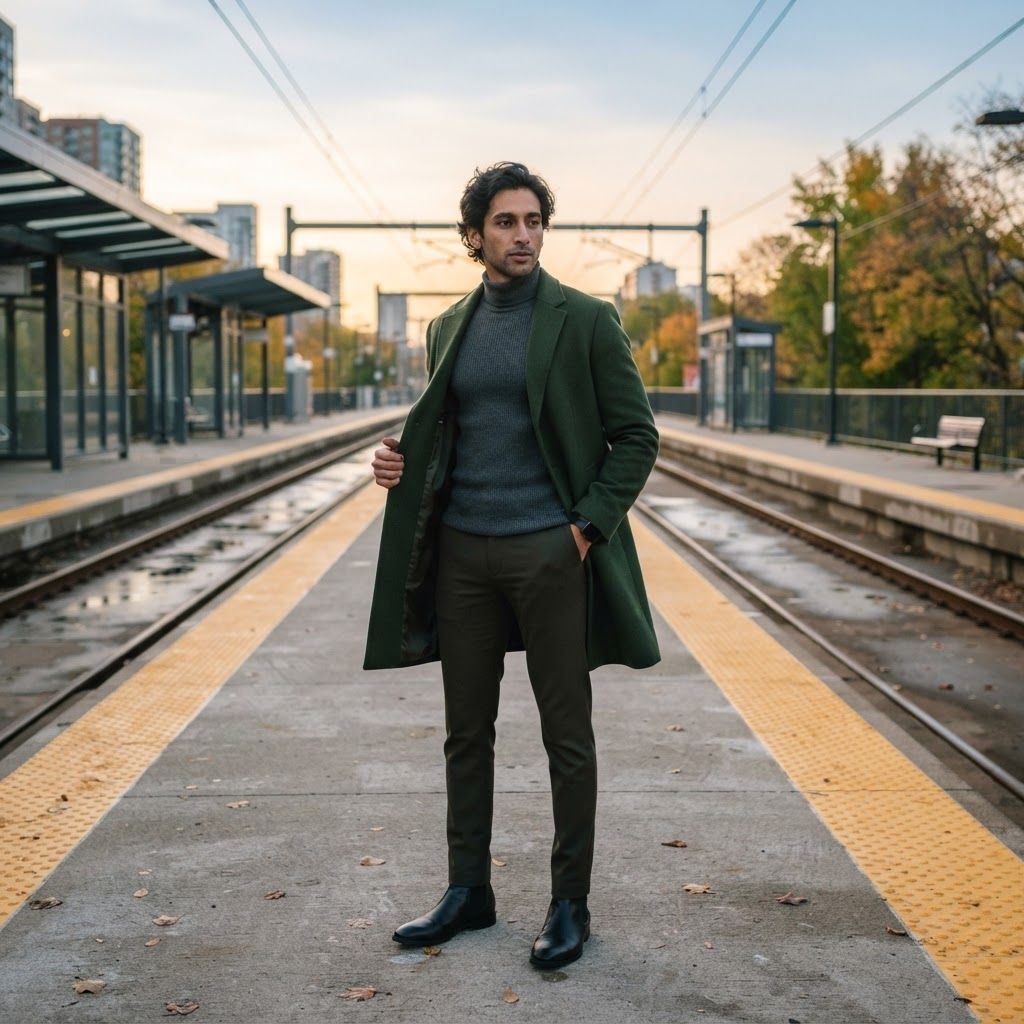
Longline Coat at a Train Platform
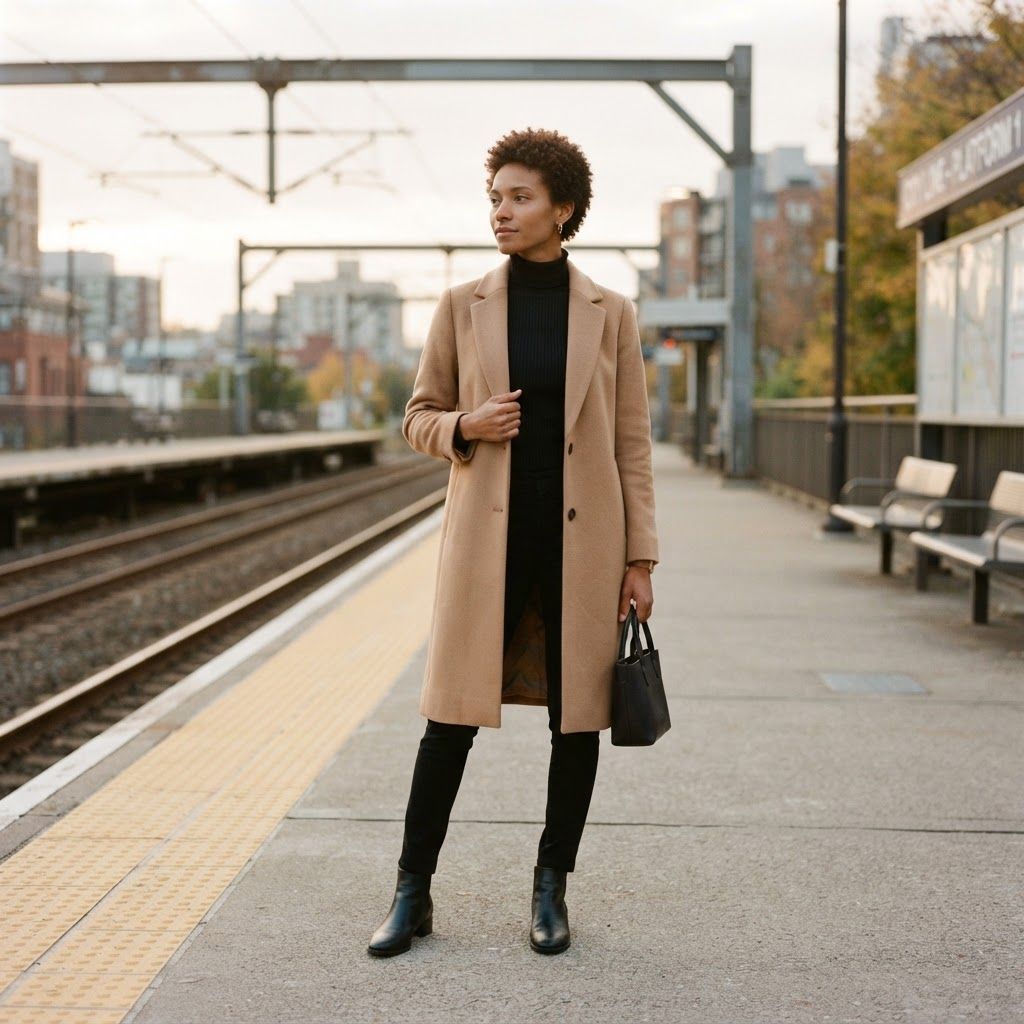
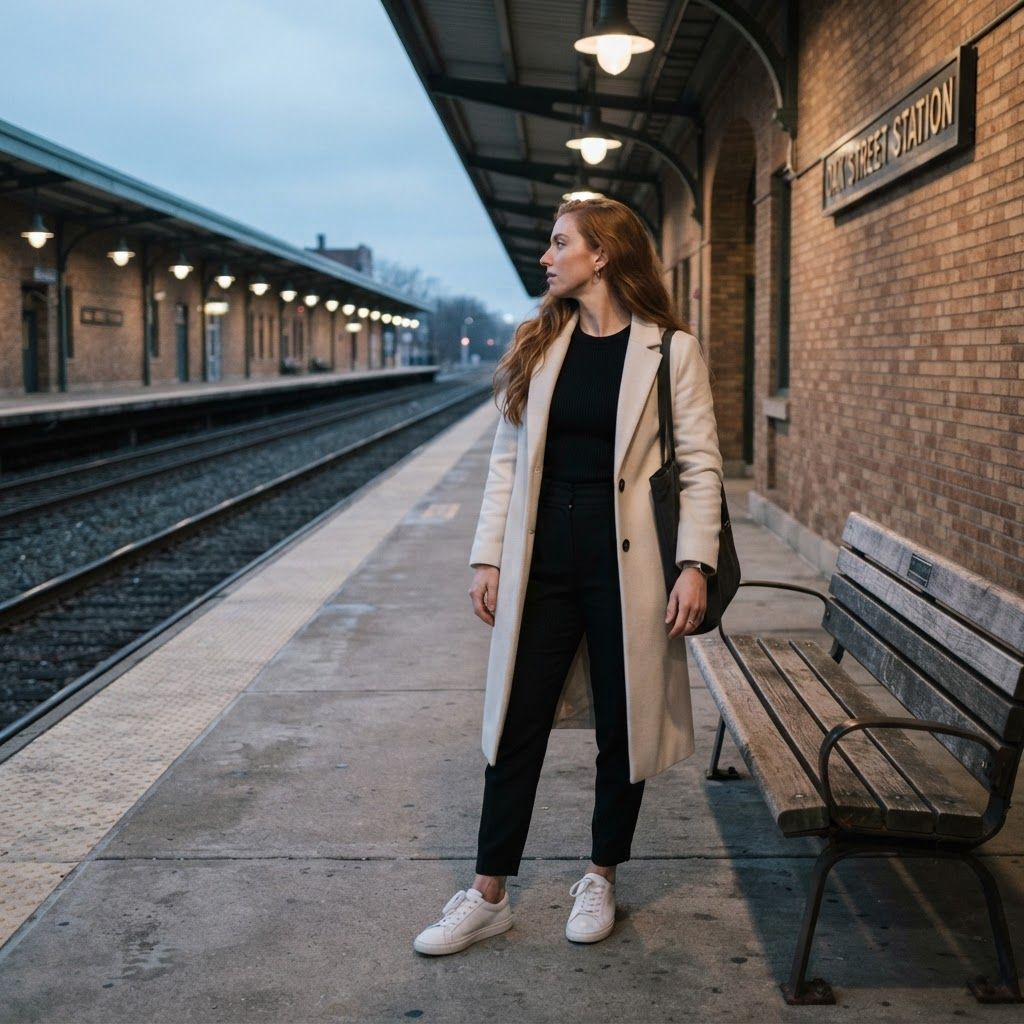
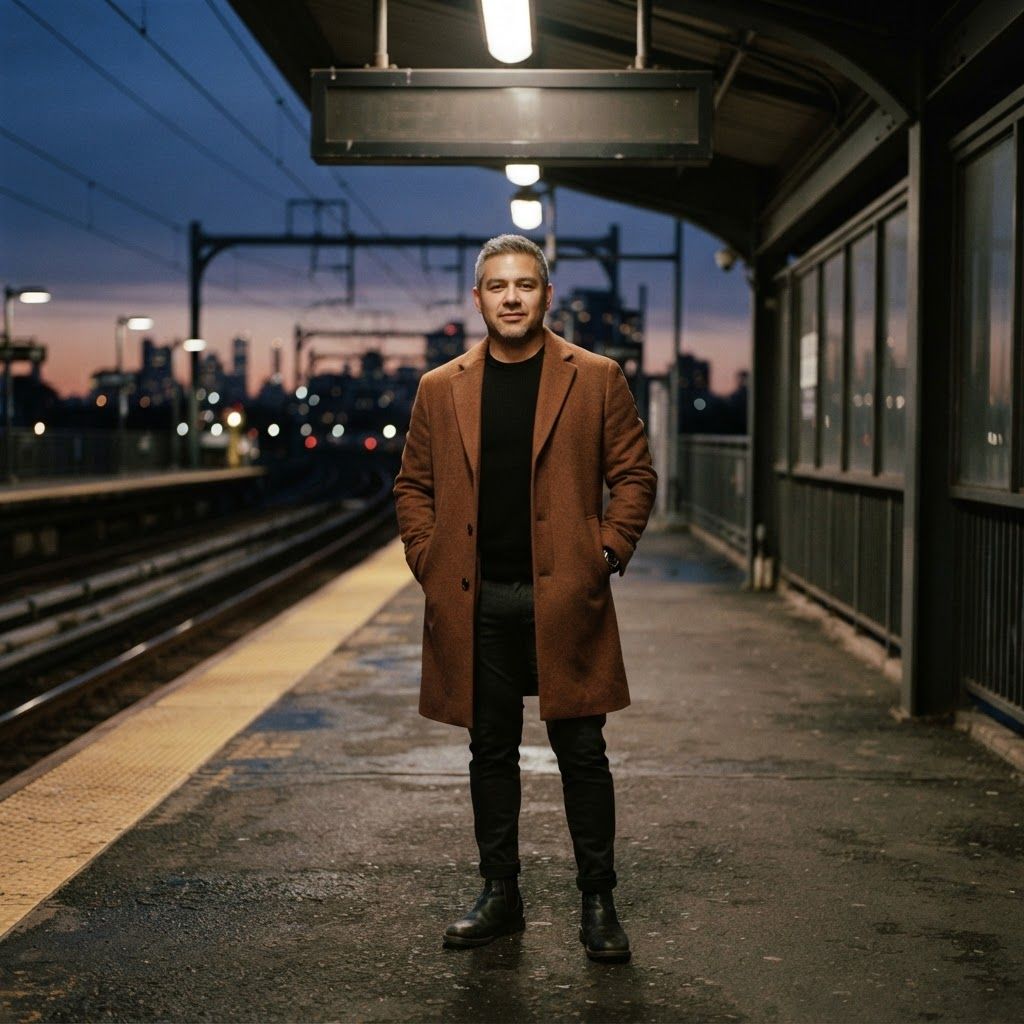
A longline coat makes an outfit feel pulled together while covering the layers beneath it. Wear it slightly open over a fitted knit and straight or narrow trousers. That contrast keeps the front from reading as one heavy block.
Length matters on stairs and crowded trains. Choose a hem that clears your shoes, and close the coat when the platform is windy. An open, quiet platform gives the coat room in a full-length photo. Its long lines lead the eye toward you without extra styling.
Stand well behind the platform safety line, beside the lines that run into the distance. Use soft daylight, a relaxed face, and a long coat open enough to show fitted layers. Avoid cropping the hem or posing near the edge.
Choose a photo to create your version
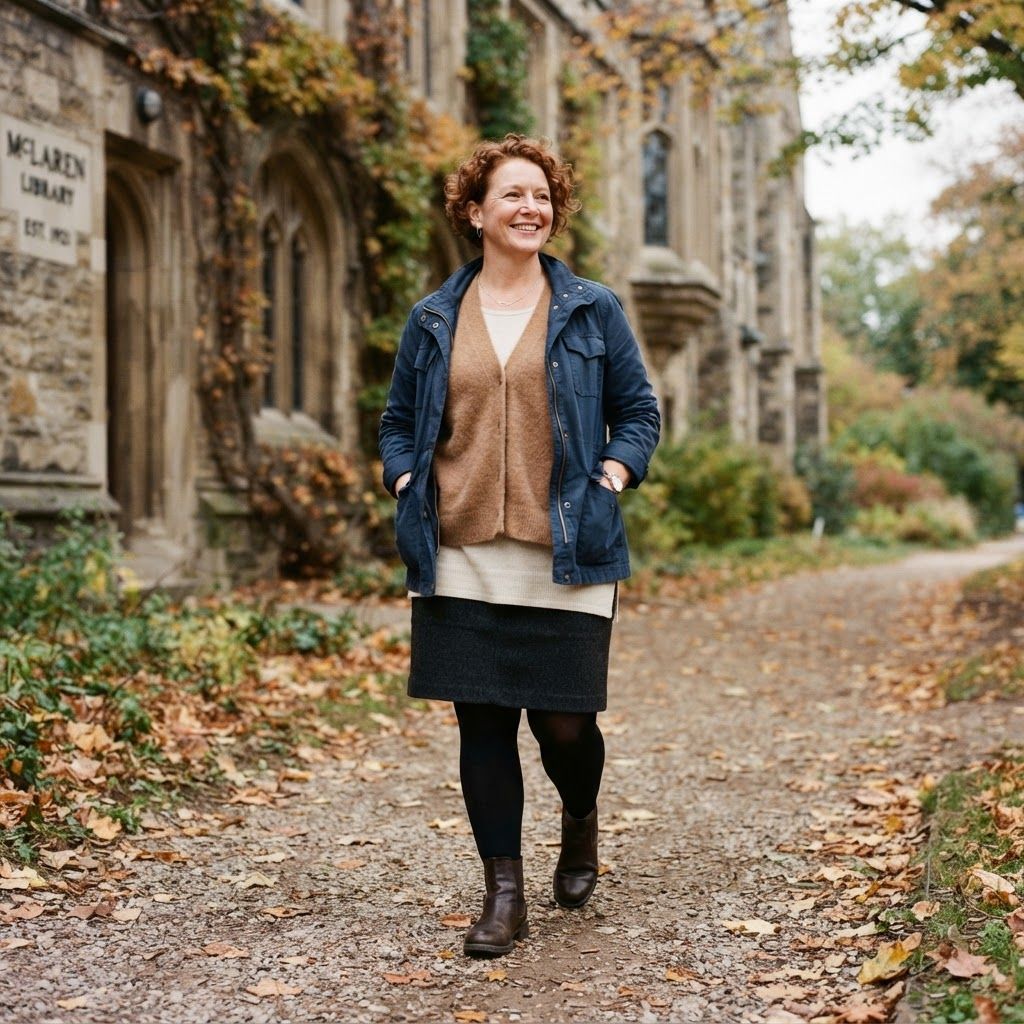
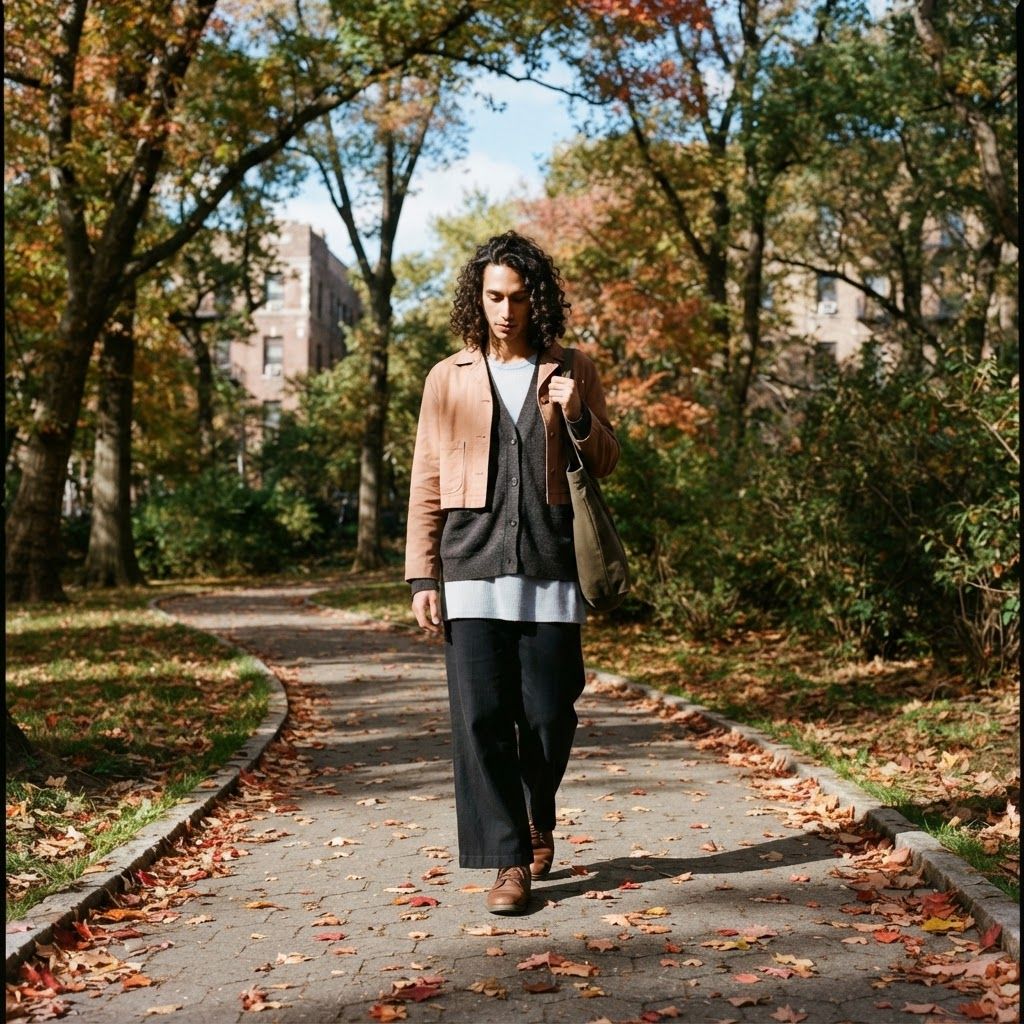
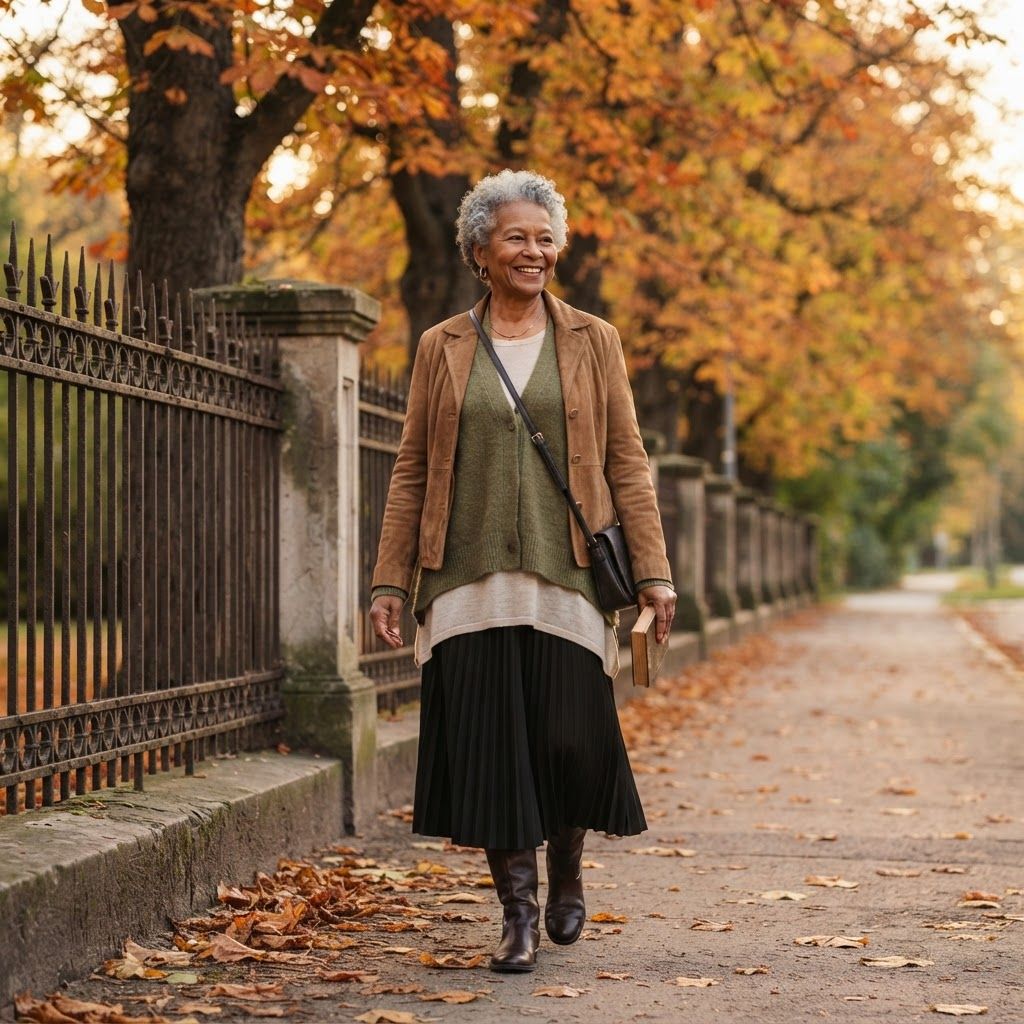
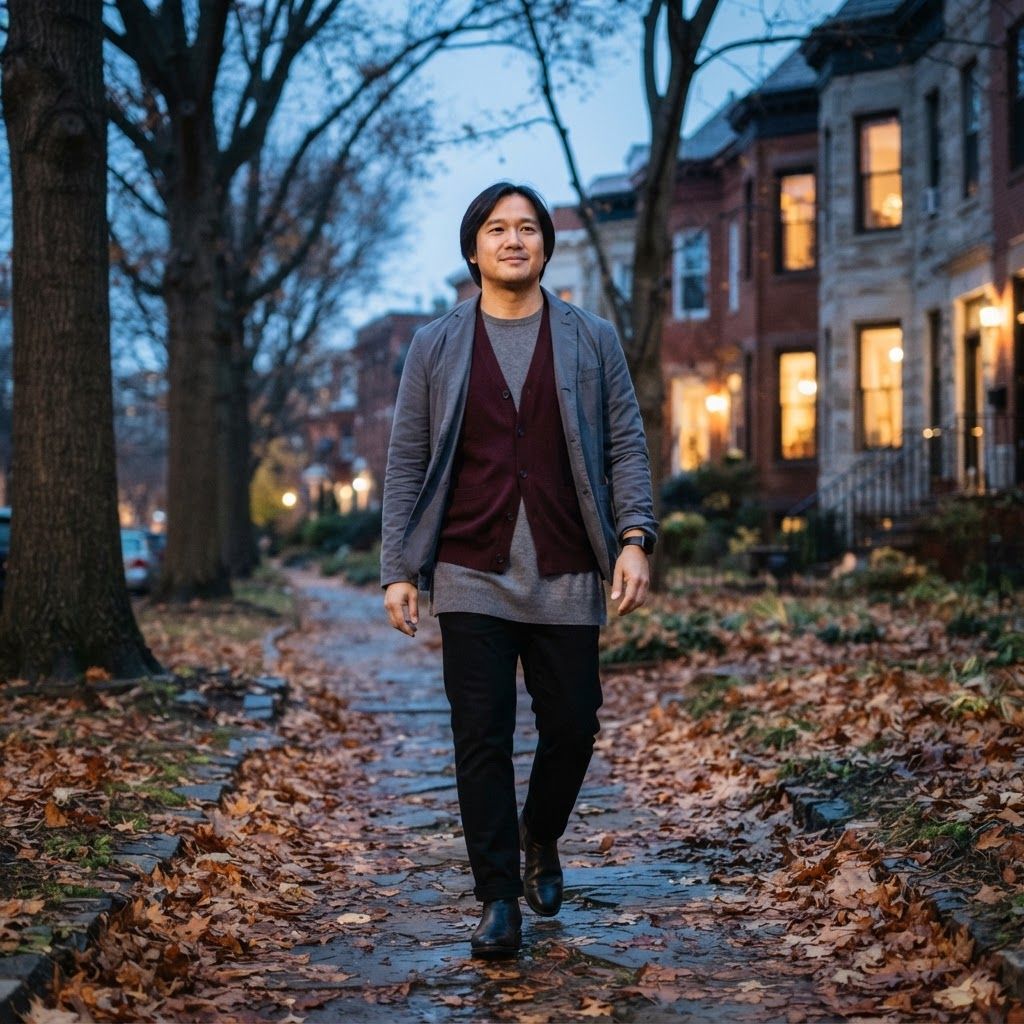
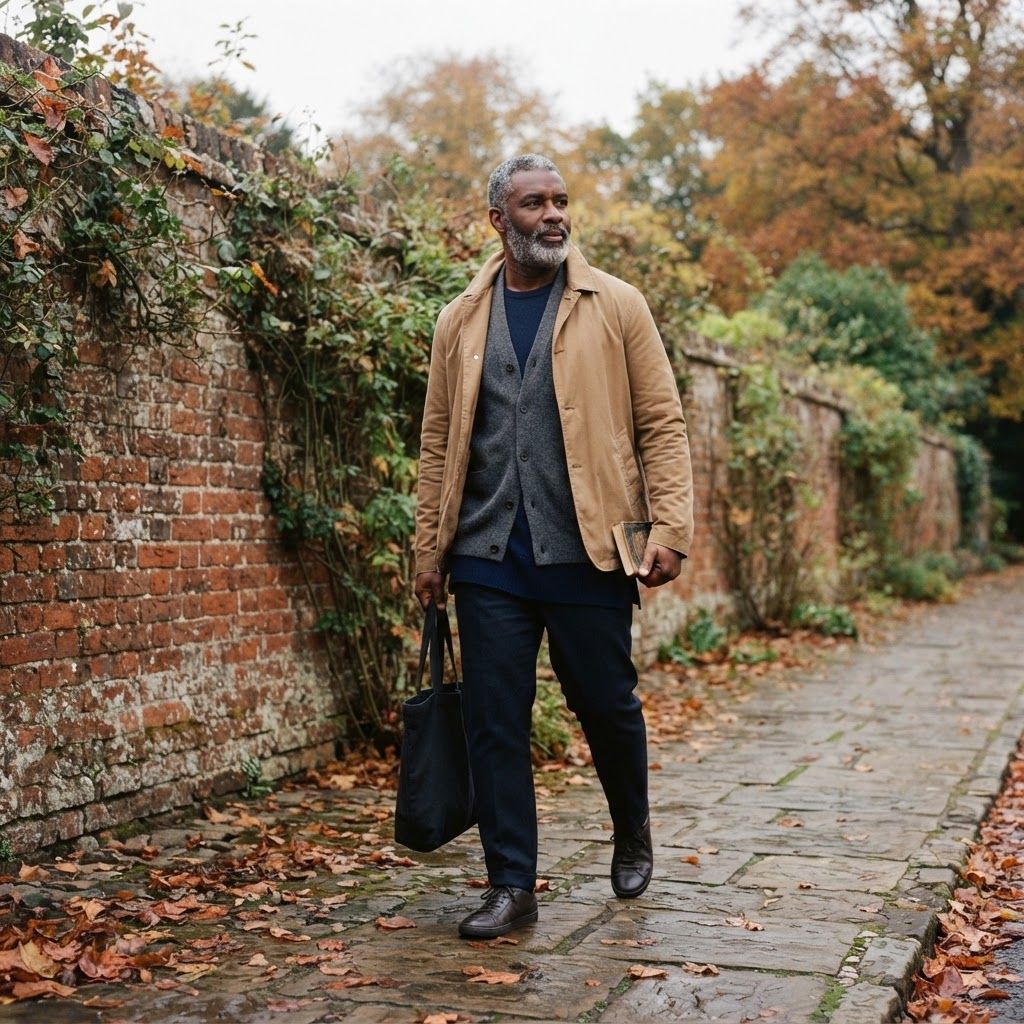
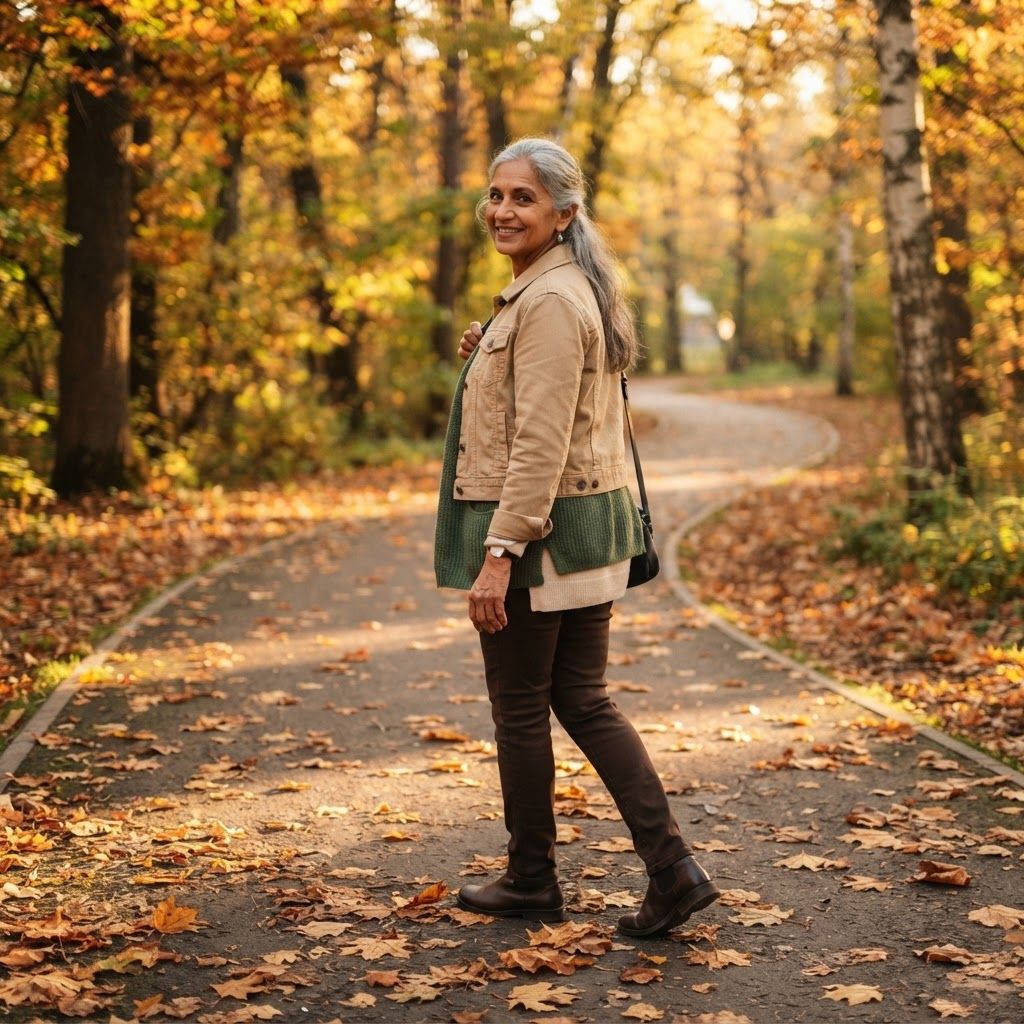
Soft Layers on a Leaf-Strewn Walk
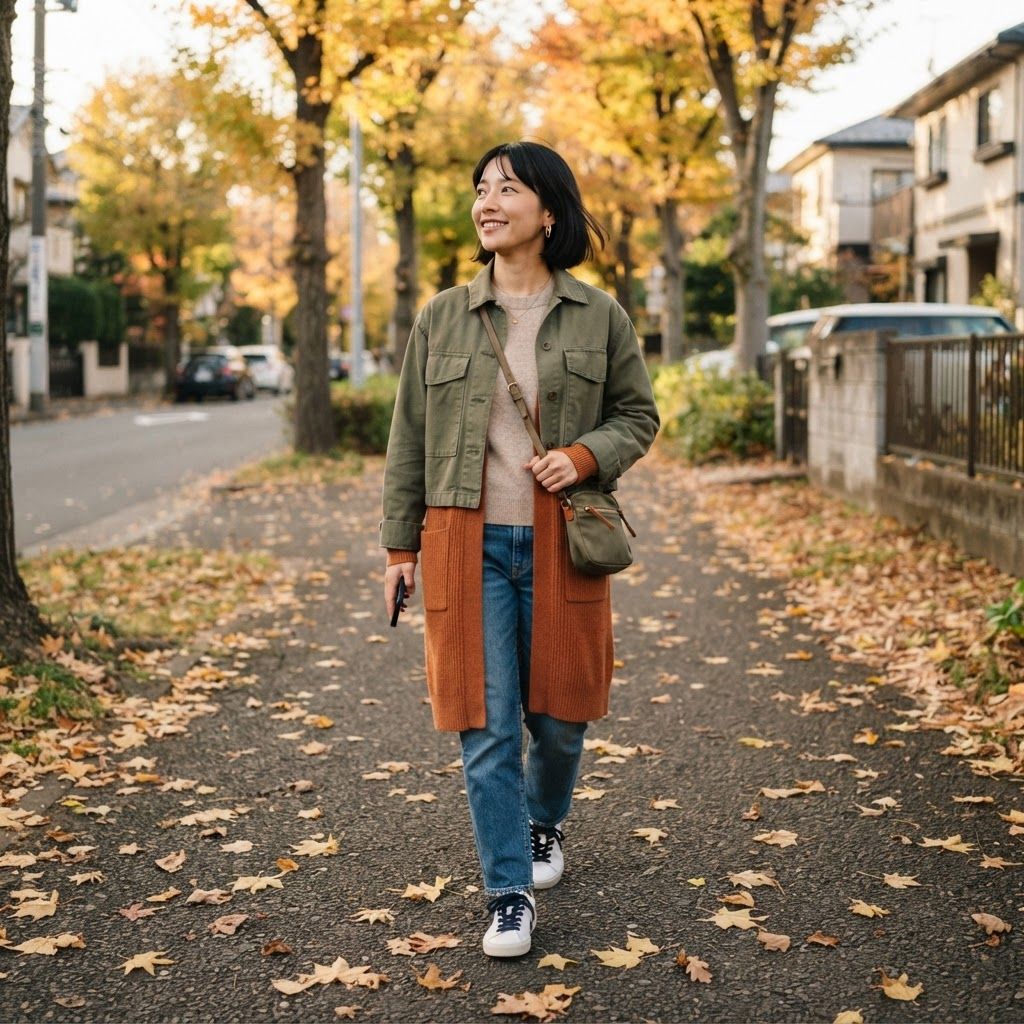
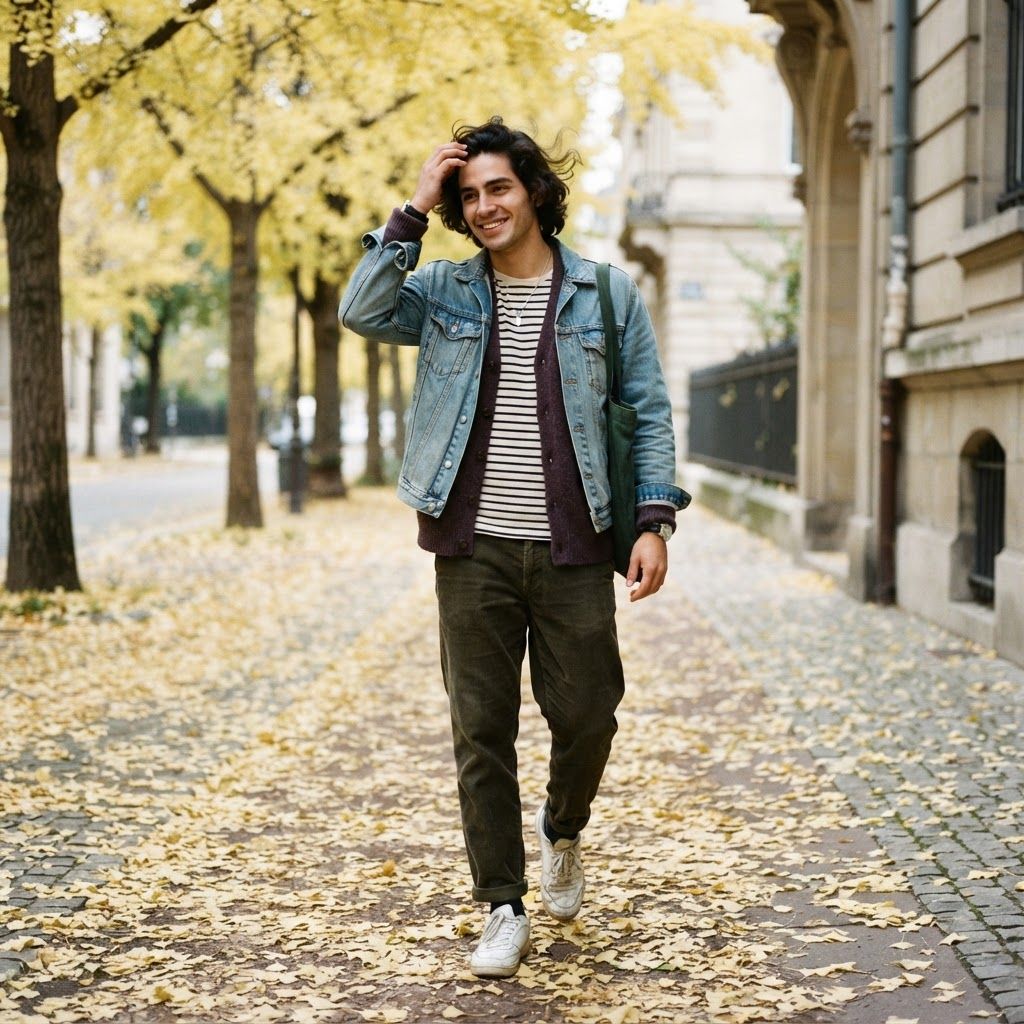
Not every fall shape needs sharp edges. A fine knit, loose cardigan, and light jacket give you soft layers that you can change as the day warms up. Let their hems end at different points so you can see the shape of each piece.
Keep the layers light enough to walk in comfortably. Two or three related colors will help the uneven hems look intentional. Fallen leaves add a warm background, but they can be slippery when wet. Choose shoes with grip and a path where you can move easily.
Walk at an easy pace and look slightly ahead, with your hands away from the hemlines. Use gentle daylight on a leaf-strewn path. Show the knit, cardigan, and jacket clearly. Avoid a stiff pose or a jacket zipped over every layer.
Choose a photo to create your version
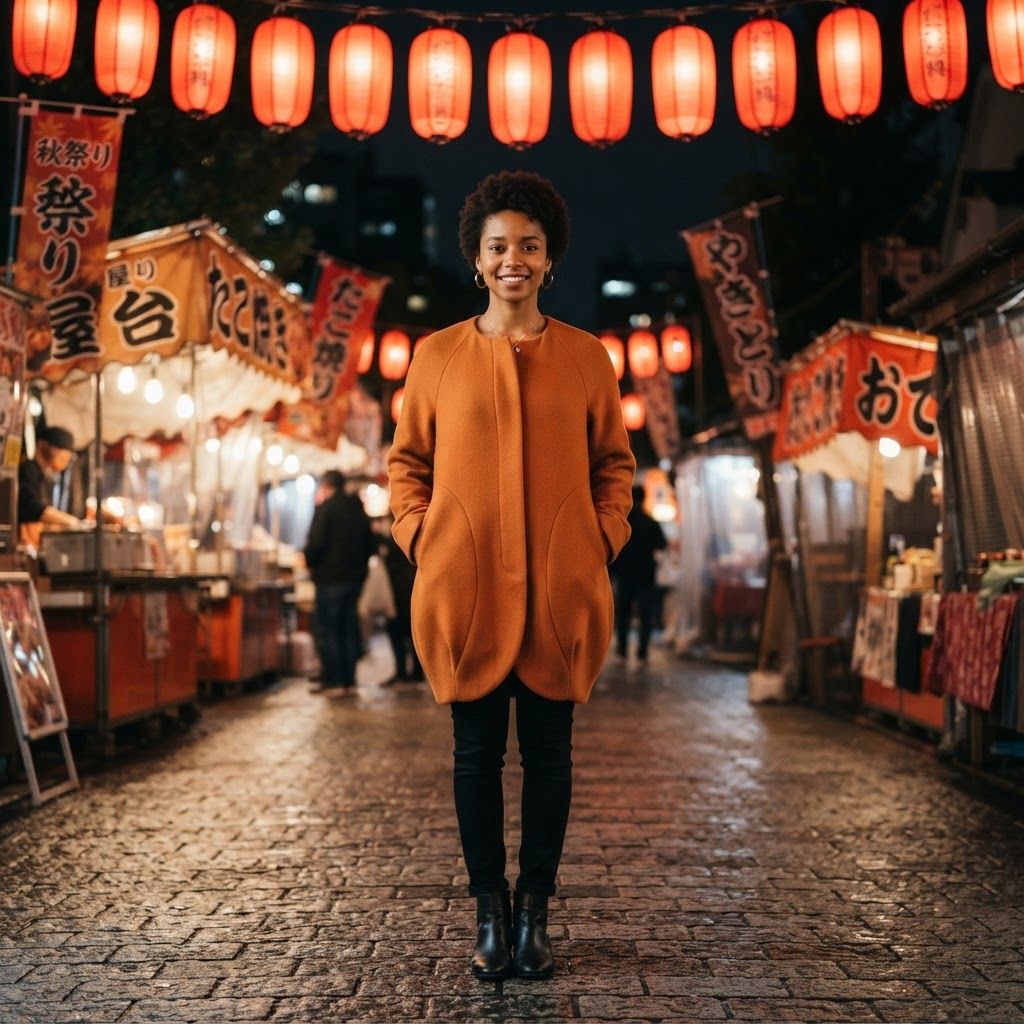
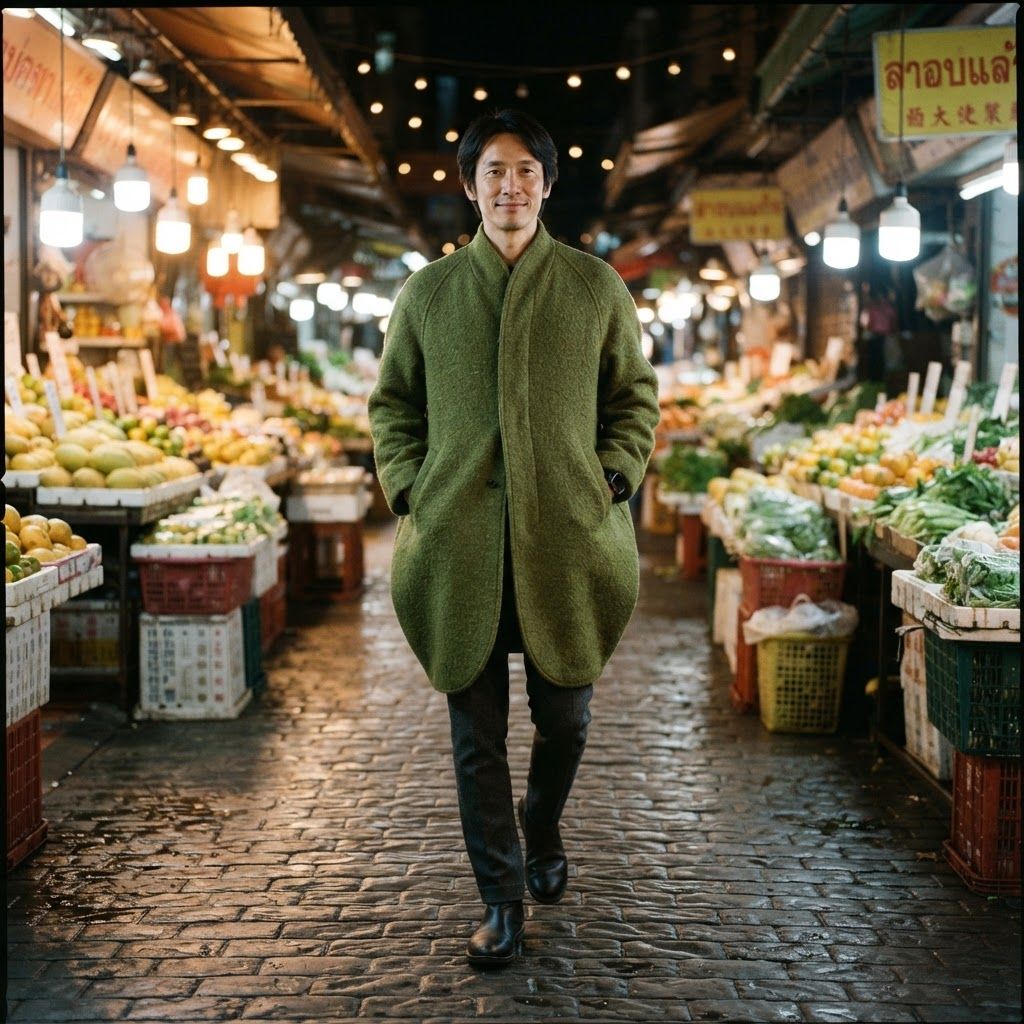
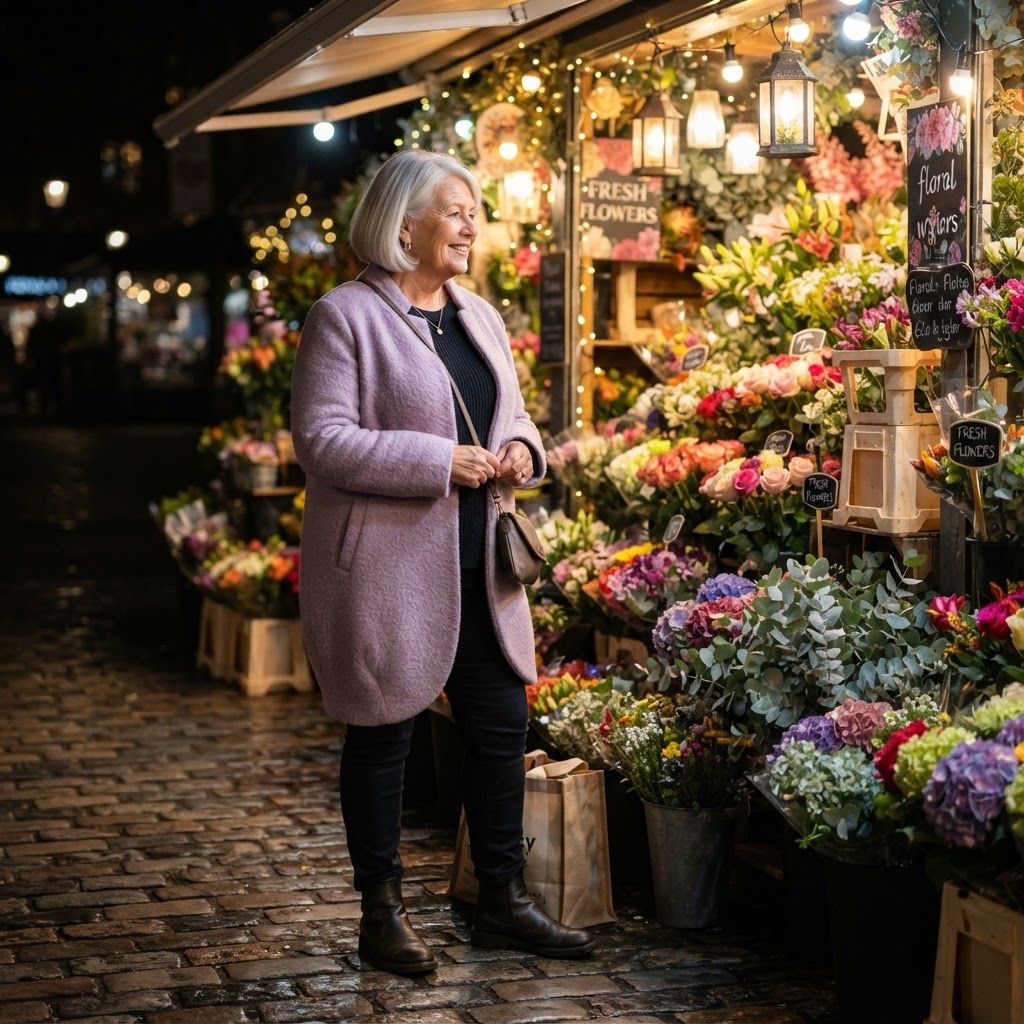
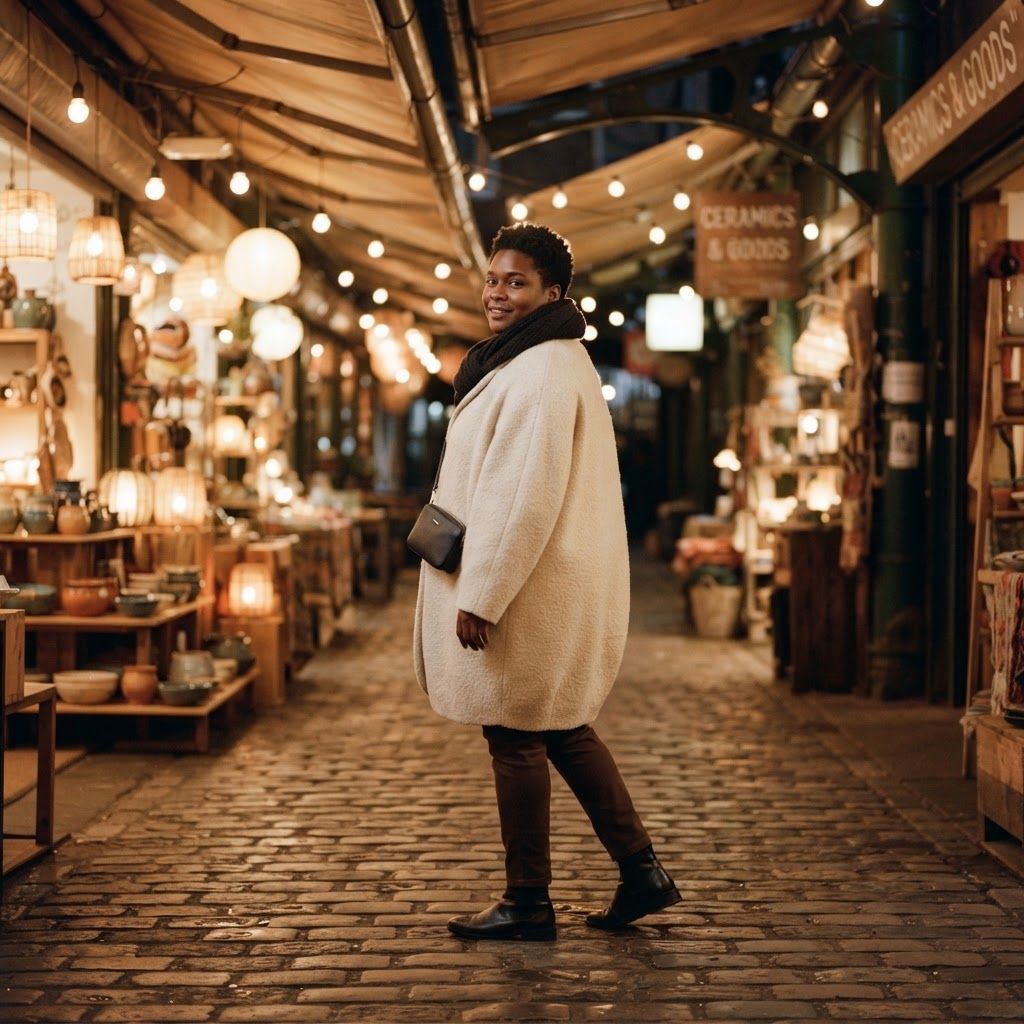
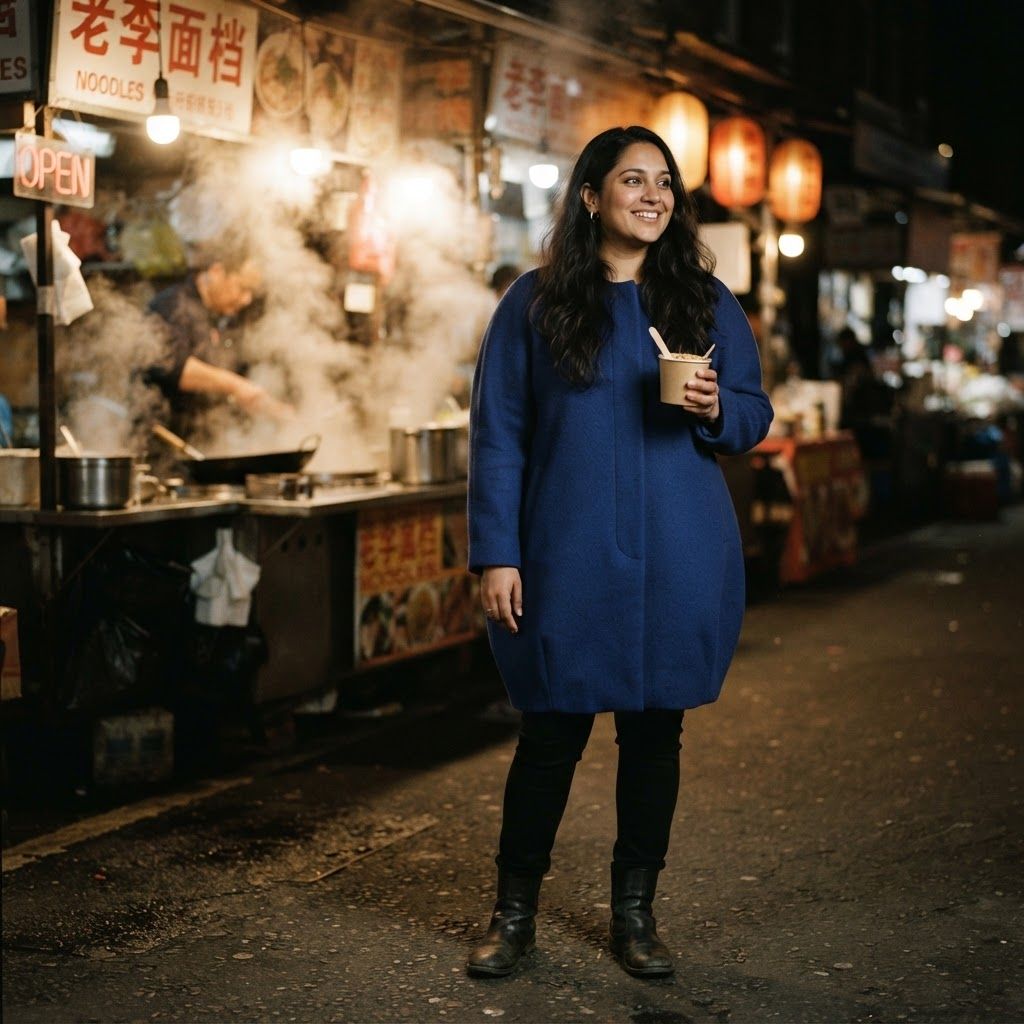
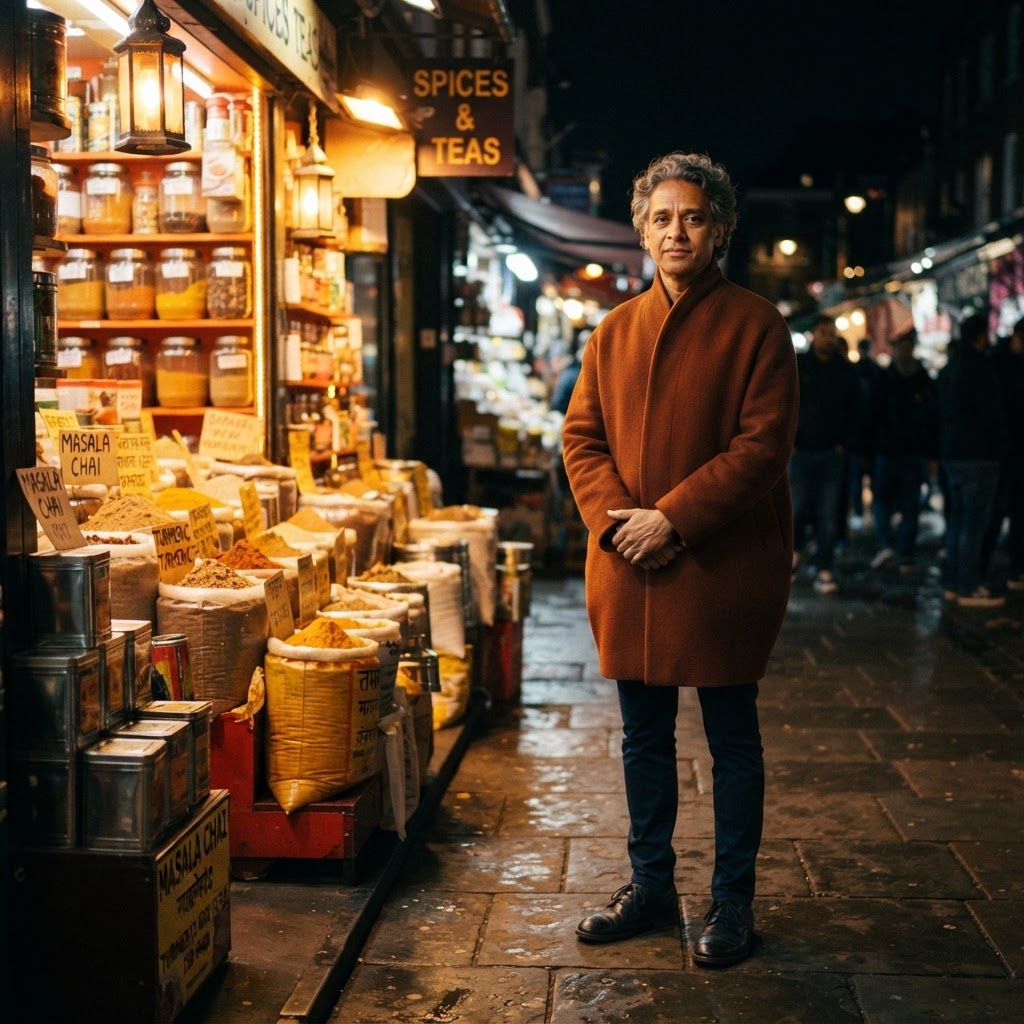
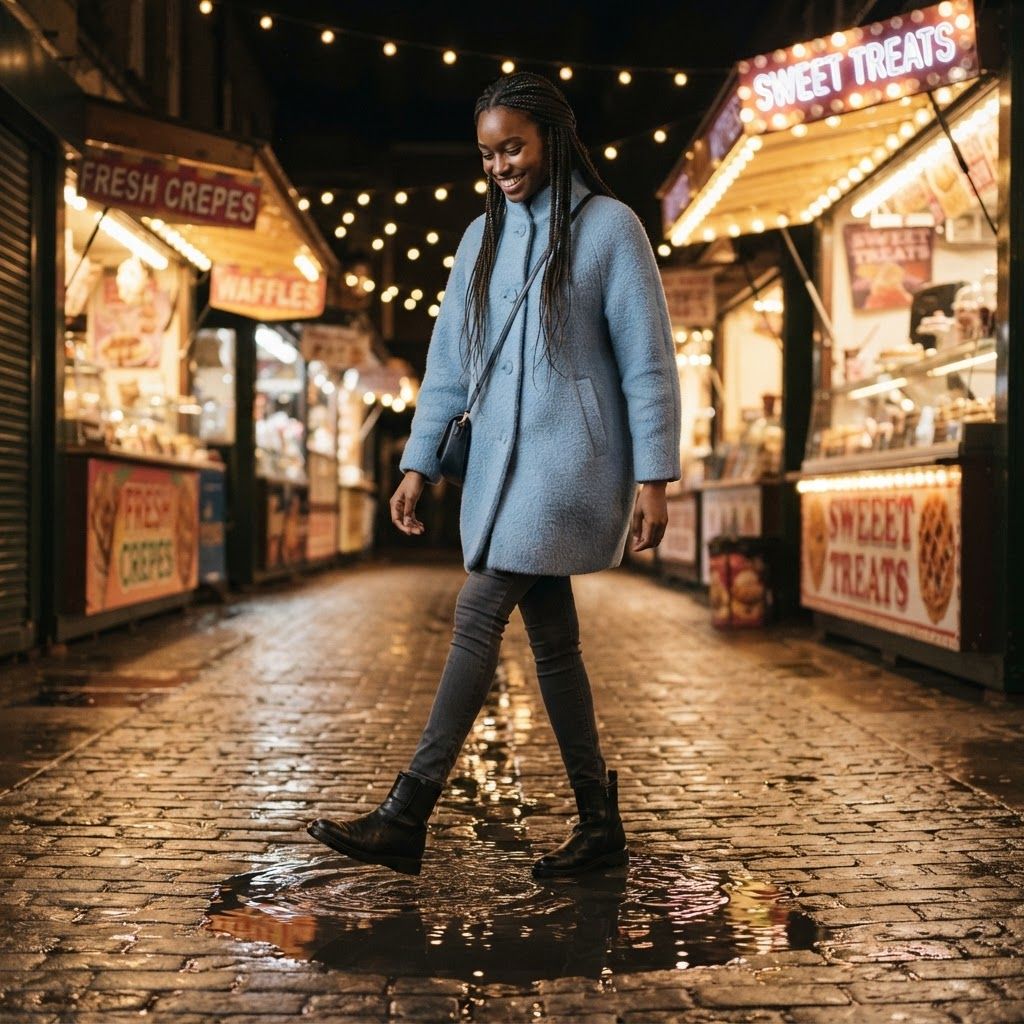
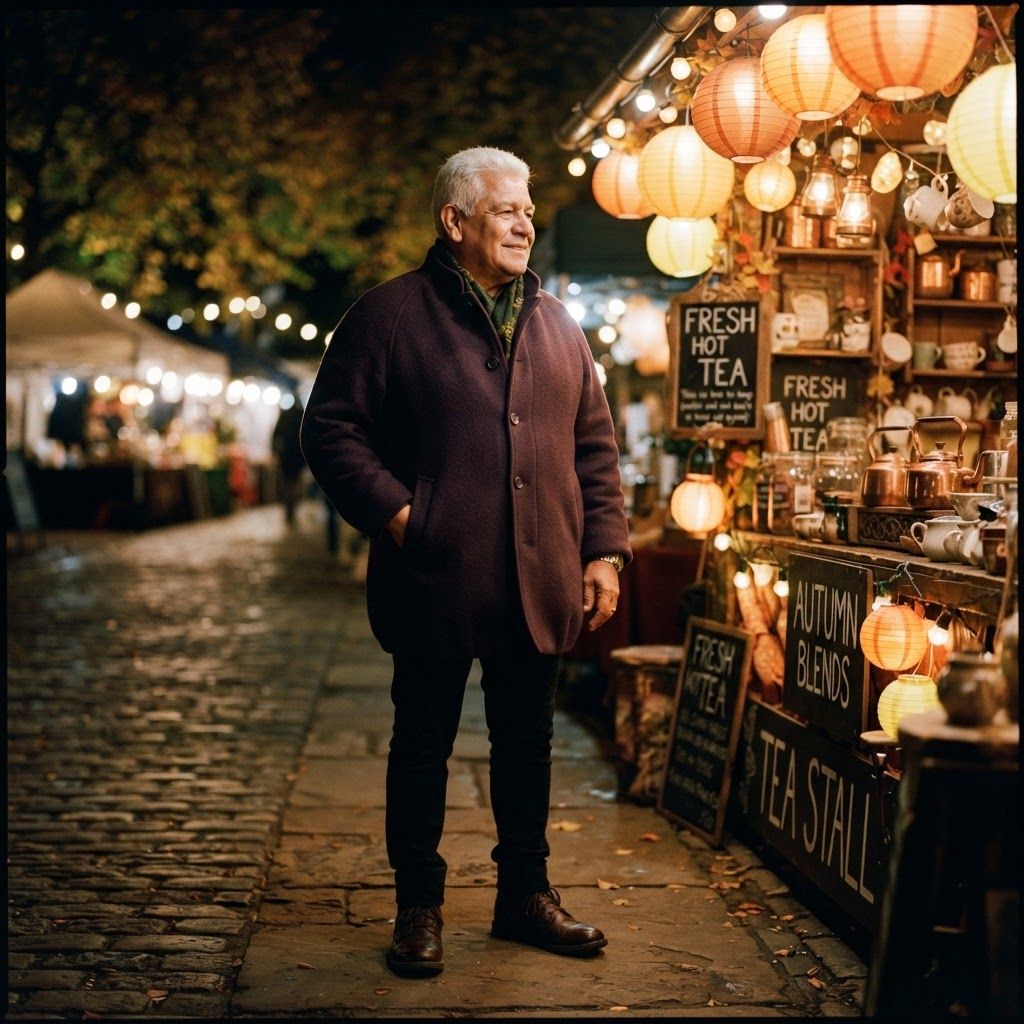
Cocoon Coat in a Night Market
A cocoon coat is full through the body and draws in near the hem. Its rounded shape is the point, so wear narrow trousers beneath it. A thin sweater leaves space inside the coat without adding more bulk.
Check where the widest part sits on your body. If it pulls at the hips or traps your arms, try another size or cut. At night, stall lights can trace the curve of the coat. Stand where light reaches one side of you; against a dark stall, the outline can disappear.
Stand head to toe at a slight angle with a relaxed expression. Use the warm light of nearby stalls and keep narrow trouser legs visible below the coat. Avoid harsh flash, a crowded background, or blocking a stall.
Choose a photo to create your version
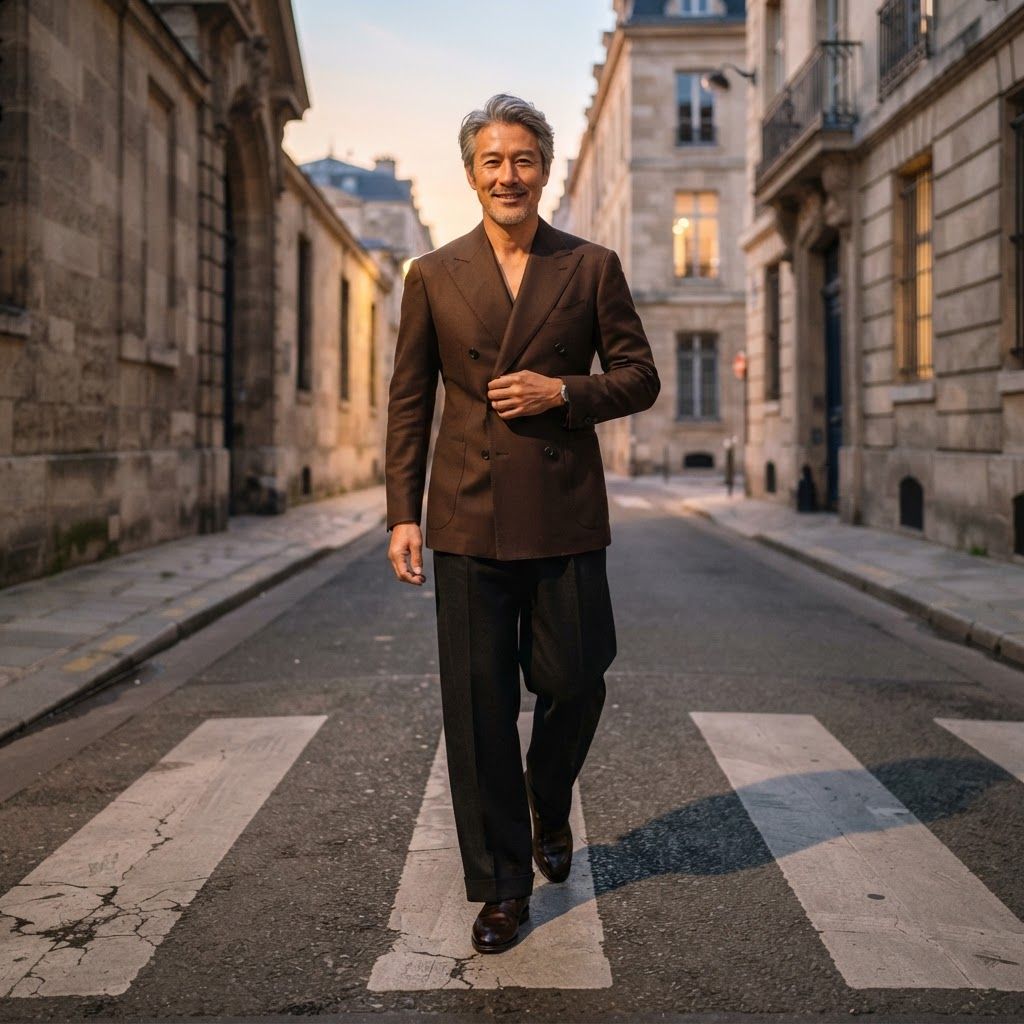
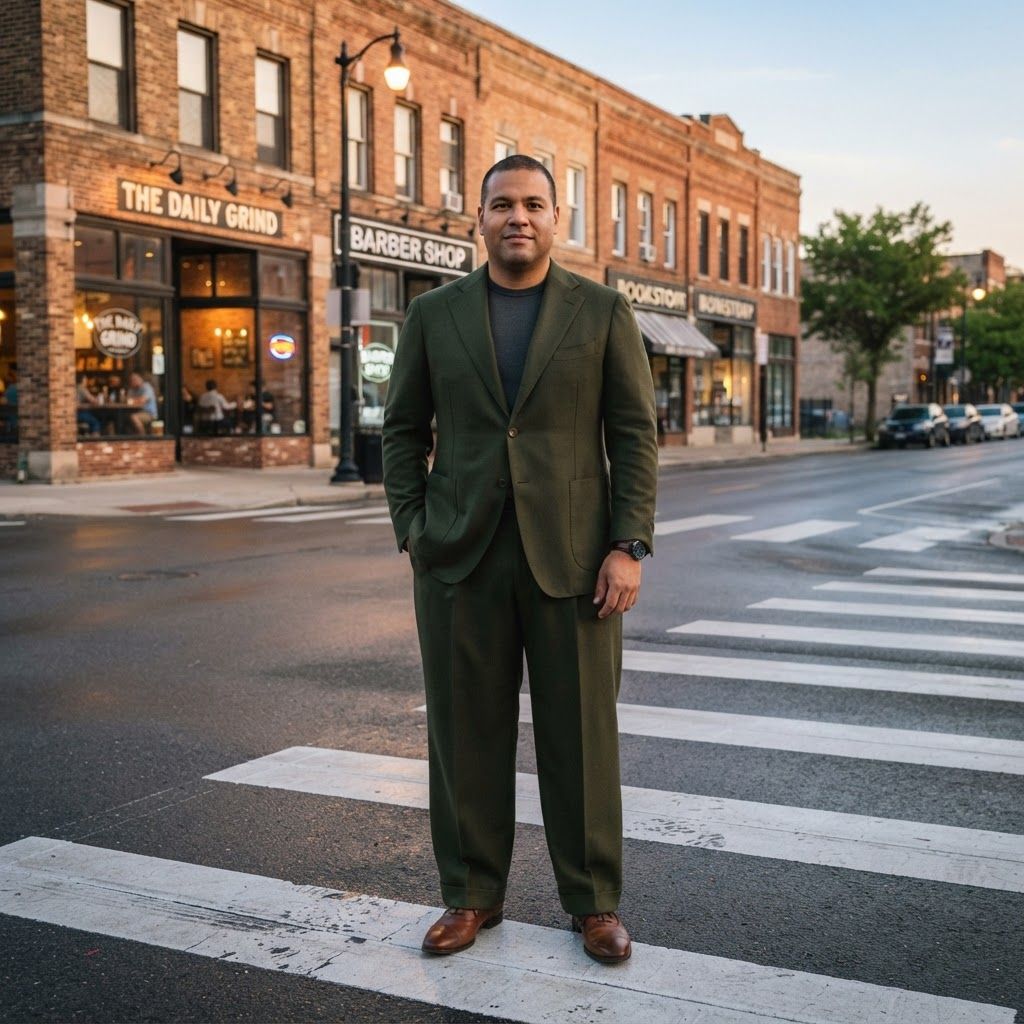
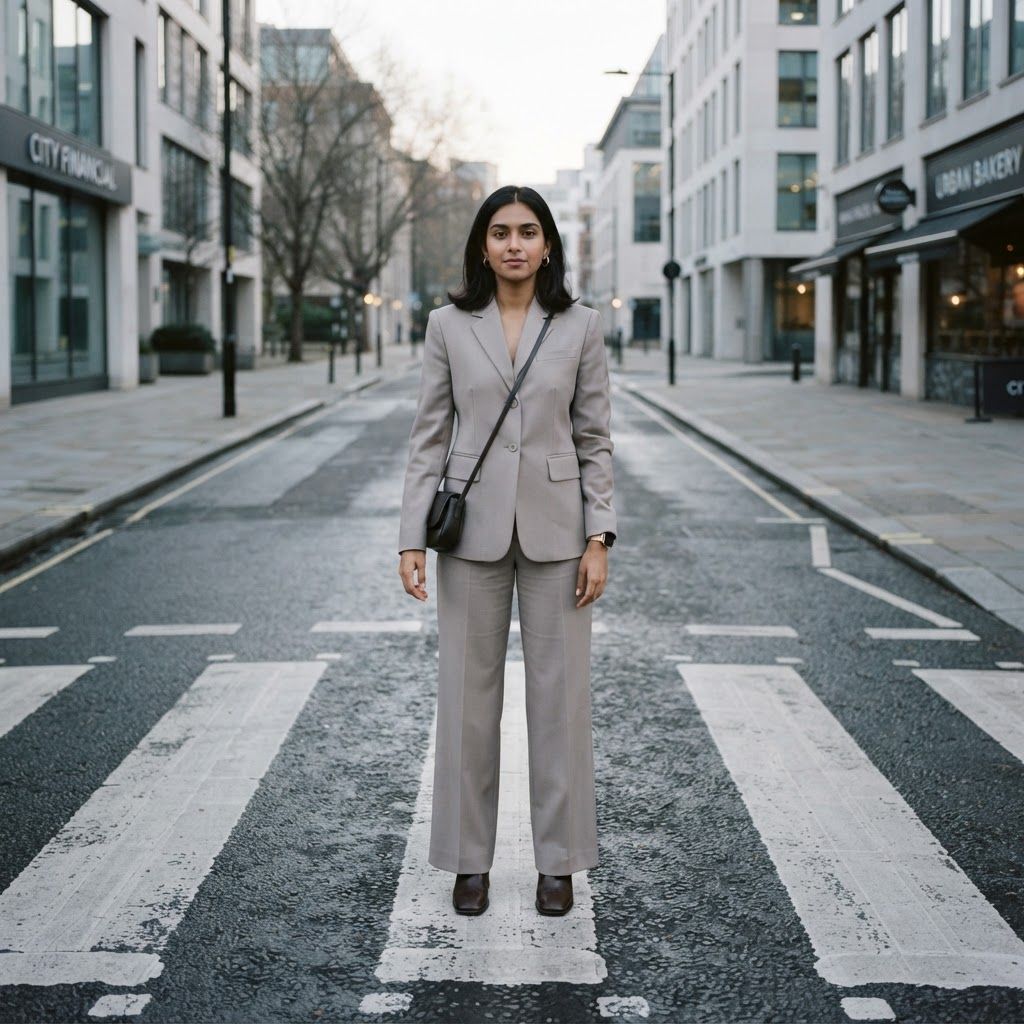
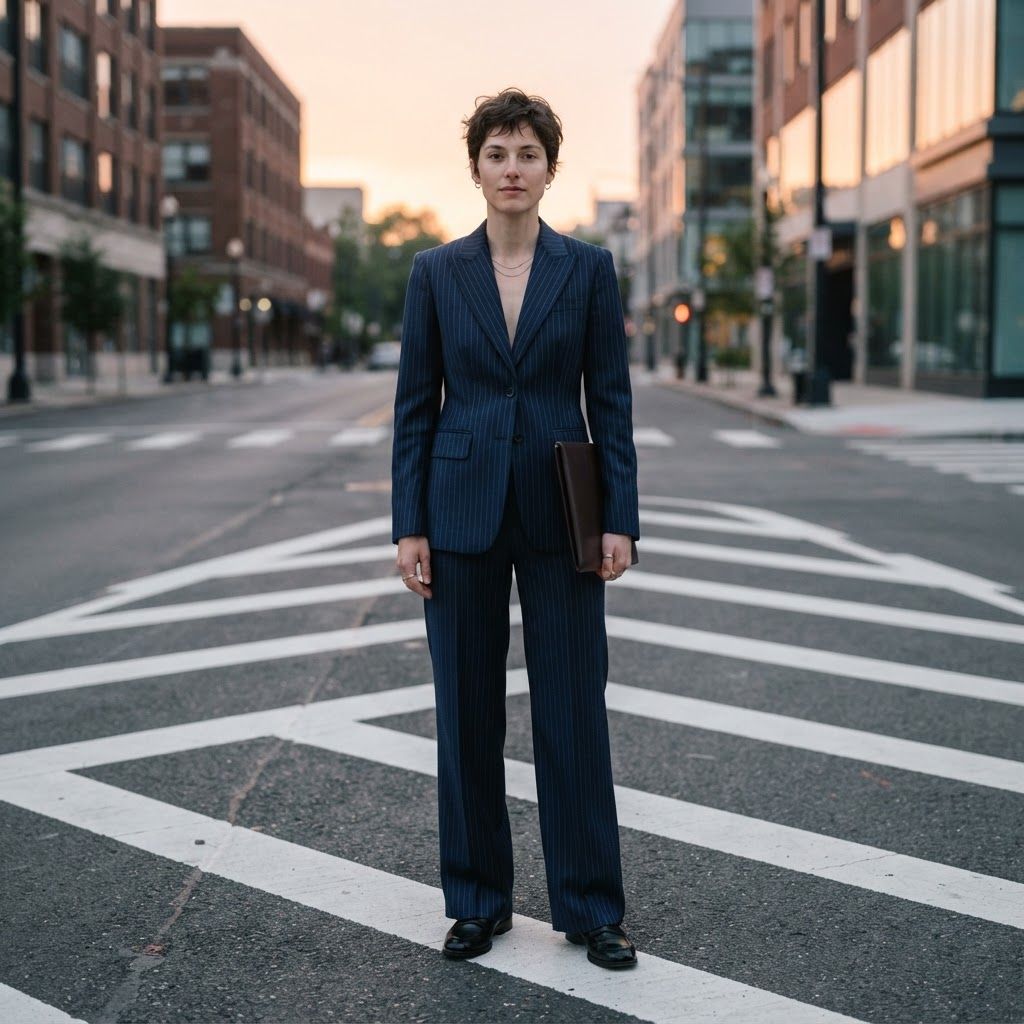
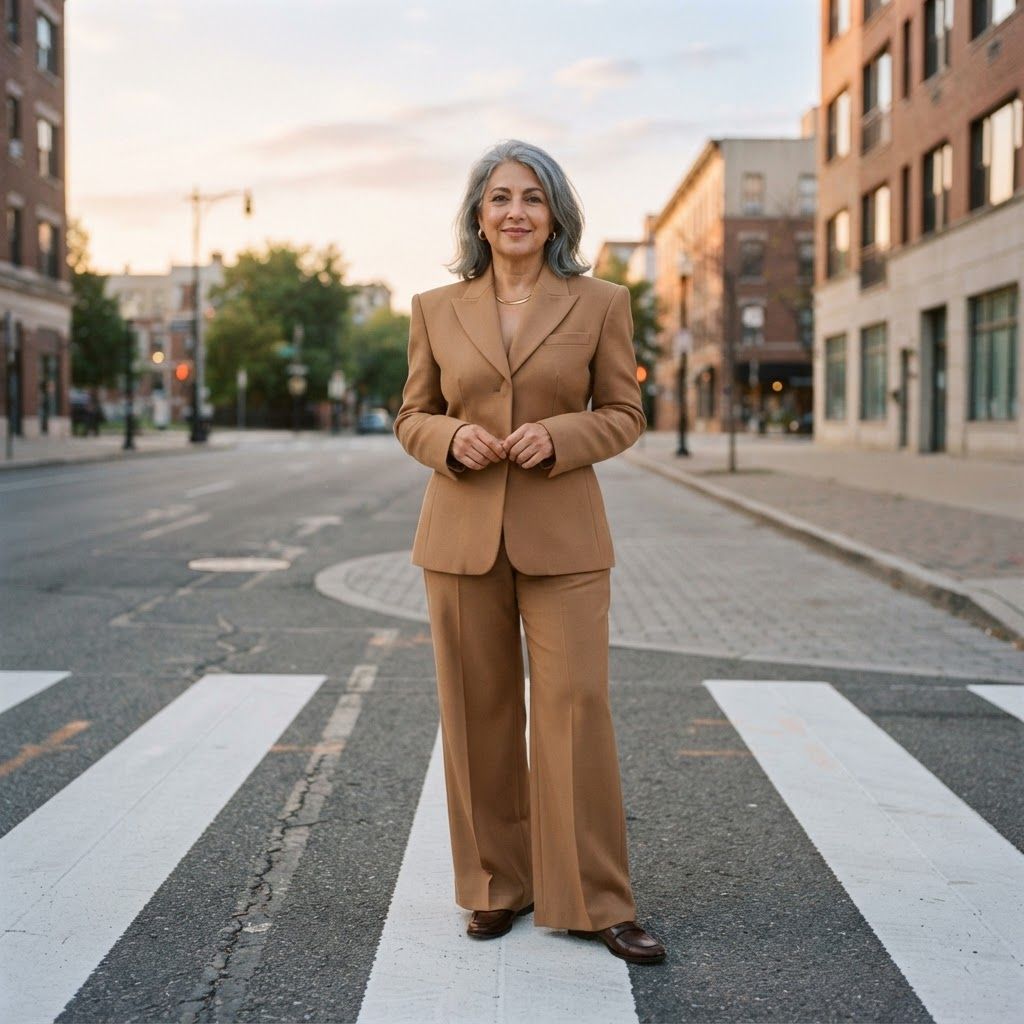
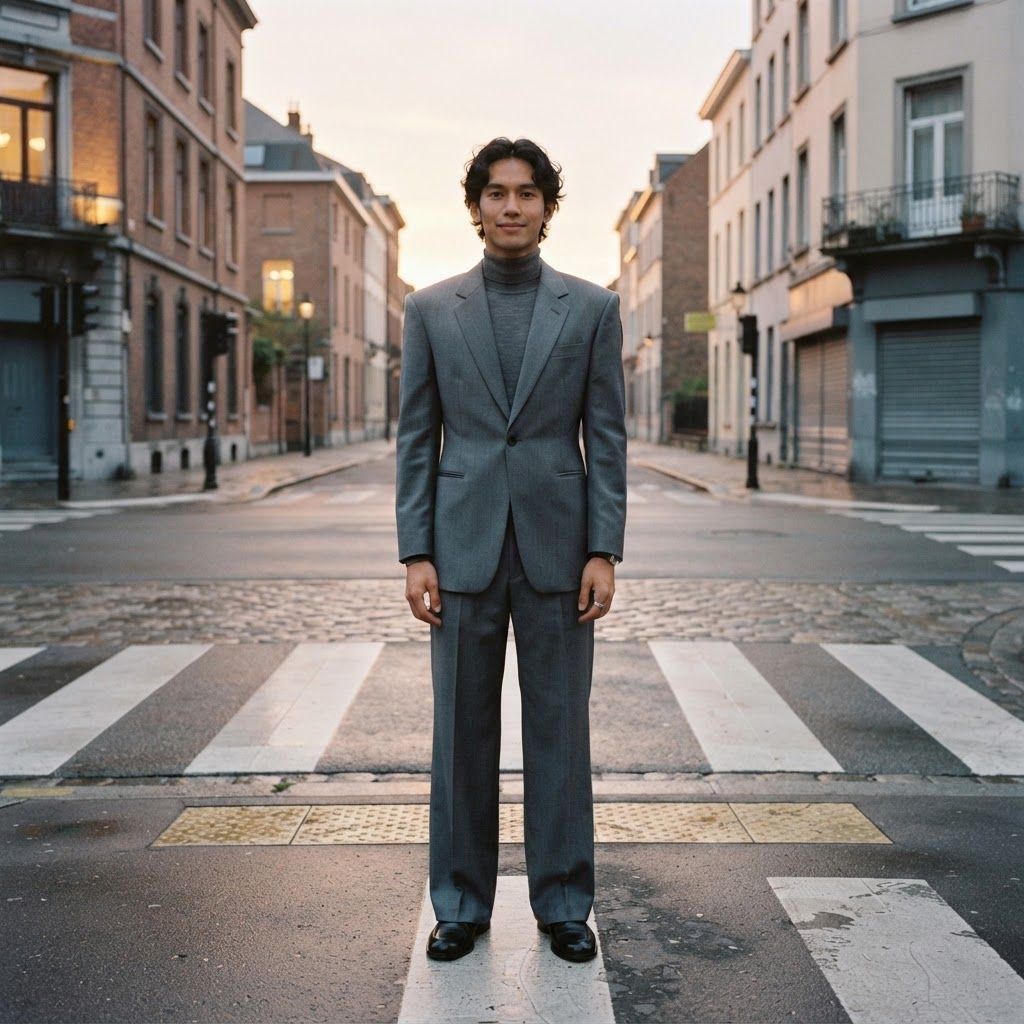
Sharp Tailoring at a Dawn Crosswalk
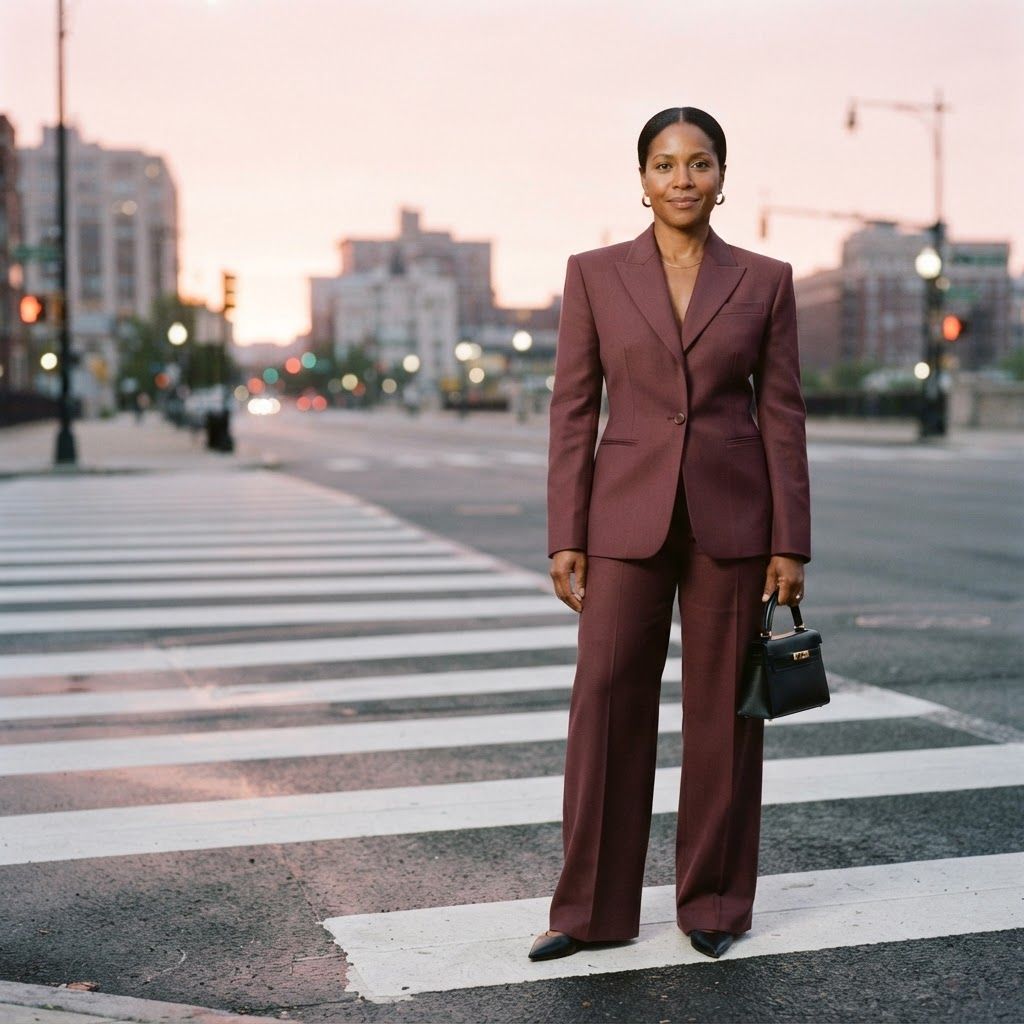
A trouser suit is another way to wear a strong fall shape. Look for clear blazer shoulders, a waist you can see, and wide legs that fall cleanly. If the jacket strains when buttoned, it will lose that crisp line as soon as you move.
Let the trouser hems skim your shoes without dragging. A simple top keeps the focus on the suit’s cut. Pale morning light softens the look, while crosswalk stripes give its straight lines a clear setting. You do not need a rigid pose to look confident.
Walk toward a camera set at the curb while the crossing signal allows it. Frame your full outfit from the front in pale dawn light. Keep your face at ease and your shoulders level. Avoid stopping in the road or cropping your shoes.
Choose a photo to create your version
Choose the Shape You Will Wear
For wet days, start with the cape or a practical long coat. For easy changes in temperature, try soft or structured layers. Choose a cocoon coat for rounded volume, a shaped coat for drama, or a suit for a clean line.
Try one change at a time. Wear your usual shoes and carry your usual bag. Then check your outline while you stand, sit, and walk. If the shape still works in all three, you have found more than a good photo.